Langa
Library
LLanga Card
← Back to Authors
Featured Author

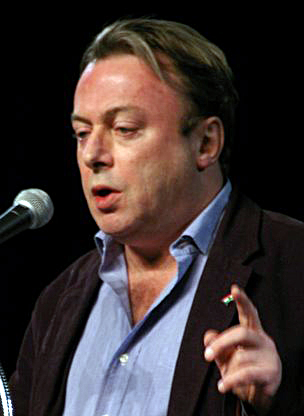
Christopher Hitchens

American • British • Author • Journalist
19 books in Langa

Christopher Eric Hitchens was a British and American author and journalist. Known as one of the "Four Horsemen" of New Atheism, he gained prominence as a columnist and speaker. His epistemological razor, which states that "what can be asserted without evidence can also be dismissed without evidence", is used in philosophy and law.

Domains
LiteratureJournalism
Christopher Hitchens

Books in Langa Library

19 books available from this author.

A Hitch in Time: Writings From the London Review of Books

A Hitch in Time: Writings From the London Review of Books

Atlantic Books · 2021 · English · EPUB

'Revisiting this selection of diaries and essay-reviews from the London Review of Books is restorative, an extended spa treatment that stretches tired brains and unkinks the usual habitual responses where Hitchens is concerned.' James Wolcott in his introduction Christopher Hitchens was a star writer wherever he wrote, and the same was true of the London Review of Books, to which he contributed sixty pieces over two decades. Anthologised here for the first time, this selection of his finest LRB reviews, diaries and essays (along with a smattering of ferocious letters) finds Hitchens at his very best. Familiar bêtes noires - Kennedy, Nixon, Kissinger, Clinton - rub shoulders with lesser-known preoccupations: P.G. Wodehouse, Princess Margaret and, magisterially, Isaiah Berlin. Here is Hitchens on the (first) Gulf War and the 'Salman Rushdie Acid Test', on being spanked by Mrs Thatcher in the House of Lords and taking his son to the Oscars, on America's homegrown Nazis and 'Acts of Violence in Grosvenor Square' in 1968. Edited by the London Review of Books, with an introduction by James Wolcott, this collection recaptures, ten years after his death, 'a Hitch in time': barnstorming, cauterising, and ultimately uncontainable.
Literary CollectionsEssaysLiterary CriticismModern+1
And Yet...: Essays

And Yet...: Essays

Simon & Schuster · 2015 · English · EPUB

The seminal, uncollected essays—lauded as “dazzling” (The New York Times Book Review)—by the late Christopher Hitchens, author of the #1 New York Times bestseller God Is Not Great, showcase the notorious contrarian’s genius for rhetoric and his sharp rebukes to tyrants and the ill-informed everywhere. For more than forty years, Christopher Hitchens delivered essays to numerous publications on both sides of the Atlantic that were astonishingly wide-ranging and provocative. His death in December 2011 from esophageal cancer prematurely silenced a voice that was among the most admired of contemporary voices—writers, readers, pundits and critics the world over mourned his loss. At the time of his death, Hitchens left nearly 250,000 words of essays not yet published in book form. “Another great book of essays from a writer who we wish were still alive to produce more copy” (National Review), And Yet… ranges from the literary to the political and is a banquet of entertaining and instructive delights, including essays on Orwell, Lermontov, Chesterton, Fleming, Naipaul, Rushdie, Orhan Pamuk, and Dickens, among others, as well as his laugh-out-loud self-mocking “makeover.” The range and quality of Hitchens’s essays transcend the particular occasions for which they were originally written, yielding “a bounty of famous scalps, thunder-blasted targets, and a few love letters from the notorious provocateur-in-chief’s erudite and scathing assessments of American culture” (Vanity Fair). Often prescient, always pugnacious, formidably learned, Hitchens was a polemicist for the ages. With this posthumous volume, he remains, “America’s foremost rhetorical pugilist” (The Village Voice).
Literary CollectionsSpeechesLiterary CriticismAmerican+2
Arguably: Essays by Christopher Hitchens

Arguably: Essays by Christopher Hitchens

Hachette UK · 2011 · English · EPUB

"All first-rate criticism first defines what we are confronting," the late, great jazz critic Whitney Balliett once wrote. By that measure, the essays of Christopher Hitchens are in the first tier. For nearly four decades, Hitchens has been telling us, in pitch-perfect prose, what we confront when we grapple with first principles-the principles of reason and tolerance and skepticism that define and inform the foundations of our civilization-principles that, to endure, must be defended anew by every generation. "A short list of the greatest living conversationalists in English," said The Economist, "would probably have to include Christopher Hitchens, Sir Patrick Leigh-Fermor, and Sir Tom Stoppard. Great brilliance, fantastic powers of recall, and quick wit are clearly valuable in sustaining conversation at these cosmic levels. Charm may be helpful, too. " Hitchens-who staunchly declines all offers of knighthood-hereby invites you to take a seat at a democratic conversation, to be engaged, and to be reasoned with. His knowledge is formidable, an encyclopedic treasure, and yet one has the feeling, reading him, of hearing a person thinking out loud, following the inexorable logic of his thought, wherever it might lead, unafraid to expose fraudulence, denounce injustice, and excoriate hypocrisy. Legions of readers, admirers and detractors alike, have learned to read Hitchens with something approaching awe at his felicity of language, the oxygen in every sentence, the enviable wit and his readiness, even eagerness, to fight a foe or mount the ramparts. Here, he supplies fresh perceptions of such figures as varied as Charles Dickens, Karl Marx, Rebecca West, George Orwell, J.G. Ballard, and Philip Larkin are matched in brilliance by his pungent discussions and intrepid observations, gathered from a lifetime of traveling and reporting from such destinations as Iran, China, and Pakistan. Hitchens's directness, elegance, lightly carried erudition, critical and psychological insight, humor, and sympathy-applied as they are here to a dazzling variety of subjects-all set a standard for the essayist that has rarely been matched in our time. What emerges from this indispensable volume is an intellectual self-portrait of a writer with an exemplary steadiness of purpose and a love affair with the delights and seductions of the English language, a man anchored in a profound and humane vision of the human longing for reason and justice.
GeneralNon FictionLiterary CollectionsEssays
Blood, Class and Empire: The Enduring Anglo-American Relationship

Blood, Class and Empire: The Enduring Anglo-American Relationship

Atlantic Books · 2006 · English · EPUB

In the wake of the terrorist attacks of 9/11 and 7/7, Britain's relationship with America seems to have intensified. Through an analysis of its various manifestations - from James Bond to Winston Churchill - this book asks what this relationship consists of.
HistoryEuropeGreat BritainGeneral+5
For the Sake of Argument: Essays and Minority Reports

For the Sake of Argument: Essays and Minority Reports

Atlantic Books Ltd · 2017 · English · PDF

The global turmoil of the last few years has severely tested every analyst and commentator. Few have written with such insight as Christopher Hitchens about the large events—or with such discernment and wit about the small tell-tale signs of a disordered culture. For the Sake of Argument ranges from the political squalor of Washington, as a beleaguered Bush administration seeks desperately to stave off disaster and Clinton prepares for power; to the twilight of Stalinism in Prague; from the Jewish quarter of Damascus in the aftermath of the Gulf War to the embattled barrios of Central America and the imperishable resistance of Sarajevo, as a difficult peace is negotiated with ruthless foes. Hitchens's unsparing account of Western realpolitik in the end shows it to rest on delusion as well as deception. The reader will find in these pages outstanding essays on political assassination in America as well as a scathing review of the evisceration of politics by pollsters and spin-doctors. Hitchens's knowledge of the tortuous history of revolutions in the twentieth century helps him explain both the New York intelligentsia's flirtation with Trotskyism and the frailty of Communist power structures in Eastern Europe. Hitchens's pointed reassessments of Graham Greene, P. G. Wodehouse and C. L. R. James, or his riotous celebration of drinking and smoking, display an engaging enthusiasm and an acerbic wit. Equally entertaining is his unsparing rogues' gallery, which gives us unforgettable portraits of the lugubrious "Dr." Kissinger, the comprehensively reactionary "Mother" Teresa, the preposterous Paul Johnson and the predictable P. J. O'Rourke.
EBC ConvertedEssaysLiterary Collections
For the Sake of Argument: Essays and Minority Reports

For the Sake of Argument: Essays and Minority Reports

Atlantic Books Ltd · 2017 · English · EPUB

The global turmoil of the last few years has severely tested every analyst and commentator. Few have written with such insight as Christopher Hitchens about the large events—or with such discernment and wit about the small tell-tale signs of a disordered culture. For the Sake of Argument ranges from the political squalor of Washington, as a beleaguered Bush administration seeks desperately to stave off disaster and Clinton prepares for power; to the twilight of Stalinism in Prague; from the Jewish quarter of Damascus in the aftermath of the Gulf War to the embattled barrios of Central America and the imperishable resistance of Sarajevo, as a difficult peace is negotiated with ruthless foes. Hitchens's unsparing account of Western realpolitik in the end shows it to rest on delusion as well as deception. The reader will find in these pages outstanding essays on political assassination in America as well as a scathing review of the evisceration of politics by pollsters and spin-doctors. Hitchens's knowledge of the tortuous history of revolutions in the twentieth century helps him explain both the New York intelligentsia's flirtation with Trotskyism and the frailty of Communist power structures in Eastern Europe. Hitchens's pointed reassessments of Graham Greene, P. G. Wodehouse and C. L. R. James, or his riotous celebration of drinking and smoking, display an engaging enthusiasm and an acerbic wit. Equally entertaining is his unsparing rogues' gallery, which gives us unforgettable portraits of the lugubrious "Dr." Kissinger, the comprehensively reactionary "Mother" Teresa, the preposterous Paul Johnson and the predictable P. J. O'Rourke.
EBC ConvertedEssaysLiterary Collections
Letters to a Young Contrarian

Letters to a Young Contrarian

Hachette UK · 2009 · English · EPUB

From bestselling author and provocateur Christopher Hitchens, the classic guide to the art of principled dissent and disagreement In Letters to a Young Contrarian, bestselling author and world-class provocateur Christopher Hitchens inspires the radicals, gadflies, mavericks, rebels, and angry young (wo)men of tomorrow. Exploring the entire range of "contrary positions"—from noble dissident to gratuitous nag—Hitchens introduces the next generation to the minds and the misfits who influenced him, invoking such mentors as Emile Zola, Rosa Parks, and George Orwell. As is his trademark, Hitchens pointedly pitches himself in contrast to stagnant attitudes across the ideological spectrum. No other writer has matched Hitchens's understanding of the importance of disagreement—to personal integrity, to informed discussion, to true progress, to democracy itself.
ReligionPolitics & StateAtheismPolitical Science+15
Long Live Hitch: Three Classic Books in One Volume

Long Live Hitch: Three Classic Books in One Volume

Atlantic Books Ltd · 2012 · English · EPUB

Three of the most provocative and thought-provoking works of the great Christopher Hitchens, now available in one volume. god Is Not Great This provocative international bestseller is the ultimate case against religion. In a series of acute readings of the major religious texts, Christopher Hitchens demonstrates the ways in which religion is man-made, dangerously sexually repressive and distorts the very origins of the cosmos. Above all, Hitchens argues that the concept of an omniscient God has profoundly damaged humanity, and proposes that the world might be a great deal better off without 'him'. Hitch-22 The hilarious and provocative bestselling memoirs of our greatest contrarian are by turns, moving and funny, charming and infuriating, enraging and inspiring. It is an indispensable companion to the life and thought of our pre-eminent political writer. Arguably For forty years, Christopher Hitchens was at the epicentre of the battle of letters in Britain & America. Throughout his life he shone the light of reason and truth into the eyes of charlatans and hucksters, exposing falsehood and decrying hypocrisy wherever he found it. Arguably collects Hitchens' writing on politics, literature and religion when he was at the zenith of his career.
Political ScienceCommentary & OpinionEssays
Love, Poverty, and War: Journeys and Essays

Love, Poverty, and War: Journeys and Essays

PublicAffairs · 2004 · English · EPUB

"I did not, I wish to state, become a journalist because there was no other 'profession' that would have me. I became a journalist because I did not want to rely on newspapers for information. " Love, Poverty and War: Journeys and Essays showcases America's leading polemicist's rejection of consensus and cliché whether he's reporting from abroad in Indonesia, Kurdistan, Iraq, North Korea, or Cuba, or when his pen is targeted mercilessly at the likes of William Clinton, Mother Theresa ("a fanatic, a fundamentalist and a fraud"), the Dalai Lama, Noam Chomsky, Mel Gibson and Michael Bloomberg. Hitchens began the nineties as a "darling of the left" but has become more of an "unaffiliated radical" whose targets include those on the "left," who he accuses of "fudging" the issue of military intervention in the Balkans, Afghanistan and Iraq. Yet, as Hitchens shows in his reportage, cultural and literary criticism, and opinion essays from the last decade, he has not jumped ship and joined the right but is faithful to the internationalist, contrarian and democratic ideals that have always informed his work.
Political ScienceEssaysAmerican GovernmentNational
Mortality

Mortality

Twelve · 2012 · English · EPUB

On June 8, 2010, while on a book tour for his bestselling memoir, *Hitch-22* , Christopher Hitchens was stricken in his New York hotel room with excruciating pain in his chest and thorax. As he would later write in the first of a series of award-winning columns for Vanity Fair, he suddenly found himself being deported "from the country of the well across the stark frontier that marks off the land of malady." Over the next eighteen months, until his death in Houston on December 15, 2011, he wrote constantly and brilliantly on politics and culture, astonishing readers with his capacity for superior work even in extremis. Throughout the course of his ordeal battling esophageal cancer, Hitchens adamantly and bravely refused the solace of religion, preferring to confront death with both eyes open. In this riveting account of his affliction, Hitchens poignantly describes the torments of illness, discusses its taboos, and explores how disease transforms experience and changes our relationship to the world around us. By turns personal and philosophical, Hitchens embraces the full panoply of human emotions as cancer invades his body and compels him to grapple with the enigma of death. ** ** **MORTALITY** is the exemplary story of one man's refusal to cower in the face of the unknown, as well as a searching look at the human predicament. Crisp and vivid, veined throughout with penetrating intelligence, Hitchens's testament is a courageous and lucid work of literature, an affirmation of the dignity and worth of man. ### Amazon.com Review **Amazon Best Books of the Month, September 2012:** Curious and prolific to the end, combative writer Christopher Hitchens leaves us with a posthumously published analysis of his dying days. *Mortality* is the anti– *Last Lecture* : Stripping away semantics and sentimentality, Hitchens treats his cancer as he would any other topic--with dogged inquisitiveness and brutal honesty. Which makes it all the more poignant when he begins losing his voice, his "freedom of speech," and sinks deeper into his "year of living dyingly." Funny, smart, irreverent, and surprisingly moving, this lucid, unflinching end-of-life journey through "Tumorville" is brave and powerful stuff. The unfinished jottings that comprise the final pages are a heartbreaking display of a mind that never stopped till the very end. -- *Neal Thompson* ### From Bookforum *Mortality* is an odd little book, neither fully a cancer memoir nor a meditation on the meanings we attribute to the disease . . . More honestly ironic, more like the Hitchens of old, before the religion wars and the war on terror and the gonzo grandstanding. It is *Mortality* at its most generous and most human: just another man dying, making a joke and telling a story. —Jeff Sharlet On June 8, 2010, while on a book tour for his bestselling memoir, *Hitch-22* , Christopher Hitchens was stricken in his New York hotel room with excruciating pain in his chest and thorax. As he would later write in the first of a series of award-winning columns for Vanity Fair, he suddenly found himself being deported "from the country of the well across the stark frontier that marks off the land of malady." Over the next eighteen months, until his death in Houston on December 15, 2011, he wrote constantly and brilliantly on politics and culture, astonishing readers with his capacity for superior work even in extremis. Throughout the course of his ordeal battling esophageal cancer, Hitchens adamantly and bravely refused the solace of religion, preferring to confront death with both eyes open. In this riveting account of his affliction, Hitchens poignantly describes the torments of illness, discusses its taboos, and explores how disease transforms experience and changes our relationship to the world around us. By turns personal and philosophical, Hitchens embraces the full panoply of human emotions as cancer invades his body and compels him to grapple with the enigma of death. ** ** **MORTALITY** is the exemplary story of one man's refusal to cower in the face of the unknown, as well as a searching look at the human predicament. Crisp and vivid, veined throughout with penetrating intelligence, Hitchens's testament is a courageous and lucid work of literature, an affirmation of the dignity and worth of man. ### Amazon.com Review **Amazon Best Books of the Month, September 2012:** Curious and prolific to the end, combative writer Christopher Hitchens leaves us with a posthumously published analysis of his dying days. *Mortality* is the anti– *Last Lecture* : Stripping away semantics and sentimentality, Hitchens treats his cancer as he would any other topic--with dogged inquisitiveness and brutal honesty. Which makes it all the more poignant when he begins losing his voice, his "freedom of speech," and sinks deeper into his "year of living dyingly." Funny, smart, irreverent, and surprisingly moving, this lucid, unflinching end-of-life journey through "Tumorville" is brave and powerful stuff. The unfinished jottings that comprise the final pages are a heartbreaking display of a mind that never stopped till the very end. -- *Neal Thompson* ### Review "Nothing sharpened Christopher Hitchens' mind like Cancer. He wrote the best, most piercing, most clarifying prose of his career as he faced down the specter of his own demise. As he dealt with fatigue and nausea, with the anger, disgust and frustration that must accompany what he knew was a death sentence, Hitch poured it all into words as painfully honest as they were hilarious." ( **Sharon Waxman, *TheWrap.com** * ) "Among the many things that made Hitchens unique was his precision of thought and expression. What made him rare were his courage and tenacity. He was fearless in the field and relentless in his defense of the defenseless with that mightiest of swords--his pen. Judging from his final essays, he was also fearless in the fact of death." ( **Kathleen Parker, *The Washington Post** * ) "I have no doubt that Christopher Hitchens will have an afterlife. As one of the most original and provocative writers of his generation, his words will continue to mesmerize, incite, confound, and entertain." ( **Rabbi Shmuley Boteach, *FoxNews.com** * ) "His unworldly fluency never deserted him, his commitment was passionate, and he never deserted his trade. He was the consummate writer, the brilliant friend. In Walter Pater's famous phrase, he burned 'with this hard gem-like flame.'Right to the end." ( **Ian McEwan** ) "A seeker of truth to the end, and a deservedly legendary witness against the hypocrisy of the ever-sactimonious establishment. What zeal this man had to eviscerate the conceits of the powerful, whether their authority derived from wealth, the state, or a claim to the ear of the divine." ( **Robert Scheer, *TruthDig** * ) "Reading and responding to the Hitch is ceaselessly inspiring and seldom less than exhilarating. More, it is an instigatory experience: it compels you to get involved more deeply with the world around and inside you. Reading any worthwhile writer is an act of celebration, a shared reaction to the act of creation. More, it is an exercise in how to write, read, think and live." ( ** *PopMatters.com*** ) During the US book tour for his memoir, Hitch-22, Christopher Hitchens collapsed in his New York hotel room to excoriating pain in his chest and thorax. As he would later write in the first of a series of deeply moving Vanity Fair pieces, he was being deported 'from the country of the well across the stark frontier that marks off the land of malady.' Until his death in 2011 he underwent the brutal gamut of modern cancer treatment, enduring catastrophic levels of suffering and eventually losing his voice. Mortality is the most meditative piece of writing Hitchens has ever produced; at once an unsparingly honest account of the ravages of his disease, an examination of cancer bathroom etiquette, and the coda to a lifetime of fierce debate and peerless prose. In this eloquent confrontation of mortality, Hitchens returns a human face to a disease that has become a contemporary cipher of suffering. On June 8, 2010, while on a book tour for his bestselling memoir, *Hitch-22* , Christopher Hitchens was stricken in his New York hotel room with excruciating pain in his chest and thorax. As he would later write in the first of a series of award-winning columns for Vanity Fair, he suddenly found himself being deported "from the country of the well across the stark frontier that marks off the land of malady." Over the next eighteen months, until his death in Houston on December 15, 2011, he wrote constantly and brilliantly on politics and culture, astonishing readers with his capacity for superior work even in extremis. Throughout the course of his ordeal battling esophageal cancer, Hitchens adamantly and bravely refused the solace of religion, preferring to confront death with both eyes open. In this riveting account of his affliction, Hitchens poignantly describes the torments of illness, discusses its taboos, and explores how disease transforms experience and changes our relationship to the world around us. By turns personal and philosophical, Hitchens embraces the full panoply of human emotions as cancer invades his body and compels him to grapple with the enigma of death. ** ** **MORTALITY** is the exemplary story of one man's refusal to cower in the face of the unknown, as well as a searching look at the human predicament. Crisp and vivid, veined throughout with penetrating intelligence, Hitchens's testament is a courageous and lucid work of literature, an affirmation of the dignity and worth of man. ### Amazon.com Review **Amazon Best Books of the Month, September 2012:** Curious and prolific to the end, combative writer Christopher Hitchens leaves us with a posthumously published analysis of his dying days. *Mortality* is the anti– *Last Lecture* : Stripping away semantics and sentimentality, Hitchens treats his cancer as he would any other topic--with dogged inquisitiveness and brutal honesty. Which makes it all the more poignant when he begins losing his voice, his "freedom of speech," and sinks deeper into his "year of living dyingly." Funny, smart, irreverent, and surprisingly moving, this lucid, unflinching end-of-life journey through "Tumorville" is brave and powerful stuff. The unfinished jottings that comprise the final pages are a heartbreaking display of a mind that never stopped till the very end. -- *Neal Thompson* ### Review "Nothing sharpened Christopher Hitchens' mind like Cancer. He wrote the best, most piercing, most clarifying prose of his career as he faced down the specter of his own demise. As he dealt with fatigue and nausea, with the anger, disgust and frustration that must accompany what he knew was a death sentence, Hitch poured it all into words as painfully honest as they were hilarious." ( **Sharon Waxman, *TheWrap.com** * ) "Among the many things that made Hitchens unique was his precision of thought and expression. What made him rare were his courage and tenacity. He was fearless in the field and relentless in his defense of the defenseless with that mightiest of swords--his pen. Judging from his final essays, he was also fearless in the fact of death." ( **Kathleen Parker, *The Washington Post** * ) "I have no doubt that Christopher Hitchens will have an afterlife. As one of the most original and provocative writers of his generation, his words will continue to mesmerize, incite, confound, and entertain." ( **Rabbi Shmuley Boteach, *FoxNews.com** * ) "His unworldly fluency never deserted him, his commitment was passionate, and he never deserted his trade. He was the consummate writer, the brilliant friend. In Walter Pater's famous phrase, he burned 'with this hard gem-like flame.'Right to the end." ( **Ian McEwan** ) "A seeker of truth to the end, and a deservedly legendary witness against the hypocrisy of the ever-sactimonious establishment. What zeal this man had to eviscerate the conceits of the powerful, whether their authority derived from wealth, the state, or a claim to the ear of the divine." ( **Robert Scheer, *TruthDig** * ) "Reading and responding to the Hitch is ceaselessly inspiring and seldom less than exhilarating. More, it is an instigatory experience: it compels you to get involved more deeply with the world around and inside you. Reading any worthwhile writer is an act of celebration, a shared reaction to the act of creation. More, it is an exercise in how to write, read, think and live." ( ** *PopMatters.com*** ) During the US book tour for his memoir, Hitch-22, Christopher Hitchens collapsed in his New York hotel room to excoriating pain in his chest and thorax. As he would later write in the first of a series of deeply moving Vanity Fair pieces, he was being deported 'from the country of the well across the stark frontier that marks off the land of malady.' Until his death in 2011 he underwent the brutal gamut of modern cancer treatment, enduring catastrophic levels of suffering and eventually losing his voice. Mortality is the most meditative piece of writing Hitchens has ever produced; at once an unsparingly honest account of the ravages of his disease, an examination of cancer bathroom etiquette, and the coda to a lifetime of fierce debate and peerless prose. In this eloquent confrontation of mortality, Hitchens returns a human face to a disease that has become a contemporary cipher of suffering.
BiographyReligionNon FictionPhilosophy+11
No One Left to Lie To: The Triangulations of William Jefferson Clinton

No One Left to Lie To: The Triangulations of William Jefferson Clinton

Hachette UK · 2012 · English · EPUB

"Just as the necessary qualification for a good liar is a good memory, so the essential equipment of a would-be lie detector is a good timeline, and a decent archive. " In No One Left to Lie To, a New York Times bestseller, Christopher Hitchens casts an unflinching eye on the Clinton political machine and offers a searing indictment of a president who sought to hold power at any cost. With blistering wit and meticulous documentation, Hitchens masterfully deconstructs Clinton's abject propensity for pandering to the Left while delivering to the Right, and he argues that the president's personal transgressions were ultimately inseparable from his political corruption. Hitchens questions the president's refusals to deny accusations of rape by reputable women and lambasts, among numerous impostures, his insistence on playing the race card, the shortsightedness of his welfare bill, his ludicrous war on drugs, and his abandonment of homosexuals in the form of the Defense of Marriage Act. Opportunistic statecraft, crony capitalism, "divide and rule" identity politics, and populist manipulations-these are perhaps Clinton's greatest and most enduring legacies.
Social ScienceGeneral
THE LAST INTERVIEW AND OTHER CONVERSATIONS

THE LAST INTERVIEW AND OTHER CONVERSATIONS

Grand Central Publishing · 2012 · English · EPUB

"All first-rate criticism first defines what we are confronting," the late, great jazz critic Whitney Balliett once wrote. By that measure, the essays of Christopher Hitchens are in the first tier. For nearly four decades, Hitchens has been telling us, in pitch-perfect prose, what we confront when we grapple with first principles-the principles of reason and tolerance and skepticism that define and inform the foundations of our civilization-principles that, to endure, must be defended anew by every generation. "A short list of the greatest living conversationalists in English," said The Economist, "would probably have to include Christopher Hitchens, Sir Patrick Leigh-Fermor, and Sir Tom Stoppard. Great brilliance, fantastic powers of recall, and quick wit are clearly valuable in sustaining conversation at these cosmic levels. Charm may be helpful, too. " Hitchens-who staunchly declines all offers of knighthood-hereby invites you to take a seat at a democratic conversation, to be engaged, and to be reasoned with. His knowledge is formidable, an encyclopedic treasure, and yet one has the feeling, reading him, of hearing a person thinking out loud, following the inexorable logic of his thought, wherever it might lead, unafraid to expose fraudulence, denounce injustice, and excoriate hypocrisy. Legions of readers, admirers and detractors alike, have learned to read Hitchens with something approaching awe at his felicity of language, the oxygen in every sentence, the enviable wit and his readiness, even eagerness, to fight a foe or mount the ramparts. Here, he supplies fresh perceptions of such figures as varied as Charles Dickens, Karl Marx, Rebecca West, George Orwell, J.G. Ballard, and Philip Larkin are matched in brilliance by his pungent discussions and intrepid observations, gathered from a lifetime of traveling and reporting from such destinations as Iran, China, and Pakistan. Hitchens's directness, elegance, lightly carried erudition, critical and psychological insight, humor, and sympathy-applied as they are here to a dazzling variety of subjects-all set a standard for the essayist that has rarely been matched in our time. What emerges from this indispensable volume is an intellectual self-portrait of a writer with an exemplary steadiness of purpose and a love affair with the delights and seductions of the English language, a man anchored in a profound and humane vision of the human longing for reason and justice.
Literary CollectionsEssaysGeneral
The Monarchy: A Critique of Britain's Favourite Fetish

The Monarchy: A Critique of Britain's Favourite Fetish

Random House · 2012 · English · EPUB

As the Duke and Duchess of Sussex bring renewed focus to the monarchy, now is the perfect time to re-examine Christopher Hitchens’s powerful polemic. In this scathing essay, Christopher Hitchens looks at the relationship of the press and the public to the royal family, unpacking the tautology and contradictory arguments that prop it up. In his inimitable style, Hitchens argues that our desire not to profane or disturb the monarchy is a failure of reason and a confusion of reality. Fealty to the magic of monarchy stops us looking objectively at our own history and hinders open-minded criticism of our present. It is time we outgrew it. With the recent birth of royal baby Archie, during a time of austerity and national inequality, Hitchens’s 10,000-word critique is even more relevant today than when it was first published in 1990. 'Christopher is one of the most terrifying rhetoricians that the world has yet seen' Martin Amis
Biography & AutobiographyRoyaltySocial ScienceEssays+3
The Parthenon Marbles: The Case for Reunification

The Parthenon Marbles: The Case for Reunification

Verso Books · 2016 · English · EPUB

<p>The Parthenon Marbles (formerly known as the Elgin Marbles), designed and executed by Pheidias to adorn the Parthenon, are perhaps the greatest of all classical sculptures. In 1801, Lord Elgin, then ambassador to the Turkish government, had chunks of the frieze sawn off and shipped to England, where they were subsequently seized by Parliament and sold to the British Museum to help pay off his debts.</p> <p>This scandal, exacerbated by the inept handling of the sculptures by their self-appointed guardians, remains unresolved to this day. In his fierce, eloquent account of a shameful piece of British imperial history, Christopher Hitchens makes the moral, artistic, legal and political case for re-unifying the Parthenon frieze in Athens.</p> <p>The opening of the New Acropolis Museum emphatically trumps the British Museum's long-standing (if always questionable) objection that there is nowhere in Athens to house the Parthenon Marbles. With contributions by Nadine Gordimer and Professor Charalambos Bouras, The Parthenon Marbles will surely end all arguments about where these great treasures belong, and help bring a two-centuries-old disgrace to a just conclusion.</p> <b>The most powerful case yet made for the return of the Parthenon Marbles</b><br>The Parthenon Marbles (formerly known as the Elgin Marbles), designed and executed by Pheidias to adorn the Parthenon, are perhaps the greatest of all classical sculptures. In 1801, Lord Elgin, then ambassador to the Turkish government, had chunks of the frieze sawn off and shipped to England, where they were subsequently seized by Parliament and sold to the British Museum to help pay off his debts.<br>This scandal, exacerbated by the inept handling of the sculptures by their self-appointed guardians, remains unresolved to this day. In his fierce, eloquent account of a shameful piece of British imperial history, Christopher Hitchens makes the moral, artistic, legal and political case for re-unifying the Parthenon frieze in Athens.<br>The opening of the New Acropolis Museum emphatically trumps the British Museum's long-standing (if always questionable) objection that there is nowhere in Athens to... <b>The most powerful case yet made for the return of the Parthenon Marbles</b><br>The Parthenon Marbles (formerly known as the Elgin Marbles), designed and executed by Pheidias to adorn the Parthenon, are perhaps the greatest of all classical sculptures. In 1801, Lord Elgin, then ambassador to the Turkish government, had chunks of the frieze sawn off and shipped to England, where they were subsequently seized by Parliament and sold to the British Museum to help pay off his debts.<br>This scandal, exacerbated by the inept handling of the sculptures by their self-appointed guardians, remains unresolved to this day. In his fierce, eloquent account of a shameful piece of British imperial history, Christopher Hitchens makes the moral, artistic, legal and political case for re-unifying the Parthenon frieze in Athens.<br>The opening of the New Acropolis Museum emphatically trumps the British Museum's long-standing (if always questionable) objection that there is nowhere in Athens to...
Social ScienceArchaeologyArtsArts & Politics+4
The Portable Atheist: Essential Readings for the Nonbeliever

The Portable Atheist: Essential Readings for the Nonbeliever

Hachette Books · 2007 · English · EPUB

Despite the mistaken use of the label "New Atheists," there is a lot of continuity over the past couple of centuries among atheist authors in their critiques of religion, theism, and superstition. Not every argument is identical, and even when the same basic argument is being offered there can be variety in how it is presented. This evolution of atheist critiques of supernatural religion is one of the virtues of Christopher Hitchens' book The Portable Atheist: Essential Readings for the Nonbeliever. Well known for his own atheist book God Is Not Great, Hitchens treads some very heavily-traveled ground here in editing a compendium of atheist writings. Do we really need yet another book of essays, isolated chapters, and other selections from atheists, agnostics, freethinkers and skeptics of the past? What could we get out of this latest offering that we didn't get from the past half dozen that we bought - or the others that we simply skipped? Those are good questions, and reasons why I was skeptical of Hitchens' book, but in the end I think he succeeds in making his book more than "just one more" collection of atheist essays.
Literary CriticismSubjects & ThemesReligionPhilosophy+6
The Trial of Henry Kissinger

The Trial of Henry Kissinger

Verso · 2002 · English · EPUB

**A devastating indictment of a man whose ambition and ruthlessness have directly resulted in both individual murders and widespread, indiscriminate slaughter.** Drawing on first-hand testimony, previously unpublished documentation and broad sweeps through material released under the Freedom of Information Act, Christopher Hitchens mounts a devastating indictment of a man whose ambition and ruthlessness have directly resulted in both individual murders and widespread, indiscriminate slaughter. ### Amazon.com Review Christopher Hitchens doesn't mince words when it comes to Henry Kissinger, the former secretary of state and national-security advisor: Kissinger deserves vigorous prosecution "for war crimes, for crimes against humanity, and for offenses against common or customary or international law, including conspiracy to commit murder, kidnap, and torture." *The Trial of Henry Kissinger* is a masterpiece of polemics; even readers who don't agree that its target is an emanation of "official evil" will appreciate the verve and style brought to Hitchens's fiery brief. ("A good liar must have a good memory: Kissinger is a stupendous liar with a remarkable memory.") The book is best understood as a prosecutorial document--both because Hitchens limits his critique to what he believes might stand up in an international court of law following precedents set at Nuremberg and elsewhere, and also because his treatment of Kissinger is far from evenhanded. The charges themselves are astonishing, as they link Kissinger to war casualties in Vietnam, massacres in Bangladesh and Timor, and assassinations in Chile, Cyprus, and Washington, D.C. After reading this book, one wants very badly to hear a full response from the defendant. Hitchens, a writer for *Vanity Fair* and *The Nation* , is a man of the Left, though he has a history of skewering both Democrats (he is the author of a provocative book on the Clintons, *No One Left to Lie To* ) as well as Republicans (Kissinger). At the root of this latest effort is moral outrage, and a call for Americans, of all people, not to ignore Kissinger's record: "They can either persist in averting their gaze from the egregious impunity enjoyed by a notorious war criminal and lawbreaker, or they can become seized by the exalted standards to which they continually hold everyone else," writes Hitchens. "If the courts and lawyers of this country will not do their duty, we shall watch as the victims and survivors of this man pursue justice and vindication in their own dignified and painstaking way, and at their own expense, and we shall be put to shame." *\--John J. Miller* ### From Publishers Weekly The arrest of Augusto Pinochet signaled a significant shift in enforcing international law, noticed by Henry Kissinger if not others. Vanity Fair columnist Hitchens (No One Left to Lie To, etc.), a self-described "political opponent of Henry Kissinger," writes to remedy the awareness gap, focusing on specific charges of Kissinger's responsibility for mass killings of civilians, genocide, assassinations, kidnapping, murder and conspiracy involving Indochina, East Timor, Bangladesh, Cyprus, Greece and Chile. If the book's title is direct, Hitchens's style is not. Indeed, so much attention is given to unraveling Kissinger's denials and cover stories that the underlying allegations recede into the background. Most of the material is known, but Kissinger's possible culpability has been overlooked for so long that Hitchens's stylish summation may be precisely what's required to bring resolution to a chapter in American foreign policy. Topics include what Hitchens casts as Kissinger's role in helping Nixon undermine the Paris peace talks on the eve of the 1968 election; the bombings of Cambodia and Laos, which killed roughly a million civilians; the assassination of Chilean chief of staff General Rene Schneider, whose loyalty blocked the planned coup against Allende; Kissinger's approval and support for Indonesia's invasion of East Timor and the resulting genocide; his support for the Pakistan military government's 1971 genocide in Bangladesh and for a bloody military coup in independent Bangladesh in 1975, and more. If America does not act promptly, Hitchens warns, others will, further eroding our claims to moral leadership. (May)Forecast: Hitchens's fame and reputation as a contrarian guarantee that his indictment will receive media attention (it's already been serialized in Harper's), and leftists will delight in his skewering of Kissinger. Copyright 2001 Cahners Business Information, Inc. His own lonely impunity is rank; it smells to heaven. If it is allowed to persist then we shall shamefully vindicate the ancient philosopher Anacharsis, who maintained that laws were like cobwebs; strong enough to detain only the weak, and too weak to hold the strong. In the name of innumerable victims known and unknown, it is time for justice to take a hand.'With the detention of Augusto Pinochet, and intense international pressure for the arrest of Slobodan Milosevic, the possibility of international law acting against tyrants around the world is emerging as a reality. Yet, as Christopher Hitchens demonstrates in this compact, incendiary book, the West need not look abroad to find suitable candidates for the dock at the International Court of Justice. The United States, for instance, is home to an individual whose record of war crimes bears comparison with the worst dictators of recent history. Please stand, ex-Secretary of State and National Security Advisor, Henry A. Kissinger.Weighing the evidence with judicial care, and developing his case with scrupulous parsing of the written record, Hitchens takes the floor as prosecuting counsel. He investigates, in turn, Kissinger's involvement in the war in Indochina, mass murder in Bangladesh, planned assassinations in Santiago, Nicosia and Washington DC, and genocide in East Timor. Drawing on first-hand testimony, previously unpublished documentation, and broad sweeps through material released under the Freedom of Information Act, he mounts a devastating indictment of a man whose ambition and ruthlessness have directly resulted in both individual murders and widespread, indiscriminate slaughter. His own lonely impunity is rank; it smells to heaven. If it is allowed to persist then we shall shamefully vindicate the ancient philosopher Anacharsis, who maintained that laws were like cobwebs; strong enough to detain only the weak, and too weak to hold the strong. In the name of innumerable victims known and unknown, it is time for justice to take a hand.'With the detention of Augusto Pinochet, and intense international pressure for the arrest of Slobodan Milosevic, the possibility of international law acting against tyrants around the world is emerging as a reality. Yet, as Christopher Hitchens demonstrates in this compact, incendiary book, the West need not look abroad to find suitable candidates for the dock at the International Court of Justice. The United States, for instance, is home to an individual whose record of war crimes bears comparison with the worst dictators of recent history. Please stand, ex-Secretary of State and National Security Advisor, Henry A. Kissinger.Weighing the evidence with judicial care, and developing his case with scrupulous parsing of the written record, Hitchens takes the floor as prosecuting counsel. He investigates, in turn, Kissinger's involvement in the war in Indochina, mass murder in Bangladesh, planned assassinations in Santiago, Nicosia and Washington DC, and genocide in East Timor. Drawing on first-hand testimony, previously unpublished documentation, and broad sweeps through material released under the Freedom of Information Act, he mounts a devastating indictment of a man whose ambition and ruthlessness have directly resulted in both individual murders and widespread, indiscriminate slaughter. His own lonely impunity is rank; it smells to heaven. If it is allowed to persist then we shall shamefully vindicate the ancient philosopher Anacharsis, who maintained that laws were like cobwebs; strong enough to detain only the weak, and too weak to hold the strong. In the name of innumerable victims known and unknown, it is time for justice to take a hand.'With the detention of Augusto Pinochet, and intense international pressure for the arrest of Slobodan Milosevic, the possibility of international law acting against tyrants around the world is emerging as a reality. Yet, as Christopher Hitchens demonstrates in this compact, incendiary book, the West need not look abroad to find suitable candidates for the dock at the International Court of Justice. The United States, for instance, is home to an individual whose record of war crimes bears comparison with the worst dictators of recent history. Please stand, ex-Secretary of State and National Security Advisor, Henry A. Kissinger.Weighing the evidence with judicial care, and developing his case with scrupulous parsing of the written record, Hitchens takes the floor as prosecuting counsel. He investigates, in turn, Kissinger's involvement in the war in Indochina, mass murder in Bangladesh, planned assassinations in Santiago, Nicosia and Washington DC, and genocide in East Timor. Drawing on first-hand testimony, previously unpublished documentation, and broad sweeps through material released under the Freedom of Information Act, he mounts a devastating indictment of a man whose ambition and ruthlessness have directly resulted in both individual murders and widespread, indiscriminate slaughter. His own lonely impunity is rank; it smells to heaven. If it is allowed to persist then we shall shamefully vindicate the ancient philosopher Anacharsis, who maintained that laws were like cobwebs; strong enough to detain only the weak, and too weak to hold the strong. In the name of innumerable victims known and unknown, it is time for justice to take a hand.'With the detention of Augusto Pinochet, and intense international pressure for the arrest of Slobodan Milosevic, the possibility of international law acting against tyrants around the world is emerging as a reality. Yet, as Christopher Hitchens demonstrates in this compact, incendiary book, the West need not look abroad to find suitable candidates for the dock at the International Court of Justice. The United States, for instance, is home to an individual whose record of war crimes bears comparison with the worst dictators of recent history. Please stand, ex-Secretary of State and National Security Advisor, Henry A. Kissinger.Weighing the evidence with judicial care, and developing his case with scrupulous parsing of the written record, Hitchens takes the floor as prosecuting counsel. He investigates, in turn, Kissinger's involvement in the war in Indochina, mass murder in Bangladesh, planned assassinations in Santiago, Nicosia and Washington DC, and genocide in East Timor. Drawing on first-hand testimony, previously unpublished documentation, and broad sweeps through material released under the Freedom of Information Act, he mounts a devastating indictment of a man whose ambition and ruthlessness have directly resulted in both individual murders and widespread, indiscriminate slaughter. His own lonely impunity is rank; it smells to heaven. If it is allowed to persist then we shall shamefully vindicate the ancient philosopher Anacharsis, who maintained that laws were like cobwebs; strong enough to detain only the weak, and too weak to hold the strong. In the name of innumerable victims known and unknown, it is time for justice to take a hand.'With the detention of Augusto Pinochet, and intense international pressure for the arrest of Slobodan Milosevic, the possibility of international law acting against tyrants around the world is emerging as a reality. Yet, as Christopher Hitchens demonstrates in this compact, incendiary book, the West need not look abroad to find suitable candidates for the dock at the International Court of Justice. The United States, for instance, is home to an individual whose record of war crimes bears comparison with the worst dictators of recent history. Please stand, ex-Secretary of State and National Security Advisor, Henry A. Kissinger.Weighing the evidence with judicial care, and developing his case with scrupulous parsing of the written record, Hitchens takes the floor as prosecuting counsel. He investigates, in turn, Kissinger's involvement in the war in Indochina, mass murder in Bangladesh, planned assassinations in Santiago, Nicosia and Washington DC, and genocide in East Timor. Drawing on first-hand testimony, previously unpublished documentation, and broad sweeps through material released under the Freedom of Information Act, he mounts a devastating indictment of a man whose ambition and ruthlessness have directly resulted in both individual murders and widespread, indiscriminate slaughter.
LiteraryInternational RelationsPolitical ScienceGovernment+14
Thomas Paine's Rights of Man

Thomas Paine's Rights of Man

Open Road + Grove/Atlantic · 2008 · English · EPUB

A “brief but potent” appreciation of one of the most influential and revolutionary works of political thought “mixing biography, criticism and philosophy” (Los Angeles Times). Christopher Hitchens, the #1 New York Times–bestselling author of God Is Not Great, has been called a Tom Paine for our times. In this addition to the Books that Changed the World Series, Hitchens vividly introduces Paine and his Declaration of the Rights of Man, the world’s foremost defense of democracy. An outraged response to Edmund Burke’s attack on the French Revolution, Paine’s immortal text is a passionate defense of man’s inalienable rights, and the key to his reputation. Ever since the day of its publication in 1791, Declaration of the Rights of Man has been celebrated, criticized, maligned, suppressed, and co-opted. But in Thomas Paine’s Rights of Man, Hitchens marvels at its forethought and revels in its contentiousness. Famous as a polemicist and provocative commentator, Hitchens himself is a political descendant of the great pamphleteer. Here, he demonstrates how Paine’s book became the philosophical cornerstone of the United States of America, and how “in a time when both rights and reason are under several kinds of open and covert attack, the life and writing of Thomas Paine will always be part of the arsenal on which we shall need to depend.” Enlivened by Hitchens’s extraordinary prose, this “elegant and useful primer . . . ought still to engage us all” (The Guardian). “Paine, as Hitchens notes in this lucid and fast-moving appreciation, has no proper memorial anywhere; this slender book makes a good start.” —Kirkus Reviews
Biography & AutobiographyHistoricalHistoryUnited States+1
Unacknowledged Legislation: Writers in the Public Sphere

Unacknowledged Legislation: Writers in the Public Sphere

Atlantic Books · 2014 · English · EPUB

**A celebration of writers and their encounters with politics and public life from one of our greatest critics.** *Unacknowledged Legislation* is a celebration of Percy Shelley's assertion that 'poets are the unacknowledged legislators of the world'. In over thirty magnificent essays on writers from Oscar Wilde to Salman Rushdie, and with his trademark wit, rigour and flair, master critic Christopher Hitchens dispels the myth of politics as a stone tied to the neck of literature. Instead, Hitchens argues that when all parties in the state were agreed on a matter, it was the individual pens that created the space for a true moral argument. **I have been asked whether I wish to nominate a successor, and inheritor, a dauphin or delfino. I have decided to name Christopher Hitchens. - Gore Vidal** ### Review “Hitchens’s writing is tough, heartfelt, coruscating, funny ? and imbued with the understanding that the task in hand is an important one.”— *The Times* “I have been asked whether I wish to nominate a successor, an inheritor, a *dauphin* or *delfino*. I have decided to name Christopher Hitchens.”—Gore Vidal “A Tom Paine for our troubled times ... He picks up the sword and mantle of E. P. Thompson, and carries them off with swashbuckling impertinence, valiant for truth, last in the line of English gentlemen-intellectuals.”— *Independent* “ *Unacknowledged Legislation* is a big, handsome book containing some of the best, most polished and wittiest writing you are likely to encounter this or any other year ... Gore Vidal should be so lucky to have this boy for an heir.”—John Banville, *Irish Times* “Christopher Hitchens is indeed hit-man to the intelligentsia. If there is an inflated ego to puncture, he has the red-hot needle to do it.”— *Sunday Times* “Lionel Trilling once observed in his diaries that, to his genuine surprise, he was no longer simply a critic of literature but had become a fact of literature himself ... Christopher Hitchens, political and literary journalist extraordinaire, should now be considered a fact of political and cultural reality. His astounding capacity for work has produced a body of work; his vastly ranging, deeply driven devastations and illuminations make up a reliable outlook on the world.”—Lee Siegel, *Los Angeles Times* “He is a loose cannon, a sharp wit, an ironist, a polemicist of exceptional talent, and editor’s dream.”— *Times Literary Supplement* \--This text refers to an out of print or unavailable edition of this title. ### About the Author **Christopher Hitchens** is a contributing editor to *Vanity Fair* and the author of the best-selling *God Is Not Great*. His books published by Verso include *The Trial of Henry Kissinger* , *No One Left to Lie To* , *The Missionary Position* , *Unacknowledged Legislation* , *The Parthenon Marbles* , *Hostage to History* , and more. --This text refers to an out of print or unavailable edition of this title.
Literary CollectionsGeneralEssays
Why Orwell Matters

Why Orwell Matters

Hachette UK · 2008 · English · EPUB

**"Hitchens presents a George Orwell fit for the twenty-first century." --Boston Globe** In this widely acclaimed biographical essay, the masterful polemicist Christopher Hitchens assesses the life, the achievements, and the myth of the great political writer and participant George Orwell. True to his contrarian style, Hitchens is both admiring and aggressive, sympathetic yet critical, taking true measure of his subject as hero and problem. Answering both the detractors and the false claimants, Hitchens tears down the façade of sainthood erected by the hagiographers and rebuts the critics point by point. He examines Orwell and his perspectives on fascism, empire, feminism, and Englishness, as well as his outlook on America, a country and culture toward which he exhibited much ambivalence. Whether thinking about empires or dictators, race or class, nationalism or popular culture, Orwell's moral outlook remains indispensable in a world that has undergone vast changes in the seven decades since his death. Combining the best of Hitchens' polemical punch and intellectual elegance in a tightly woven and subtle argument, this book addresses not only why Orwell matters today, but how he will continue to matter in a future, uncertain world.
Literary CriticismSubjects & ThemesPoliticsPhilosophy+7