← Back to Authors
Featured Author
Henry Kissinger
American • German • Author • Scientist
8 books in Langa
Domains
LiteratureScience
Books in Langa Library
8 books available from this author.
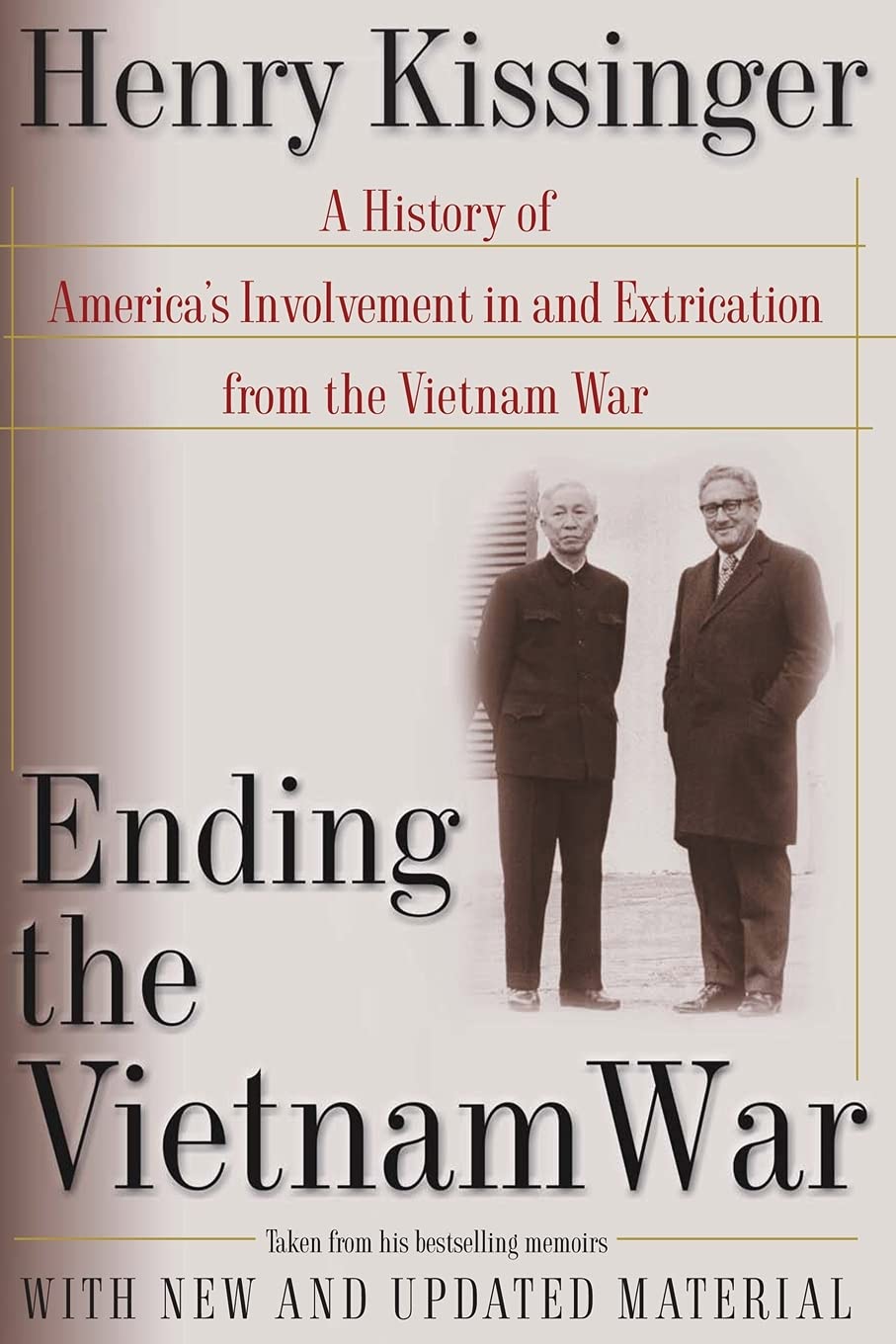
Ending the Vietnam War: A History of America's Involvement in and Extrication From the Vietnam War
Simon and Schuster · 2003 · English · EPUB
Now, for the first time, Kissinger gives us in a single volume an in-depth, inside view of the Vietnam War, personally collected, annotated, revised, and updated from his bestselling memoirs and his book Diplomacy.
Many other authors have written about what they thought happened—or thought should have happened—in Vietnam, but it was Henry Kissinger who was there at the epicenter, involved in every decision from the long, frustrating negotiations with the North Vietnamese delegation to America's eventual extrication from the war.
Here, Kissinger writes with firm, precise knowledge, supported by meticulous documentation that includes his own memoranda to and replies from President Nixon. He tells about the tragedy of Cambodia, the collateral negotiations with the Soviet Union and the People's Republic of China, the disagreements within the Nixon and Ford administrations, the details of all negotiations in which he was involved, the domestic unrest and protest in the States, and the day-to-day military to diplomatic realities of the war as it reached the White House.
As compelling and exciting as Barbara Tuchman's The Guns of August, Ending the Vietnam War also reveals insights about the bigger-than-life personalities—Johnson, Nixon, de Gaulle, Ho Chi Minh, Brezhnev—who were caught up in a war that forever changed international relations. This is history on a grand scale, and a book of overwhelming importance to the public record.
+3
Henry Kissinger the Complete Memoirs E-book Boxed Set
Simon & Schuster · 2023 · English · EPUB
<B>This e-book box set includes the complete memoirs of Henry Kissinger, detailing his life and work.</B><BR><I>White House Years:</I> One of the most important books to come out of the Nixon Administration, <I>White House Years</I> covers Henry Kissinger's first four years (1969–1973) as Assistant to the President for National Security Affairs.<BR><I>Years of Upheaval: </I>This second volume of Henry Kissinger's monumental memoirs covers his years as President Richard Nixon's Secretary of State (1972–1974), including the ending of the Vietnam War, the 1973 Middle East War and oil embargo, Watergate, and Nixon's resignation. <I>Years of Upheaval</I> opens with Dr. Kissinger being appointed Secretary of State.<BR><I>Years of Renewal: </I>This third and final volume of memoirs completes a major work of contemporary history. The third & final volume begins with the resignation of Nixon and takes the reader through the years of Ford's administration, in which Kissinger... <p><strong>This e-book box set includes the complete memoirs of Henry Kissinger, detailing his life and work.</strong> </p> <p><em>White House Years:</em> One of the most important books to come out of the Nixon Administration, <em>White House Years</em> covers Henry Kissinger’s first four years (1969–1973) as Assistant to the President for National Security Affairs. </p> <p><em>Years of Upheaval:</em> This second volume of Henry Kissinger’s monumental memoirs covers his years as President Richard Nixon’s Secretary of State (1972–1974), including the ending of the Vietnam War, the 1973 Middle East War and oil embargo, Watergate, and Nixon’s resignation. <em>Years of Upheaval</em> opens with Dr. Kissinger being appointed Secretary of State. </p> <p><em>Years of Renewal:</em> This third and final volume of memoirs completes a major work of contemporary history. The third & final volume begins with the resignation of Nixon and takes the reader through the years of Ford's administration, in which Kissinger continued to play a decisive role. <em>Years of Renewal</em> is the triumphant conclusion of a major achievement and a book that will stand the test of time as a historical document of the first rank.</p> <p>**</p>
Leadership: Six Studies in World Strategy
Penguin UK · 2022 · English · EPUB
**An instant** New York Times **bestseller
Henry Kissinger, consummate diplomat and statesman, examines the strategies of six great twentieth-century figures and brings to life a unifying theory of leadership and diplomacy
**
** “An extraordinary book, one that braids together two through lines in the long and distinguished career of former Secretary of State Henry Kissinger...In **Leadership** he presents a fascinating set of historical case studies and political biographies that blend the dance and the dancer, seamlessly.” - James Stavridis, **The Wall Street Journal
**
**“Leaders,” writes Henry Kissinger in this compelling book, “think and act at the intersection of two axes: the first, between the past and the future; the second, between the abiding values and aspirations of those they lead. They must balance what they know, which is necessarily drawn from the past, with what they intuit about the future, which is inherently conjectural and uncertain. It is this intuitive grasp of direction that enables leaders to set objectives and lay down a strategy.”
In *Leadership* , Kissinger analyses the lives of six extraordinary leaders through the distinctive strategies of statecraft, which he believes they embodied. After the Second World War, Konrad Adenauer brought defeated and morally bankrupt Germany back into the community of nations by what Kissinger calls “the strategy of humility.” Charles de Gaulle set France beside the victorious Allies and renewed its historic grandeur by “the strategy of will.” During the Cold War, Richard Nixon gave geostrategic advantage to the United States by “the strategy of equilibrium.” After twenty-five years of conflict, Anwar Sadat brought a vision of peace to the Middle East by a “strategy of transcendence.” Against the odds, Lee Kuan Yew created a powerhouse city-state, Singapore, by “the strategy of excellence.” And, though Britain was known as “the sick man of Europe” when Margaret Thatcher came to power, she renewed her country’s morale and international position by “the strategy of conviction.”
To each of these studies, Kissinger brings historical perception, public experience and—because he knew each of the subjects and participated in many of the events he describes—personal knowledge. *Leadership* is enriched by insights and judgements that only Kissinger could make and concludes with his reflections on world order and the indispensability of leadership today.
### Review
“An extraordinary book, one that braids together two through lines in the long and distinguished career of former Secretary of State Henry Kissinger. The first is grand strategy: No practical geopolitical thinker has more assuredly mastered the way the modern global system works or how nations use the tools of statecraft to bend an often-resistant world to their will. But Mr. Kissinger is also an astute observer of the personal element in strategy—the art and science of leadership, or how, on the executive level, ‘decisions [are] made, trust earned, promises kept, a way forward proposed.’ In *Leadership* he presents a fascinating set of historical case studies and political biographies that blend the dance and the dancer, seamlessly.” — **James Stavridis,** The Wall Street Journal
“Although Kissinger, now aged 99, has not held office since 1977, he has advised virtually every US president since Nixon. . . . Elder statesman is an overused term but Kissinger is the genuine article, and worth listening to.” —Financial Times
“A must read. . . . [Kissinger] continues to contribute to our understanding of the world. His books—including this one—will hopefully be read well into the future. Indeed, our present and future leaders would benefit from reading all of Kissinger’s books. They are timeless.” —New York Journal of Books
Kissinger’s combination of historical awareness, personal familiarity with the leaders, and diplomatic experience provides for a cogent read on the iconic statesmen of the Cold War era.” —The New Criterion
“Kissinger fulfills expectations with a reflective, contextual analysis of 20th century political leaders he knew. . . . Recommended for Kissinger’s distinctive perspectives imbedded in scholarly, readable prose.” **—** Library Journal **(starred review)**
“One of America’s most legendary diplomats finds the soul in statecraft in these enlightening sketches of world leaders. . . . Kissinger infuses his lucid policy analyses with colorful firsthand observations. . . . Kissinger’s portraits of politicians spinning weakness and defeat into renewed strength are captivating. This is a vital study of power in action.” **—** Publishers Weekly
### About the Author
**Henry Kissinger** served in the US Army during the Second World War and subsequently held teaching posts in history and government at Harvard University for twenty years. He served as national security advisor and secretary of state under Richard Nixon and Gerald Ford, and has advised many other American presidents on foreign policy. He received the 1973 Nobel Peace Prize, the Presidential Medal of Freedom, and the Medal of Liberty, among other awards. He was the author of numerous books and articles on foreign policy and diplomacy, including most recently *Leadership* , *On China,* and *World Order*. He served as chairman of Kissinger Associates, Inc., an international consulting firm. He died in 2023.
### Excerpt. © Reprinted by permission. All rights reserved.
1
Konrad Adenauer:
The Strategy of Humility
The Necessity of Renewal
In January 1943, at the Casablanca Conference, the Allies proclaimed that they would accept nothing less than the 'unconditional surrender' of the Axis powers. US President Franklin Delano Roosevelt, who was the driving force behind the announcement, sought to deprive any successor government to Hitler of the ability to claim that it had been deluded into surrender by unfulfilled promises. Germany's complete military defeat, together with its total loss of moral and international legitimacy, led inexorably to the progressive disintegration of the German civil structure.
I observed this process as part of the 84th Infantry Division of the US army as it moved from the German border near the industrial Ruhr territory to the Elbe River near Magdeburg - just 100 miles away from the then-raging Battle of Berlin. As the division was crossing the German border, I was transferred to a unit responsible for security and prevention of the guerrilla activity that Hitler had ordered.
For a person like me, whose family had fled the small Bavarian city of FŸrth six years earlier to escape racial persecution, no greater contrast with the Germany of my youth could have been imagined. Then, Hitler had just annexed Austria and was in the process of dismembering Czechoslovakia. The dominant attitude of the German people verged on the overbearing.
Now, white sheets hung from many windows to signify the surrender of the population. The Germans, who a few years earlier had celebrated the prospect of dominating Europe from the English Channel to the Volga River, were cowed and bewildered. Thousands of displaced persons - deported from Eastern Europe as forced labor during the war - crowded the streets in quest of food and shelter and the possibility of returning home.
It was a desperate period in German history. Food shortages were severe. Many starved, and infant mortality was twice that of the rest of Western Europe. The established exchange of goods and services collapsed; black markets took its place. Mail service ranged from impaired to nonexistent. Rail service was sporadic and transport by road made extremely difficult by the ravages of war and the shortage of gasoline.
In the spring of 1945, the task of occupying forces was to institute some kind of civil order until trained military government personnel could replace combat troops. This occurred around the time of the Potsdam conference in July and August (of Churchill/Attlee, Truman and Stalin). At that summit, the Allies divided Germany into four occupation zones: for the United States, a southern portion containing Bavaria; for Britain, the industrial northern Rhineland and Ruhr Valley; for France, the southern Rhineland and territory along the Alsatian border; and for the Soviets, a zone running from the Elbe River to the Oder-Neisse Line, which formed the new Polish frontier, reducing prewar German territory by nearly a quarter. The three Western zones were each placed under the jurisdiction of a senior official of the occupying powers with the title of high commissioner.
German civil governance, once demonstrably efficient and unchallengeable, had come to an end. Ultimate authority was now exercised by occupation forces down to the county (Kreis) level. These forces maintained order, but it took the better part of eighteen months for communications to be restored to predictable levels. During the winter of 1945-6, fuel shortages obliged even Konrad Adenauer, who was to become chancellor four years later, to sleep in a heavy overcoat.
Occupied Germany carried not only the burden of its immediate past but also of the complexity of its history. In the seventy-four years since unification, Germany had been governed successively as a monarchy, a republic and a totalitarian state. By the end of the war, the only memory of stable governance harked back to unified Germany's beginning, under the chancellorship of Otto von Bismarck (1871-90). From then until the outbreak of the First World War in 1914, the German empire was hounded by what Bismarck would call the 'nightmare' of hostile external coalitions provoked into existence by Germany's military potential and intransigent rhetoric. Because unified Germany was stronger than any of the many states surrounding it and more populous than any save Russia, its growing and potentially dominant power turned into the permanent security challenge of Europe.
After the First World War, the newly established Weimar Republic was impoverished by inflation and economic crises and considered itself abused by the punitive provisions included in the postwar Treaty of Versailles. Under Hitler after 1933, Germany sought to impose its totalitarianism on all of Europe. In short, throughout the first half of the twentieth century, united Germany had been by turns either too strong or too weak for the peace of Europe. By 1945, it had been reduced to its least secure position in Europe and the world since unification.
The task of restoring dignity and legitimacy to this crushed society fell to Konrad Adenauer, who had served as lord mayor (OberbŸrgermeister) of Cologne for sixteen years before being dismissed by Hitler. Adenauer was by his background fortuitously cast for a role that required at once the humility to administer the consequences of unconditional surrender and the strength of character to regain an international standing for his country among the democracies. Born in 1876 - only five years after German unification under Bismarck - Adenauer was for the rest of his life associated with his native city of Cologne, with its towering Gothic cathedral overlooking the Rhine and its history as an important locus in the Hanseatic constellation of mercantile city-states.
As an adult, Adenauer had experienced the unified German state's three post-Bismarck configurations: its truculence under the Kaiser, domestic upheavals under the Weimar Republic, and adventurism under Hitler, culminating in self-destruction and disintegration. In striving to remake a place for his country in a legitimate postwar order, he faced a legacy of global resentment and, at home, the disorientation of a public battered by the long sequence of revolution, world war, genocide, defeat, partition, economic collapse and loss of moral integrity. He chose a course both humble and daring: to confess German iniquities; accept the penalties of defeat and impotence, including the partition of his country; allow the dismantling of its industrial base as war reparations; and seek through submission to build a new European structure within which Germany could become a trusted partner. Germany, he hoped, would become a normal country, though always, he knew, with an abnormal memory.
From Early Life to Internal Exile
Adenauer's father, Johann, once a non-commissioned officer in the Prussian army, was for three decades a clerical civil servant in Cologne. Lacking education beyond mandatory primary school, Johann was determined to provide his children with educational and career opportunities. Adenauer's mother shared this objective; the daughter of a bank clerk, she supplemented Johann's income through needlework. Together, they assiduously prepared young Konrad for school and strove to transmit their Catholic values to him. Cognizance of sin and social responsibility ran as an undercurrent throughout Adenauer's childhood. As a student at the University of Bonn, he achieved a reputation for commitment through his habit of plunging his feet into a bucket of ice water to overcome the fatigue of late-night studies. Adenauer's degree in law and family background of service induced him to join the Cologne civil service in 1904. He was given the title of Beigeordneter, or assistant mayor, with particular responsibility for taxation. In 1909, he was promoted to senior deputy mayor and in 1917 became lord mayor of Cologne.
Mayors of Cologne were typically former civil servants who strove to elevate their conduct above the violent and intensely partisan politics of the era. Adenauer's reputation grew to the extent that, in 1926, there were even discussions in Berlin as to whether he might be drafted as chancellor of a national unity government. The effort fell apart because of the difficulty of finding a nonpartisan alliance, Adenauer's condition for accepting the position.
Adenauer's first conspicuous national conduct occurred in connection with Hitler's designation as chancellor on January 30, 1933. To fortify his position, Hitler called a general election and proposed to the German parliament the so-called Enabling Act, suspending the rule of law and the independence of civil institutions. Adenauer, in the month after Hitler's designation as chancellor, undertook three public demonstrations of opposition. In the Prussian Upper House, to which he belonged ex officio as lord mayor of Cologne, he voted against the Enabling Act. He refused an invitation to welcome Hitler at Cologne airport during the election campaign. And in the week before the election he ordered the removal of Nazi flags from bridges and other public monuments. Adenauer was dismissed from office the week after Hitler's foreordained electoral victory.
After his dismissal, Adenauer appealed for sanctuary to an old school friend who had become the abbot of a Benedictine monastery. It was granted, and in April Adenauer took up residence in Maria Laach Abbey, 50 miles south of Cologne on the Laacher See. There, his main occupation was to immerse himself in two papal encyclicals - promulgated by Popes Leo XIII and Pius XI - which applied Catholic teaching to social and political developments, especially the evolving condition of the modern working class. In these encyclicals, Adenauer encountered doctrines that meshed with his political convictions: emphasizing Christian rather than political identity, condemning communism and socialism, ameliorating class struggle through humility and Christian charity, and ensuring free competition instead of cartel practices.
Adenauer's time at Maria Laach was not to last. While attending a Christmas Mass - which had drawn people from the surrounding area to see and support him - Nazi officials pressured the abbot to evict his admired guest. Adenauer left the following January.
The next decade of his life brought difficulty and instability. There were moments of grave danger, especially after the unsuccessful plot on Hitler's life in July 1944 organized by representatives of the Prussian upper class and including remnants of pre-Nazi political and military life. Hitler's vengeance sought to destroy all these elements. For a while, Adenauer escaped their fate by traveling peripatetically, never staying in one place for more than twenty-four hours. Danger never altered his rejection of Hitler for trampling on the rule of law, which Adenauer considered to be the sine qua non of the modern state. Although a known dissenter, Adenauer had been unwilling to join with anti-regime conspirators, whether civilian or military, largely because he was skeptical of their possibilities of success. On the whole, as one scholar describes it, 'he and his family did their best to live as quietly and inconspicuously as possible'.
Despite his departure from politics, the Nazis eventually imprisoned him. In fall 1944, he spent two months in a prison cell from the window of which he witnessed executions, including that of a sixteen-year-old boy; above him he heard the screams of other inmates as they were tortured.
In the end, his son Max, who was serving in the German army, managed to secure his release. As American tanks entered the Rhineland in February 1945, Adenauer began to think about whether he might find a role in his militarily defeated, morally devastated, economically reeling and politically collapsed country.
The Road to Leadership
Hitler's savage reaction to the July coup in the frenzied final year of the Second World War had decimated the ranks of those who might try to succeed him. Some senior Social Democratic Party politicians had survived the concentration camps - including Adenauer's later rival Kurt Schumacher - and possessed the political stature for the position of chancellor. But they lacked followings large enough to win the public support needed to implement the country's unconditional surrender and its accompanying penalties - preconditions for gaining the confidence of the Western Allies.
In May 1945, the American forces that first occupied Cologne reinstated Adenauer as mayor, but with the transfer of the city to British authority as a result of the Potsdam agreement, tensions arose, and the British dismissed him within a few months. Though he was temporarily excluded from political activity by the occupying power, Adenauer quietly concentrated on building a political base in preparation for the re-emergence of German self-government.
In December 1945, Adenauer attended a meeting to form a new party influenced by both Catholic and Protestant Christianity. Former members of the Catholic Center Party, with which Adenauer had been associated as mayor of Cologne, as well as of the conservative German National People's Party and the liberal German Democratic Party, were in attendance. Many had opposed Hitler, and some had been imprisoned for their resistance. The group lacked a clear political direction and doctrine; indeed, the tone of discussions at this initial meeting was more socialist than classically liberal. In part because of Adenauer's objections, the question of first principles was put aside, and the group simply settled on its name: the Christian Democratic Union.
The following month, Adenauer helped to imbue the CDU with its political philosophy as the party of democracy, social conservatism and European integration, rejecting Germany's recent past as well as totalitarianism in any form. At a January 1946 congress of the CDU's important members in the British occupation zone in Herford, Westphalia, Adenauer elaborated on these principles and consolidated his leadership of the nascent party.
Adenauer's first public speech after the end of the war on March 26, 1946, was a preview of his subsequent political leadership. Criticizing Germany's conduct under Hitler, Adenauer asked an audience of thousands in the severely damaged main hall of the University of Cologne how it was possible that the Nazis had come to power. They had then committed 'great crimes', he said, and the Germans could find their way toward a better future only by coming to terms with their past. Such an effort would be necessary for their country's revival. From this perspective, Germany's attitude after the Second World War needed to be the opposite of its reaction to the First. Instead of indulging in self-pitying nationalism once again, Germany should seek its future within a unifying Europe. Adenauer was proclaiming a strategy of humility.
Tall and seemingly imperturbable, Adenauer tended to speak tersely, though mitigated by the lilting tones of the Rhineland, more conciliatory than Prussian speech, in which, according to Mark Twain, sentences march across conversations like military formations. (The Rhineland had had an autonomous history until it was acquired by Prussia in 1814-15.) At the same time, he exuded vitality and self-assurance. His style was the antithesis of the blaring charismatic quality of the Hitler era and aspired to the serene authority of the pre-First World War generation, which had operated while governed by restraint and shared values.
All of these qualities, together with the standing he had acquired by a decade of ostentatious aloofness from Hitler, made Adenauer the most obvious candidate to lead the new democratic party. But he was not above practical maneuvers to achieve his end. The first CDU meeting was set up with one chair positioned at the head of the table. Adenauer strode up to it and announced, 'I was born on 5 January 1876, so I am probably the oldest person here. If nobody objects, I will regard myself as president by seniority.' That elicited both laughter and acquiescence; from that point on, he would steward the party for over fifteen years.
+8
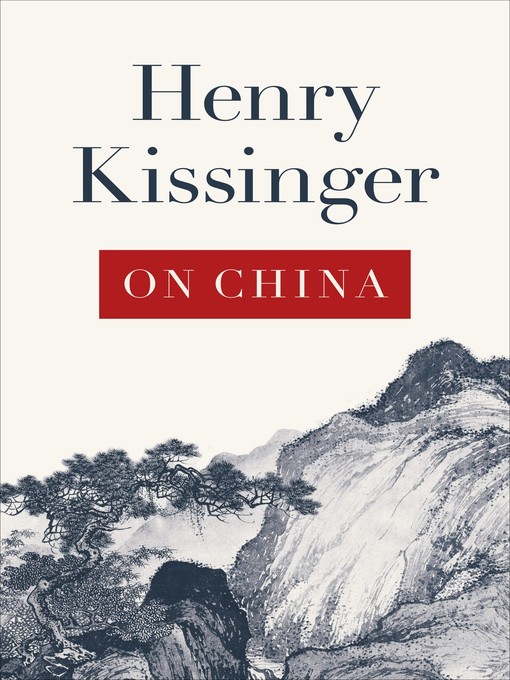
On China
Penguin Adult · 2011 · English · EPUB
<h3>Review</h3><p>"Nobody living can claim greater credit than Mr. Kissinger for America's 1971 opening to Beijing, after more than two decades of estrangement, and for China's subsequent opening to the world. So it's fitting that Mr. Kissinger has now written <em>On China</em>, a fluent, fascinating...book that is part history, part memoir and above all an examination of the premises, methods and aims of Chinese foreign policy." <br />-_The Wall Street Journal_ </p><p>"Fascinating, shrewd... [The book's] portrait of China is informed by Mr. Kissinger's intimate firsthand knowledge of several generations of Chinese leaders. The book deftly traces the rhythms and patterns in Chinese history...even as it explicates the philosophical differences that separate it from the United States." <br />-Michiko Kakutani, <em>The New York Times</em> </p><p>"Henry Kissinger was not only the first official American emissary to Communist China, he persisted in his brokerage with more than 50 trips over four decades, spanning the careers of seven leaders on both sides. Diplomatically speaking, he owns the franchise; and with <em>On China</em>, as he approaches 88, he reflects on his remarkable run. To the degree that Washington and Beijing now know each other, it is in good measure because Kissinger has been assiduously translating for both sides." <br />-Max Frankel, <em>The New York Times Book Review</em> </p><p>"Fascinating... In <em>On China</em>, statesman Henry Kissinger draws on historical records and 40 years of direct interaction with four generations of Chinese leaders to analyze the link between China's ancient past and its present day trajectory. In doing so, the man who helped shape modern East-West relations presents an often unsettling, occasionally hopeful and always compelling accounting of what we're up against." <br />-_The Chicago Sun-Times_ </p><p>"From the eminent elder statesman, an astute appraisal on Chinese diplomacy from ancient times to the fraught present "strategic trust" with the United States. Former Secretary of State Kissinger brings his considerable scholarly knowledge and professional expertise to this chronicle of the complicated evolution and precarious future of Chinese diplomacy with the West. ... Sage words and critical perspective lent by a significant participant in historical events." <br />-_Kirkus Reviews_ (starred review) </p><h3>Product Description</h3><p>In this sweeping and insightful history, Henry Kissinger turns for the first time at book-length to a country he has known intimately for decades, and whose modern relations with the West he helped shape. Drawing on historical records as well as his conversations with Chinese leaders over the past forty years, Kissinger examines how China has approached diplomacy, strategy, and negotiation throughout its history, and reflects on the consequences for the global balance of power in the 21st century. </p><p>Since no other country can claim a more powerful link to its ancient past and classical principles, any attempt to understand China's future world role must begin with an appreciation of its long history. For centuries, China rarely encountered other societies of comparable size and sophistication; it was the "Middle Kingdom," treating the peoples on its periphery as vassal states. At the same time, Chinese statesmen-facing threats of invasion from without, and the contests of competing factions within-developed a canon of strategic thought that prized the virtues of subtlety, patience, and indirection over feats of martial prowess. </p><p>In <em>On China</em>, Kissinger examines key episodes in Chinese foreign policy from the classical era to the present day, with a particular emphasis on the decades since the rise of Mao Zedong. He illuminates the inner workings of Chinese diplomacy during such pivotal events as the initial encounters between China and modern European powers, the formation and breakdown of the Sino-Soviet alliance, the Korean War, Richard Nixon's historic trip to Beijing, and three crises in the Taiwan Straits. Drawing on his extensive personal experience with four generation of Chinese leaders, he brings to life towering figures such as Mao, Zhou Enlai, and Deng Xiaoping, revealing how their different visions have shaped China's modern destiny. </p><p>With his singular vantage on U.S.-China relations, Kissinger traces the evolution of this fraught but crucial relationship over the past 60 years, following its dramatic course from estrangement to strategic partnership to economic interdependence, and toward an uncertain future. With a final chapter on the emerging superpower's 21st-century world role, <em>On China</em> provides an intimate historical perspective on Chinese foreign affairs from one of the premier statesmen of the 20th century. </p> For more than twenty years after the Communist Revolution in 1949, China and most of the western world had no diplomats in each others' capitals and no direct way to communicate. Then, in July 1971, Henry Kissinger arrived secretly in Beijing on a mission which quickly led to the reopening of relations between China and the West and changed the course of post-war history. For the past forty years, Kissinger has maintained close relations with successive generations of Chinese leaders, and has probably been more intimately connected with China at the highest level than any other western figure. This book distils his unique experience and long study of the 'Middle Kingdom', examining China's history from the classical era to the present day, and explaining why it has taken the extraordinary course that it has. The book concentrates on the decades since 1949, presenting brilliantly drawn portraits of Mao Zedong, Zhou Enlai, Deng Xiaoping and other Chinese leaders, and reproducing verbatim Kissinger's conversations with each of them. But Kissinger's eye rarely leaves the long continuum of Chinese history: he describes the essence of China's approach to diplomacy, strategy and negotiation, and the remarkable ways in which Communist-era statesmen have drawn on methods honed over millennia. At the end of the book, Kissinger reflects on these attitudes for our own era of economic interdependence and an uncertain future. On China is written with great authority, complete accessibility and with many wider reflections on statecraft and diplomacy distilled from years of experience. At a moment when the rest of the world is thinking about China more than ever before, this timely book offers insights that no other can.
+1
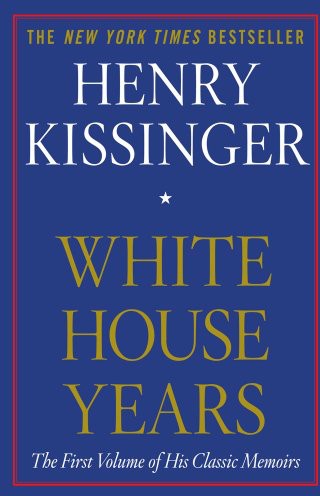
White House Years
Simon & Schuster · 2011 · English · EPUB
<h3>Product Description</h3><p>Kissinger’s invaluable and lasting contribution to the history of this crucial time. One of the most important books to come out of the Nixon Administration, <em>White House Years </em>covers Henry Kissinger’s first four years (1969–1973) as Assistant to the President for National Security Affairs. </p><p>Among the momentous events recounted in this first volume of Kissinger’s timeless memoirs are his secret negotiations with the North Vietnamese in Paris to end the Vietnam War, the Jordan crisis of 1970, the India-Pakistan war of 1971, his back-channel and face-to-face negotiations with Soviet leaders to limit the nuclear arms race, his secret journey to China, and the historic summit meetings in Moscow and Beijing in 1972. He covers major controversies of the period, including events in Laos and Cambodia, his “peace is at hand” press conference and the breakdown of talks with the North Vietnamese that led to the Christmas bombing in 1972. Throughout, Kissinger presents candid portraits of world leaders, including Richard Nixon, Anwar Sadat, Golda Meir, Jordan’s King Hussein, Leonid Brezhnev, Chairman Mao and Chou En-lai, Willy Brandt, Charles de Gaulle, and many others. </p><p><em>White House Years </em>is Henry Kissinger’s invaluable and lasting contribution to the history of this crucial time. </p><h3>About the Author</h3><p>Henry Kissinger was the fifty-sixth Secretary of State. Born in Germany, Dr. Kissinger came to the United States in 1938 and was naturalized a U.S. citizen in 1943. He served in the U.S. Army and attended Harvard University, where he later became a member of the faculty. Among the awards he has received are the Nobel Peace Prize, the Presidential Medal of Freedom, and the Medal of Liberty. Dr. Kissinger is currently Chairman of Kissinger Associates, Inc., an international consulting firm. </p>
+7
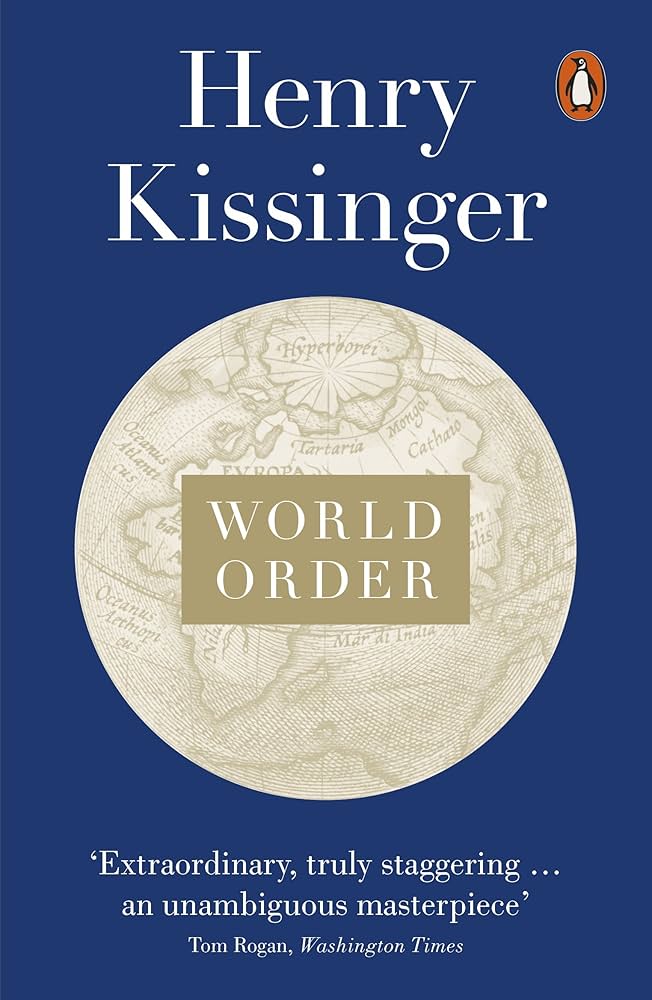
World Order: Reflections on the Character of Nations and the Course of History
Penguin Books Limited · 2014 · English · EPUB
As Henry Kissinger observes in this magisterial book, there has never been a true world order. For most of history, civilizations have defined their own concepts of order, each one envisioning its distinct principles as universally relevant. Now, as international affairs take place on a global basis, these historic concepts of world order are meeting. Every region participates in questions of high policy in every other, often instantaneously - yet there is no consensus among the major actors about the rules and limits guiding this process, or its ultimate destination. The result is mounting tension.
Blending historical insight with prognostication, World Order is a meditation from one of our era's most prominent diplomats on the 21st century's ultimate challenge: how to build a shared international order in a world of divergent historic perspectives, violent conflict, proliferating technology and ideological extremism.
+7
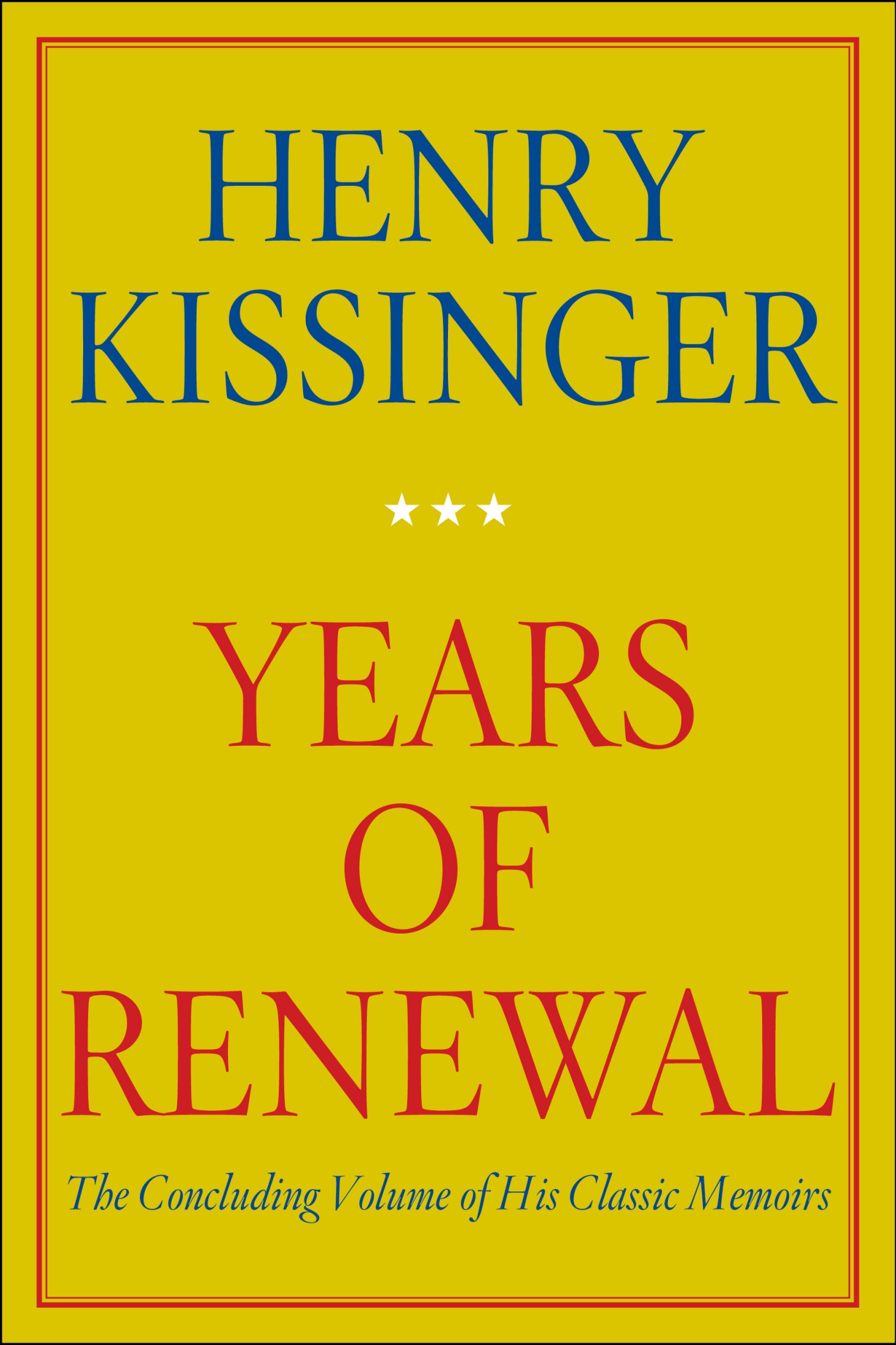
Years of Renewal
Simon and Schuster · 2011 · English · EPUB
The eagerly awaited third and final volume of memoir from the best-known American diplomats of the twentieth century—Henry Kissinger, a major figure in world history, winner of the Nobel Peace Prize, and arguably one of the most brilliant minds ever placed at the service of American foreign policy, as well as one of the shrewdest, best-informed, and most articulate men ever to occupy a position of power in Washington.
This is at once an important historical document and a brilliantly told narrative of almost Shakespearean intensity, full of startling insights, unusual (and often unsparing) candor, and a sweeping sense of history. Years of Renewal is the triumphant conclusion of a major achievement and a book that will stand the test of time as a historical document of the first rank.
+3