← Back to Authors

Featured Author
Paul Auster
American • Novelist • Writer • Poet
24 books in Langa
Domains
Literature
Books in Langa Library
24 books available from this author.
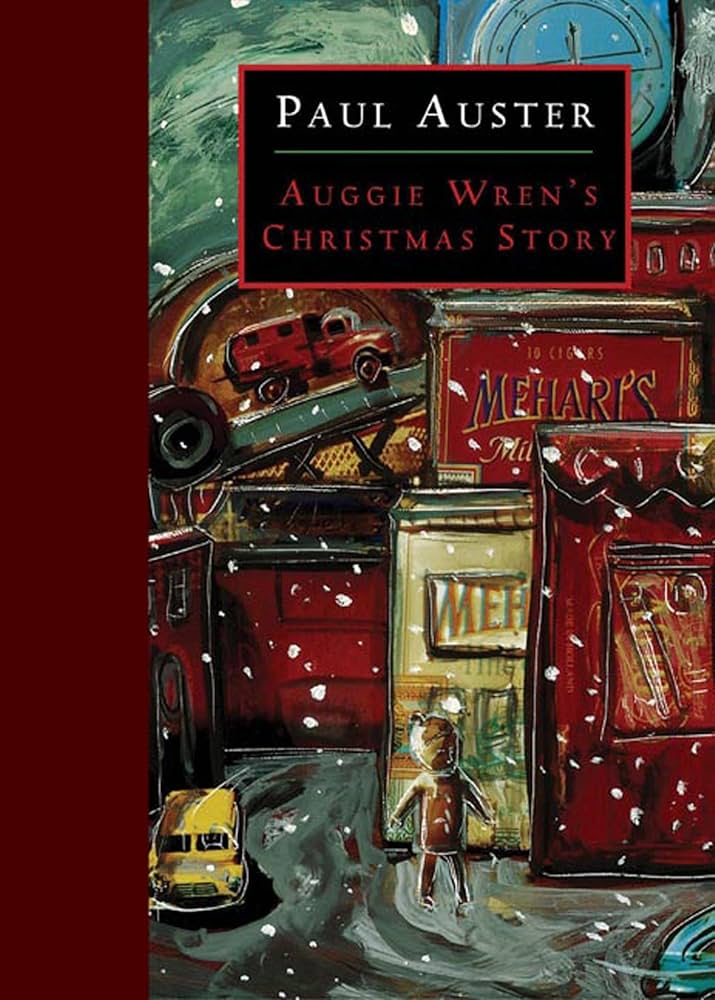
Auggie Wren's Christmas Story
Henry Holt and Company · 2014 · English · EPUB
A timeless, utterly charming Christmas fable, beautifully illustrated and destined to become a classicWhen Paul Auster was asked by The New York Times to write a Christmas story for the Op-Ed page, the result, "Auggie Wren's Christmas Story," led to Auster's collaboration on a film adaptation, Smoke. Now the story has found yet another life in this enchanting illustrated edition with Argentine artist Isol.
It begins with a writer's dilemma: he's been asked by The New York Times to write a story that will appear in the paper on Christmas morning. The writer agrees, but he has a problem: How to write an unsentimental Christmas story? He unburdens himself to his friend at his local cigar shop, a colorful character named Auggie Wren. "A Christmas story? Is that all?" Auggie counters. "If you buy me lunch, my friend, I'll tell you the best Christmas story you ever heard. And I guarantee every word of it is true.
"And an unconventional story it is, involving a lost wallet, a blind woman, and a Christmas dinner. Everything gets turned upside down. What's stealing? What's giving? What's a lie? What's the truth? It's vintage Auster, and pure pleasure: a truly unsentimental but completely affecting tale.
Collected Prose
Macmillan + ORM · 2010 · English · EPUB
The expanded edition of an essential collection of writings, essays, and interviews from Paul Auster, one of the finest thinkers and stylists in contemporary letters. The celebrated author of The New York Trilogy, The Book of Illusions, and 4 3 2 1 presents here a highly personal collection of essays, prefaces, true stories, autobiographical writings, and collaborations with artists, as well as occasional pieces written for magazines and newspapers, including his "breathtaking memoir" (Financial Times), The Invention of Solitude. Ranging in subject from Sir Walter Raleigh to Kafka, Nathaniel Hawthorne to the high-wire artist Philippe Petit, conceptual artist Sophie Calle to Auster's own typewriter, the World Trade Center catastrophe to his beloved New York City itself, Collected Prose records the passions and insights of a writer who "will be remembered as one of the great writers of our time" (San Francisco Chronicle).
+1
Day/Night: Travels in the Scriptorium and Man in the Dark
Macmillan · 2013 · English · EPUB
For the first time in one volume, two existential classics by internationally bestselling novelist Paul Auster. Day/Night brings together two metaphysical novels that mirror each other and are meant to be read in tandem: two men, each confined to a room, one suddenly alert to his existence, the other desperate to escape into sleep. In Travels in the Scriptorium, elderly Mr. Blank wakes in an unfamiliar cell, with no memory of who he is or how he got there. He must use the few objects he finds and the information imparted by the day's string of visitors to cobble together an idea of his identity. In Man in the Dark, another old man, August Brill, suffering from insomnia, struggles to push away thoughts of painful personal losses by imagining what might have been. Who are we? What is real and not real? How does the political intersect with the personal? After great loss, why are some of us unable to go on? "One of America's greats" (Time Out – Chicago) and "a descendant of Kafka and Borges," (Booklist) Auster explores in these two small masterpieces some of our most pressing philosophical concerns.
+3
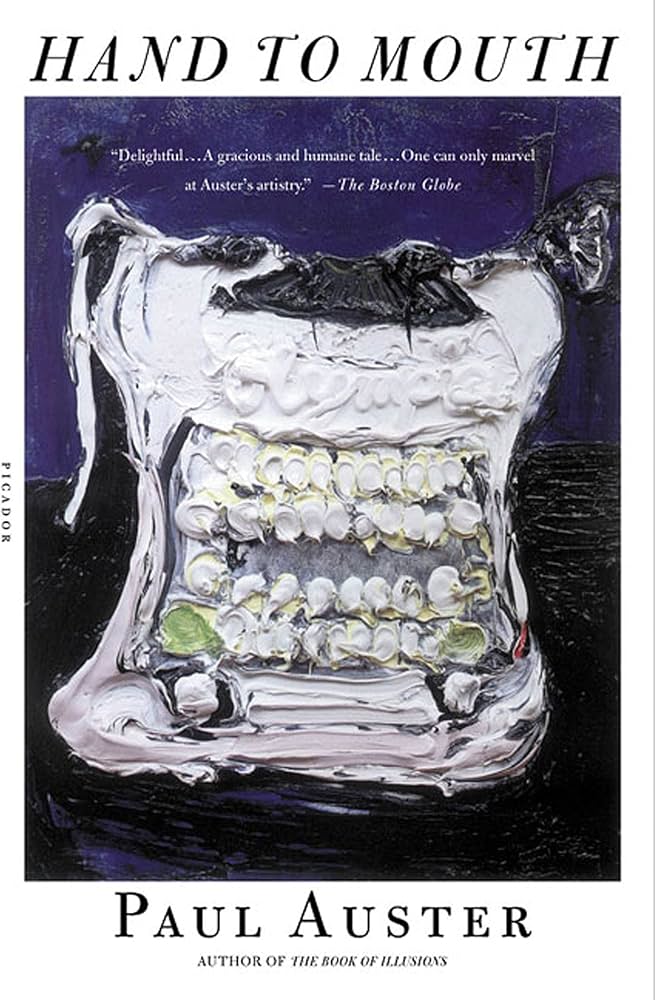
Hand to Mouth
Faber & Faber · 2014 · English · EPUB
'One of the most original and audacious autobiographies ever written by a writer.' Le Monde Hand to Mouth tells the story of the young Paul Auster's struggle to stay afloat. By turns poignant and comic, Auster's memoir is essentially a book about money - and what it means not to have it. From one odd job to the next, from one failed scheme to another, Auster investigates his own stubborn compulsion to make art and, in the process, treats us to a series of remarkable adventures and unforgettable encounters. Hand to Mouth is essential reading for anyone interested in Paul Auster, in the figure of the struggling artist, in the nature of poverty, or in baseball.
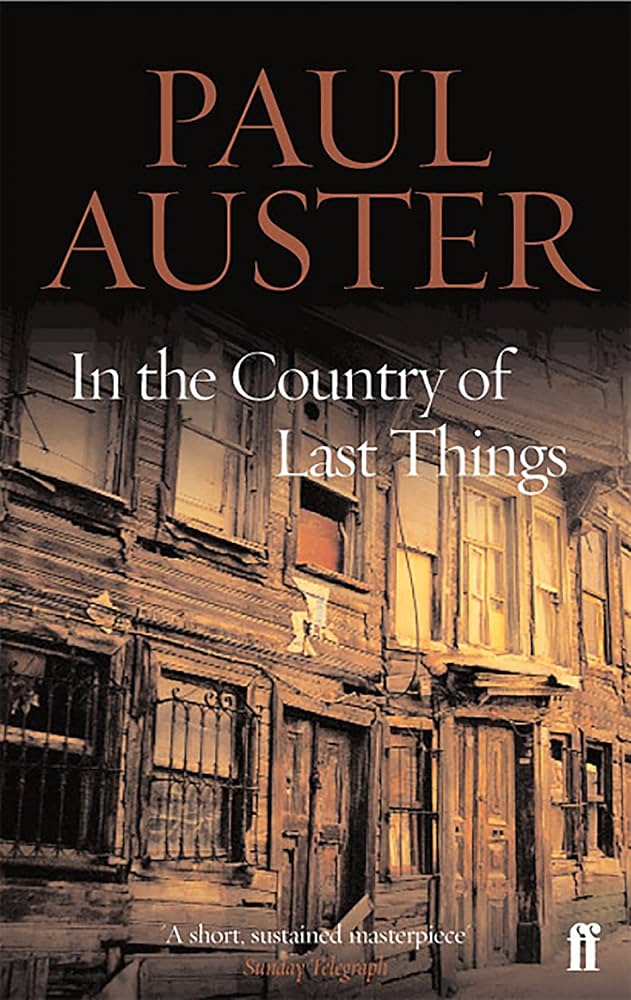
In the Country of Last Things
Penguin · 1988 · English · EPUB
From New York Times bestselling author Paul Auster, a dystopian, post-apocalyptic novel “reminiscent in many ways of Orwell’s 1984” (The Atlanta Journal-Constitution). “Powerful, original, imaginative, and handled with artistry . . . One of the better modern attempts at describing hell.”—The Washington Post Book World In a distant and unsettling future, the masses are homeless, theft is so rampant it is no longer a crime, and death—by arranging either a suicide or an assassination—is the only way out. It is in these circumstances that Anna Blume begins her search for her brother, a one-time journalist who may or may not still be alive, in an unnamed city whose destitute inhabitants dig through garbage and elusive government provides nothing but corruption. In her struggle to survive, Anna becomes a scavenger of objects from the past to sell for food and shelter. But she will also find friendship—and even love—in this devastated world. In the Country of Last Things is a tour de force that reaffirms Paul Auster’s stature as one of the most accomplished and singular talents of his generation.
+1
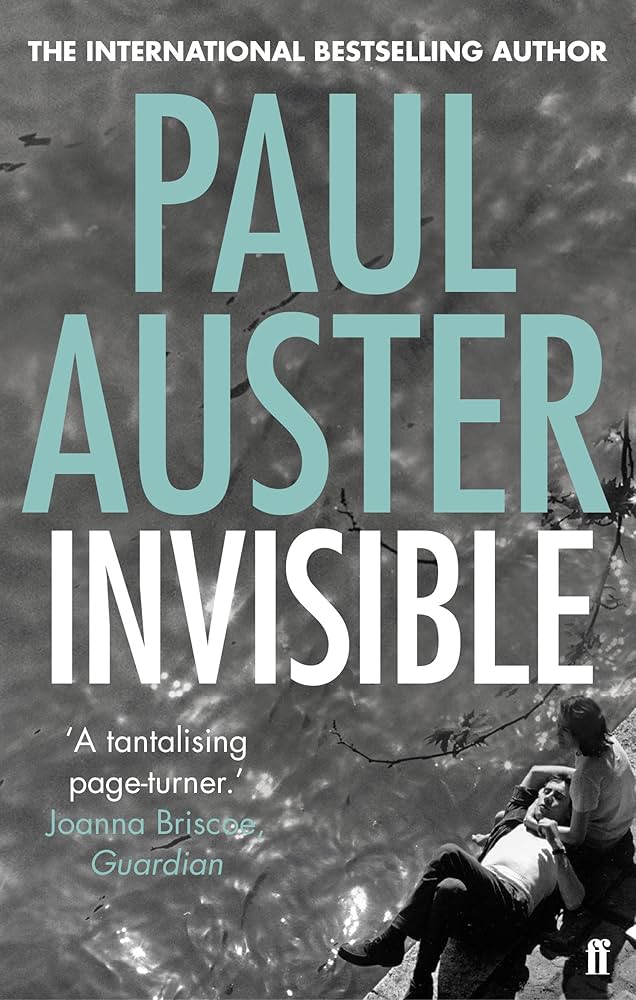
Invisible
Henry Holt and Company · 2009 · English · EPUB
“One of America’s greatest novelists” dazzlingly reinvents the coming-of-age story in his most passionate and surprising book to dateSinuously constructed in four interlocking parts, Paul Auster’s fifteenth novel opens in New York City in the spring of 1967, when twenty-year-old Adam Walker, an aspiring poet and student at Columbia University, meets the enigmatic Frenchman Rudolf Born and his silent and seductive girfriend, Margot. Before long, Walker finds himself caught in a perverse triangle that leads to a sudden, shocking act of violence that will alter the course of his life.
Three different narrators tell the story of Invisible, a novel that travels in time from 1967 to 2007 and moves from Morningside Heights, to the Left Bank of Paris, to a remote island in the Caribbean. It is a book of youthful rage, unbridled sexual hunger, and a relentless quest for justice. With uncompromising insight, Auster takes us into the shadowy borderland between truth and memory, between authorship and identity, to produce a work of unforgettable power that confirms his reputation as “one of America’s most spectacularly inventive writers.”
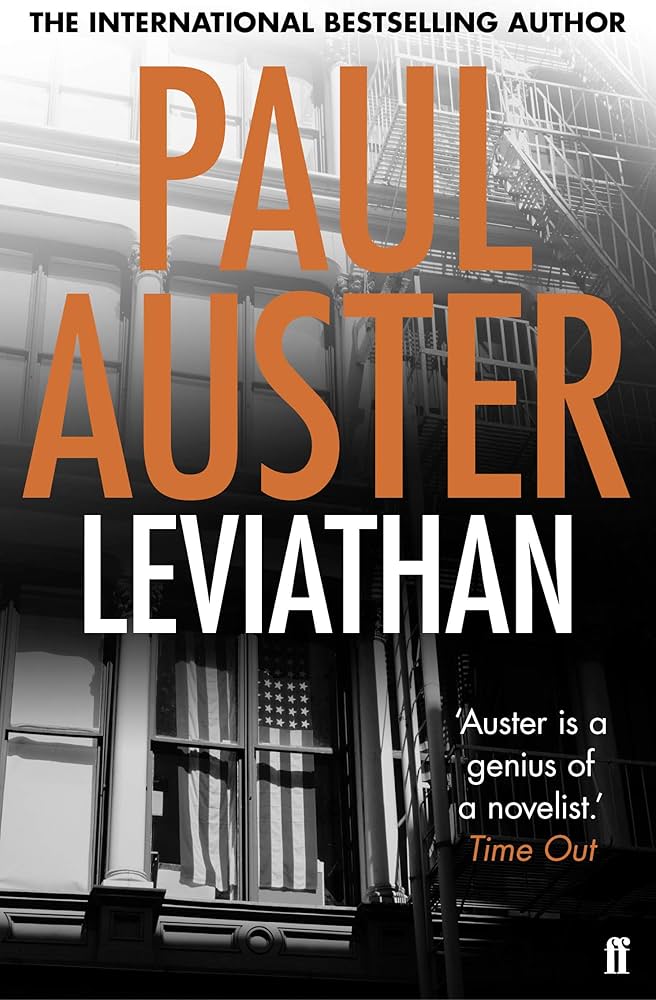
Leviathan
Penguin · 1993 · English · EPUB
NATIONAL BESTSELLER • A “compelling” (Los Angeles Times) novel of friendship, betrayal, estrangement, and the unpredictable intrusions of violence in the everyday—from “a literary original who is perfecting a genre of his own” (The Wall Street Journal) “Rich and complex . . . with fully fleshed characters, a fast-paced plot, thematic sophistication, and narrative cunning.”—The Boston Globe“Six days ago, a man blew himself up by the side of a road in northern Wisconsin.” So begins Peter Aaron’s story about his best friend, Benjamin Sachs. Sachs had a marriage Aaron envied, an intelligence he admired, a world he shared. And then suddenly, after a near-fatal fall that might or might not have been intentional, Sachs disappeared. Now Aaron must piece together the life that led to Sach’s death. His sole aim is to tell the truth and preserve it—before those who are investigating the case invent an account of their own. Leviathan is a daring and immensely moving story by an author whom The Times Literary Supplement has called “one of America’s most spectacularly inventive writers.”
+1
Moon Palace
Penguin · 2010 · English · EPUB
A “beautiful and haunting” (San Francisco Chronicle) novel of an orphan’s search for love, for his unknown father, and for the key to the elusive riddle of his fate, from New York Times bestselling author Paul Auster “Auster is a master storyteller . . . Moon Palace shimmers with mysteries.”—The Washington Post Book WorldMarco Stanley Fogg is an orphan, a child of the sixties, a quester tirelessly seeking the key to his past, the answers to the ultimate riddle of his fate. As Marco journeys from the canyons of Manhattan to the deserts of Utah, he encounters a gallery of characters and a series of events as rich and surprising as any in modern fiction. Beginning during the summer that men first walked on the moon, and from there moving backward and forward in time to span three generations, Moon Palace is propelled by coincidence and memory, illuminated by marvelous flights of lyricism and wit. Here is an entertaining and moving novel from an author well known for his breathtaking imagination.
+1
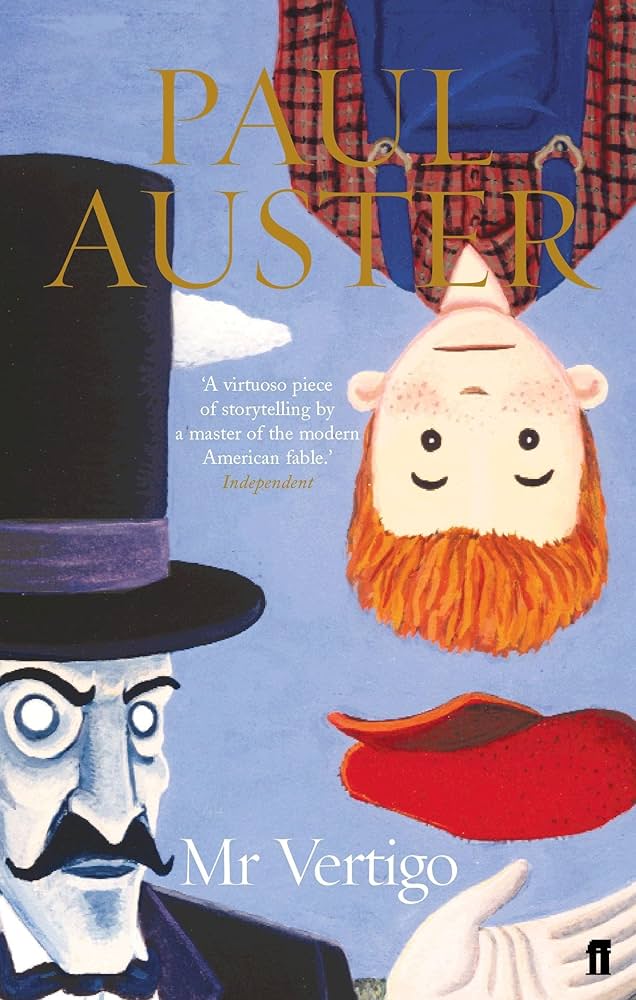
Mr. Vertigo
Penguin · 1995 · English · EPUB
“Nobody—nobody—has produced a better parable about the condition of the national consciousness at century’s end.”—The Boston Globe An enduringly brilliant novel of trial and triumph set in America in the 1920s, from New York Times bestselling author Paul Auster“A charmer pure and simple . . . Nothing less than the story of America itself.”—Jonathan Yardley, The Washington Post Paul Auster’s dazzling, picaresque novel is the story of Walter Claireborne Rawley, renowned nationwide as “Walt the Wonder Boy.” It is the late 1920s, the era of Babe Ruth, Charles Lindbergh, and Al Capone, and Walt is a Saint Louis orphan rescued from the streets by the mysterious Hungarian Master Yehudi, who teaches Walt to walk on air. The vaudeville act that results from Walt’s marvelous new ability takes them across a vast and vibrant country, where they meet and fall prey to sinners, thieves, and villains, from the Kansas Klu Klux Klan to the Chicago mob. Walt’s rise to fame and fortune mirrors America’s own coming of age, and his resilience, like that of the nation, is challenged over and again.
+1
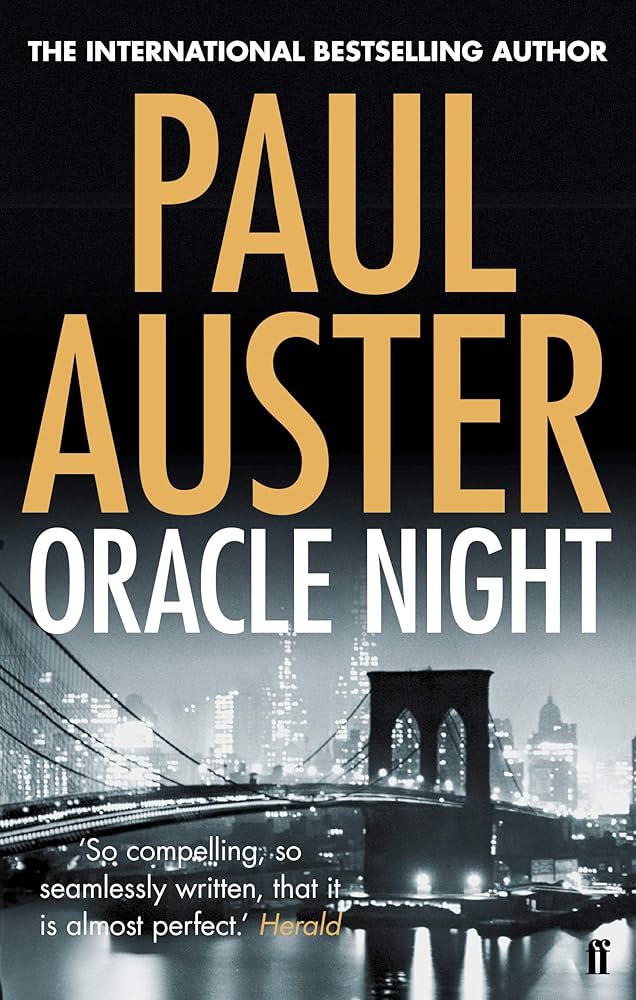
Oracle Night: A Novel
H. Holt · 2004 · English · EPUB
Several months into his recovery from a near-fatal illness, thirty-four-year-old novelist Sidney Orr enters a stationary shop in the Cobble Hill section of Brooklyn and buys a blue notebook. It is September 18, 1982, and for the next nine days Orr will live under the spell of this blank book, trapped inside a world of eerie premonitions and bewildering events that threaten to destroy his marriage and undermine his faith in reality. A novel that expands to fill volumes in the reader's mind, Oracle Night is a beautifully constructed meditation on time, love, storytelling and the imagination by one of America's boldest and most original writers.
+1
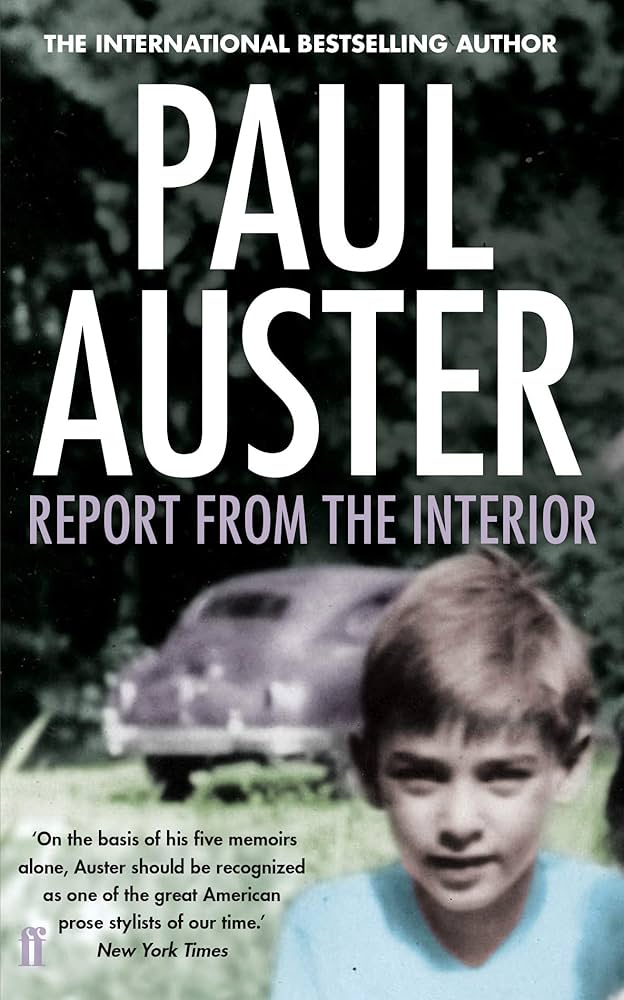
Report From the Interior
Faber & Faber · 2013 · English · EPUB
' In the beginning, everything was alive. The smallest objects were endowed with beating hearts . . .' Having recalled his life through the story of his physical self in Winter Journal, internationally best-selling novelist Paul Auster now remembers the experience of his development from within, through the encounters of his interior self with the outer world, as well as through a selection of the revealing letters he sent to his first wife, acclaimed author Lydia Davis. An impressionistic portrait of a writer coming of age, Report from the Interior moves from Auster's baby's-eye view of the man in the moon to his childhood worship of the movie cowboy Buster Crabbe to the composition of his first poem at the age of nine to his dawning awareness of the injustices of American life. Report from the Interior charts Auster's moral, political and intellectual journey as he inches his way toward adulthood through the post-war fifties and into the turbulent 1960s. Paul Auster evokes the sounds, smells, and tactile sensations that marked his early life - and the many images that came at him, including moving images (he adored cartoons, he was in love with films), until, at its unique climax, the book breaks away from prose into pure imagery: the final section of Report from the Interior recapitulates the first three parts, told in an album of pictures. At once a story of the times and the story of the emerging consciousness of a renowned literary artist, this four-part work answers the challenge of autobiography in ways rarely, if ever, seen before.
+1
Sunset Park
Macmillan · 2010 · English · EPUB
SUMMARY: Luminous, passionate, expansive, an emotional tour de force Sunset Park follows the hopes and fears of a cast of unforgettable characters brought together by the mysterious Miles Heller during the dark months of the 2008 economic collapse.An enigmatic young man employed as a trash-out worker in southern Florida obsessively photographing thousands of abandoned objects left behind by the evicted families.A group of young people squatting in an apartment in Sunset Park, Brooklyn.The Hospital for Broken Things, which specializes in repairing the artifacts of a vanished world.William Wyler's 1946 classic The Best Years of Our Lives.A celebrated actress preparing to return to Broadway.An independent publisher desperately trying to save his business and his marriage.These are just some of the elements Auster magically weaves together in this immensely moving novel about contemporary America and its ghosts. Sunset Park is a surprising departure that confirms Paul Auster as one of our greatest living writers. SUMMARY: Luminous, passionate, expansive, an emotional tour de force Sunset Park follows the hopes and fears of a cast of unforgettable characters brought together by the mysterious Miles Heller during the dark months of the 2008 economic collapse.An enigmatic young man employed as a trash-out worker in southern Florida obsessively photographing thousands of abandoned objects left behind by the evicted families.A group of young people squatting in an apartment in Sunset Park, Brooklyn.The Hospital for Broken Things, which specializes in repairing the artifacts of a vanished world.William Wyler's 1946 classic The Best Years of Our Lives.A celebrated actress preparing to return to Broadway.An independent publisher desperately trying to save his business and his marriage.These are just some of the elements Auster magically weaves together in this immensely moving novel about contemporary America and its ghosts. Sunset Park is a surprising departure that confirms Paul Auster as one of our greatest living writers.
+3
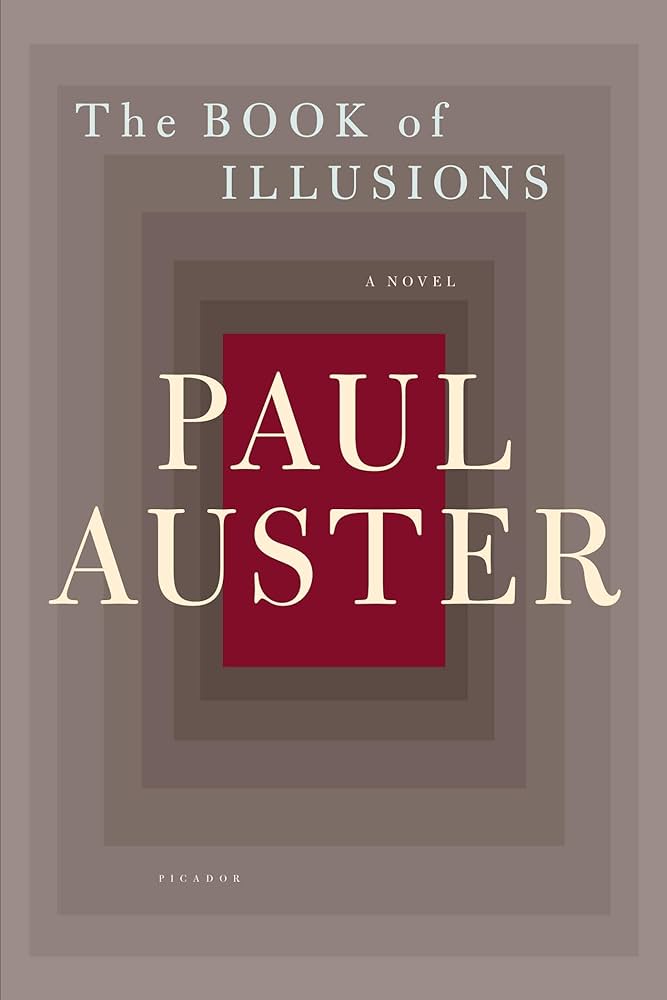
The Book of Illusions
Faber & Faber · 2008 · English · EPUB
The Book of Illusions, written with breath-taking urgency and precision, plunges the reader into a universe in which the comic and the tragic, the real and the imagined, and the violent and the tender dissolve into one another. One man's obsession with the mysterious life of a silent film star takes him on a journey into a shadow-world of lies, illusions, and unexpected love. After losing his wife and young sons in a plane crash, Vermont professor David Zimmer spends his waking hours mired in grief. Then, watching television one night, he stumbles upon a lost film by silent comedian Hector Mann, and remembers how to laugh . . . Mann was a comic genius, in trademark white suit and fluttering black moustache. But one morning in 1929 he walked out of his house and was never heard from again. Zimmer's obsession with Mann drives him to publish a study of his work; whereupon he receives a letter postmarked New Mexico, supposedly written by Mann's wife, and inviting him to visit the great Mann himself. Can Hector Mann be alive? Zimmer cannot decide - until a strange woman appears on his doorstep and makes the decision for him, changing his life forever. 'A nearly flawless work . . . Auster will be remembered as one of the great writers of our time.' San Francisco Chronicle 'Auster's elegant, finely calibrated The Book of Illusions is a haunting feat of intellectual gamesmanship.' TheNew York Times
+1
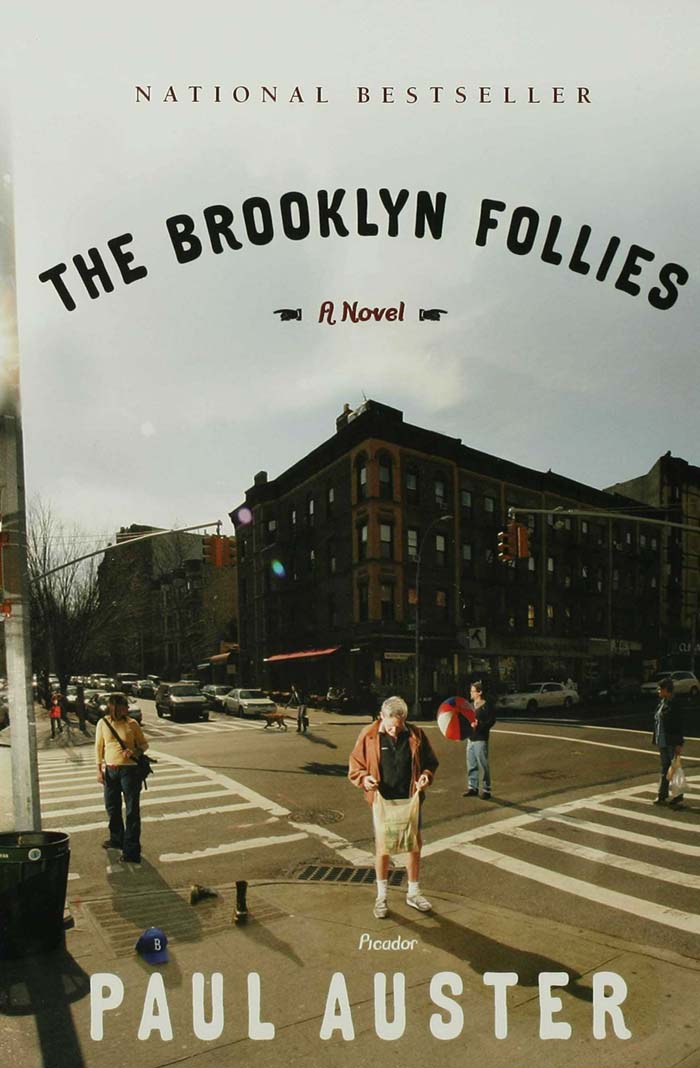
The Brooklyn Follies
Henry Holt and Co. · 2005 · English · EPUB
<p> <p>From the bestselling author of <I>Oracle Night</I> and <I>The Book of Illusions</I>, an exhilarating, whirlwind tale of one man's accidental redemption<BR><BR> Nathan Glass has come to Brooklyn to die. Divorced, estranged from his only daughter, the retired life insurance salesman seeks only solitude and anonymity. Then Nathan finds his long-lost nephew, Tom Wood, working in a local bookstore—a far cry from the brilliant academic career he'd begun when Nathan saw him last. Tom's boss is the charismatic Harry Brightman, whom fate has also brought to the "ancient kingdom of Brooklyn, New York." Through Tom and Harry, Nathan's world gradually broadens to include a new set of acquaintances—not to mention a stray relative or two—and leads him to a reckoning with his past. <BR> Among the many twists in the delicious plot are a scam involving a forgery of the first page of <I>The Scarlet Letter</I>, a disturbing revelation that takes place in a sperm bank, and an... <div><h3>From Publishers Weekly</h3><p><em>Starred Review.</em> Nathan Glass, a retired life insurance salesman estranged from his family and facing an iffy cancer prognosis, is "looking for a quiet place to die. Someone recommended Brooklyn." What he finds, though, in this ebullient novel by Brooklyn bard Auster (_Oracle Night_), is a vital, big-hearted borough brimming with great characters. These include Nathan's nephew, Tom, a grad student turned spiritually questing cab driver; Tom's serenely silent nine-year-old niece, who shows up on Tom's doorstep without her unstable mom; and a flamboyant book dealer hatching a scheme to sell a fraudulent manuscript of <em>The Scarlet Letter</em>. As Nathan recovers his soul through immersion in their lives, Auster meditates on the theme of sanctuary in American literature, from Hawthorne to Poe to Thoreau, infusing the novel's picaresque with touches of romanticism, Southern gothic and utopian yearning. But the book's presiding spirit is Brooklyn's first bard, Walt Whitman, as Auster embraces the borough's multitudes—neighborhood characters, drag queens, intellectuals manqué, greasy-spoon waitresses, urbane bourgeoisie—while singing odes to moonrise over the Brooklyn Bridge. Auster's graceful, offhand storytelling carries readers along, with enough shadow to keep the tale this side of schmaltz. The result is an affectionate portrait of the city as the ultimate refuge of the human spirit. <em>(Jan.)</em> <br>Copyright © Reed Business Information, a division of Reed Elsevier Inc. All rights reserved. </p><h3>From The New Yorker</h3><p>After a "sad and ridiculous life" in the suburbs, Nathan Glass retires, gets divorced, and moves to Brooklyn to die. To pass the time, he decides to write an account of mishaps and mistakes, beginning with his own—"The Book of Human Folly." "The tone would be light and farcical throughout," he says, "and my only purpose was to keep myself entertained." Auster seems to have had a similar intent. A chance encounter with a long-lost nephew leads Nathan into an unlikely second act, involving a longer-lost niece, her runaway daughter, and a host of lively Brooklyn caricatures—a gay used-bookstore owner, a tough widow, an H.I.V.-positive drag queen—all in the midst of unlikely second acts themselves. Nathan narrates increasingly absurd events with persistent cheer, a tone mirrored by the blinkered optimism and liberal conviction of pre-9/11 Park Slope; it's a combination that soon seems less hopeful than hollow, and profoundly disengaged.<br>Copyright © 2006 <em>The New Yorker</em></p></div>
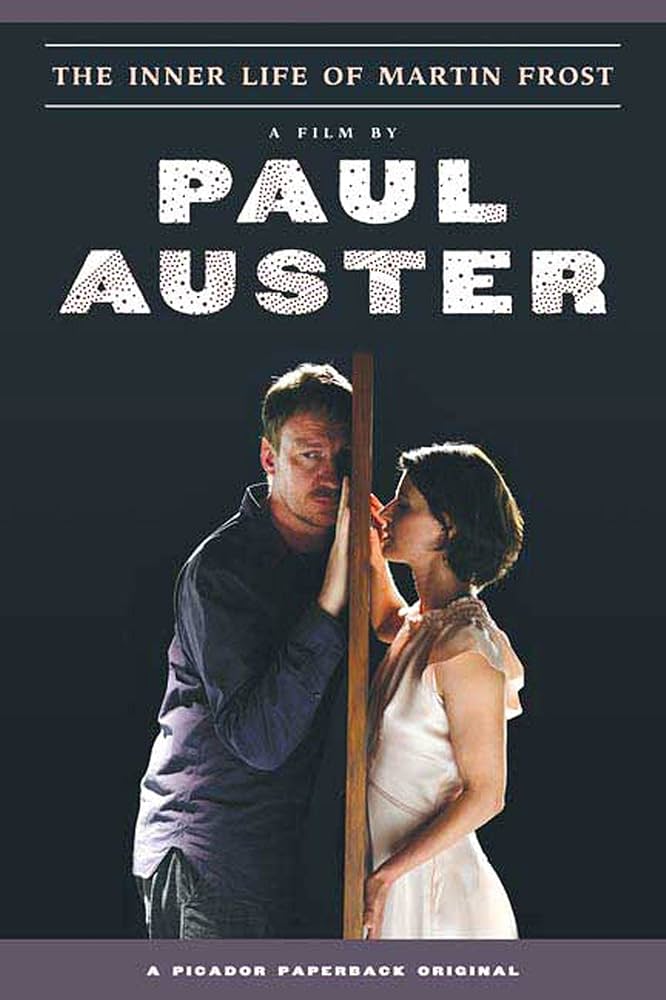
The Inner Life of Martin Frost: A Film
St. Martins Press-3PL · 2007 · English · EPUB
A Picador Paperback Original Written and directed by Paul Auster, the screenplay for The Inner Life of Martin Frost, starring David Thewlis, Irene Jacob, Michael Imperioli, and Sophie Auster. From The New York Trilogy to The Book of Illusions and 4 3 2 1, Paul Auster, one of America's most spectacularly inventive novelists, established him as an award-winning filmmaker as well, with Smoke, Blue in the Face, and Lulu on the Bridge. Here, The Inner Life of Martin Frost brings together his talents as a novelist and filmmaker with a work that is tender, moving, and funny. Searching for solitude, the writer Martin Frost borrows a friend's country house. Waking up one morning, he is shocked to find a nearly naked young woman beside him in bed. She also has a key to the house and claims to be the owner's niece. Martin's initial annoyance at Claire's intrusion is rapidly forgotten as he falls passionately in love with her. Even when it is revealed that Claire is not who she claims to be, their idyllic passion continues—until she suddenly falls ill. The Inner Life of Martin Frost is based on an imaginary film that appears in the author's novel The Book of Illusions. Unlike the fictional Hector Spelling's "lost" 1946 black and white film of the same title, Auster's luminous celebration of the mysteries of love, art, and the imagination was released in 2007.
+7
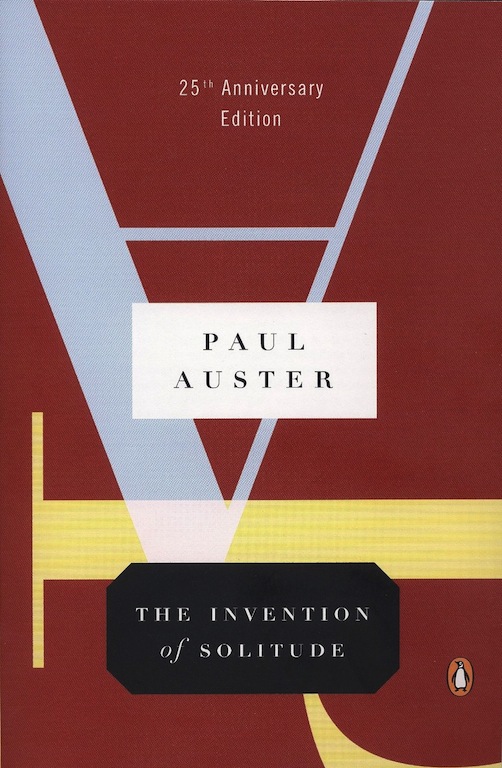
The Invention of Solitude
Penguin Group US · 2007 · English · EPUB
In this debut work by *New York Times* -bestselling author Paul Auster ( *The New York Trilogy* ), *The Invention of Solitude* , a memoir, established Auster?™s reputation as a major new voice in American writing. His moving and personal meditation on fatherhood is split into two stylistically separate sections. In the first, Auster reflects on the memories of his father who was a distant, undemonstrative, and cold man who died an untimely death. As he sifts through his Father?™s things, Auster uncovers a sixty-year-old murder mystery that sheds light on his father?™s elusive character. In the second section, the perspective shifts and Auster begins to reflect on his own identity as a father by adopting the voice of a narrator, “A.” Through a mosaic of images, coincidences, and associations “A,” contemplates his separation from his son, his dying grandfather, turning the story into a self-conscious reflection on the process of writing.
From Paul Auster, author of the forthcoming 4 3 2 1: A Novel – his very first book, a moving and personal meditation on fatherhoodThis debut work by New York Times-bestselling author Paul Auster (The New York Trilogy), a memoir, established Auster’s reputation as a major new voice in American writing. His moving and personal meditation on fatherhood is split into two stylistically separate sections. In the first, Auster reflects on the memories of his father who was a distant, undemonstrative, and cold man who died an untimely death. As he sifts through his Father’s things, Auster uncovers a sixty-year-old murder mystery that sheds light on his father’s elusive character. In the second section, the perspective shifts and Auster begins to reflect on his own identity as a father by adopting the voice of a narrator, “A.” Through a mosaic of images, coincidences, and associations “A,” contemplates his separation from his son, his dying grandfather, turning the story into a self-conscious reflection on the process of writing.
From Paul Auster, author of the forthcoming 4 3 2 1: A Novel – his very first book, a moving and personal meditation on fatherhoodThis debut work by New York Times-bestselling author Paul Auster (The New York Trilogy), a memoir, established Auster’s reputation as a major new voice in American writing. His moving and personal meditation on fatherhood is split into two stylistically separate sections. In the first, Auster reflects on the memories of his father who was a distant, undemonstrative, and cold man who died an untimely death. As he sifts through his Father’s things, Auster uncovers a sixty-year-old murder mystery that sheds light on his father’s elusive character. In the second section, the perspective shifts and Auster begins to reflect on his own identity as a father by adopting the voice of a narrator, “A.” Through a mosaic of images, coincidences, and associations “A,” contemplates his separation from his son, his dying grandfather, turning the story into a self-conscious reflection on the process of writing.
+2
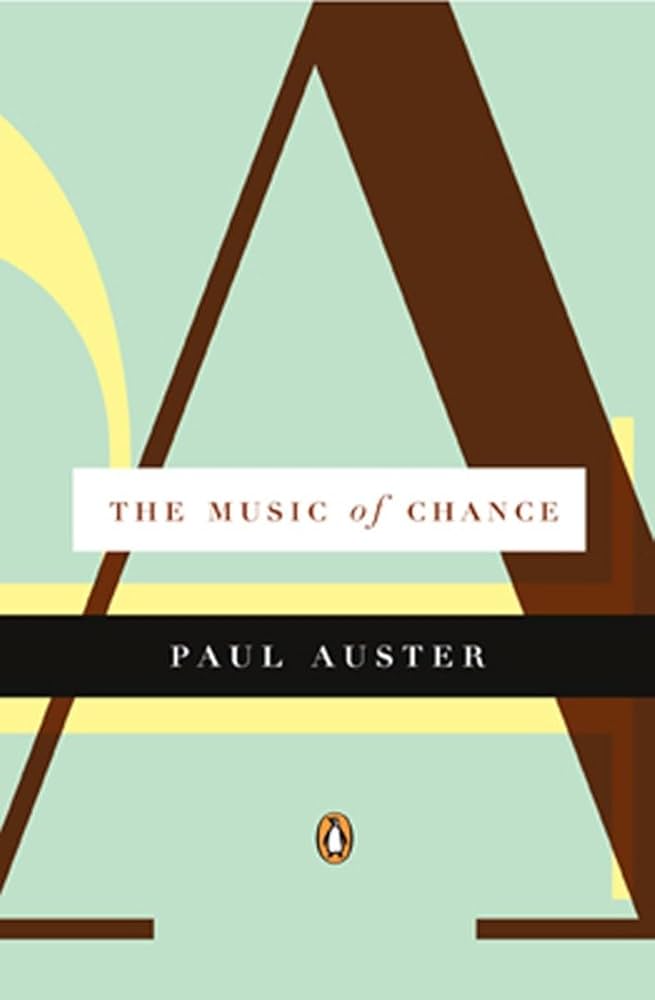
The Music of Chance
Penguin · 1991 · English · EPUB
An “exceptional” (Los Angeles Times) novel of fate, loyalty, responsibility, and the real meaning of freedom with “all the suspense and pace of a bestselling thriller” (The New York Times), from renowned author Paul Auster “A rich, dazzling performance . . . a tour de force about freedom and imprisonment, motion and stasis, order and randomness . . . its story beautifully paced and shaped, its tone powerfully ominous.”—The Wall Street JournalFINALIST FOR THE PEN/FAULKNER AWARD In a Pennsylvania meadow, a young fireman and an angry gambler are forced to build a wall of fifteenth-century stone. For Jim Nashe, it all started when he came into a small inheritance and left Boston in pursuit of “a life of freedom.” Careening back and forth across the United States, waiting for the money to run out, Nashe meets Jack Pozzi, a young man with a temper and a plan. With Nashe’s last funds, they enter a poker game against two rich eccentrics. But when their plans backfire, Jim and Jack are indentured by their elusive marks, who order them to erect a meaningless wall with bricks gathered from ruins of an Irish castle. Time passes, their debts mount, and anger builds as the two struggle to dig themselves out of their Kafkaesque serfdom. In Paul Auster’s world of fiendish bargains and punitive whims, where chance is a shifting and powerful force, there is nonetheless redemption in Nashe’s resolute quest for justice and his capacity for love.
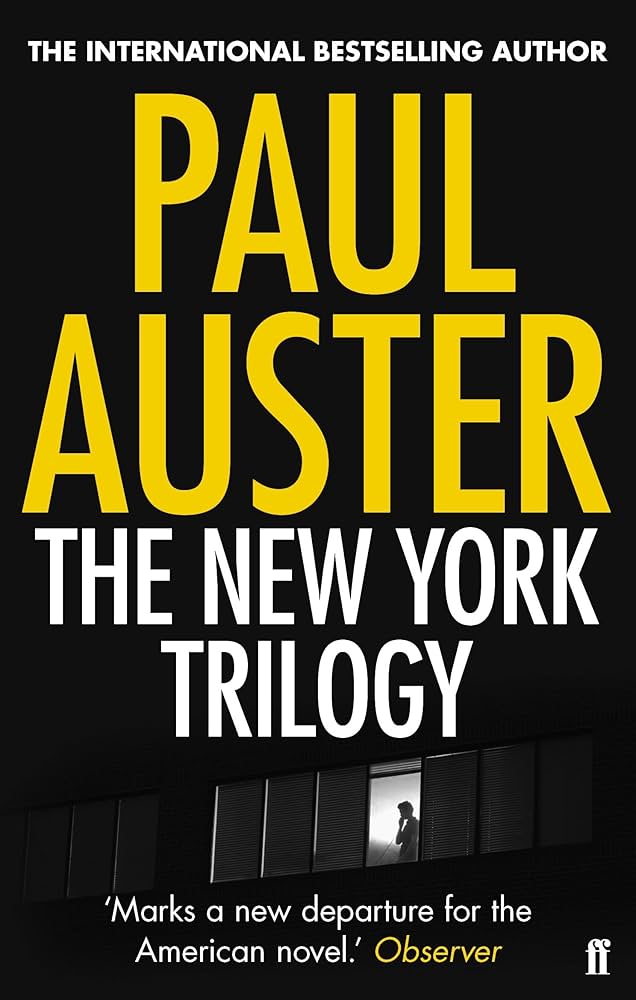
The New York Trilogy
Penguin · 1990 · English · EPUB
The remarkable, acclaimed series of interconnected detective novels City of Glass, Ghosts, and The Locked Room, from New York Times bestselling author Paul Auster “Exhilarating . . . a brilliant investigation of the storyteller’s art guided by a writer-detective who’s never satisfied with just the facts.”—The Philadelphia Inquirer City of Glass: As a result of a strange phone call in the middle of the night, Quinn, a writer of detective stories, becomes enmeshed in a case more puzzling than any he might have written. Ghosts: Blue, a student of Brown, has been hired by White to spy on Black. From a window of a rented room on Orange Street, Blue keeps watch on his subject, who is across the street, staring out of his own window. The Locked Room: Fanshawe has disappeared, leaving behind his wife and baby and a cache of extraordinary novels, plays, and poems. What happened to him and why is the narrator, Fanshawe’s boyhood friend, lured obsessively into his life? Moving at the breathless pace of a thriller, this is a uniquely stylized trilogy of detective novels that The Washington Post Book World has classified as “post-existential private eye. . . . It’s as if Kafka has gotten hooked on the gumshoe game and penned his own ever-spiraling version.”
+1
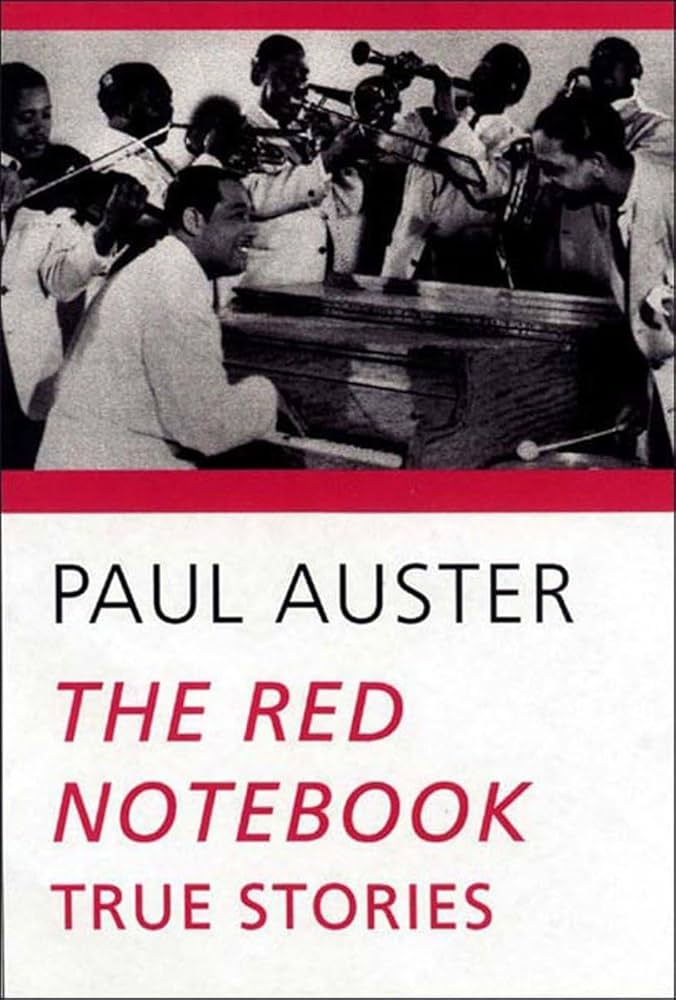
The Red Notebook: True Stories
New Directions Publishing · 2002 · English · EPUB
The Red Notebook brings together in one volume all of Paul Auster's short, true-life stories—a remarkable collection of tales that documents the curious, miraculous, and sometimes catastrophic turns of everyday reality. Paul Auster has earned international praise for the imaginative power of his many novels, including The New York Trilogy, Moon Palace, The Music of Chance, Mr. Vertigo, and Timbuktu. He has also published a number of highly original non-fiction works: The Invention of Solitude, Hand to Mouth, and The Art of Hunger. In The Red Notebook, Auster again explores events from the real world large and small, tragic and comic—that reveal the unpredictable, shifting nature of human experience. A burnt onion pie, a wrong number, a young boy struck by lightning, a man falling off a roof, a scrap of paper discovered in a Paris hotel room—all these form the context for a singular kind of ars poetica, a literary manifesto without theory, cast in the irreducible forms of pure story telling.
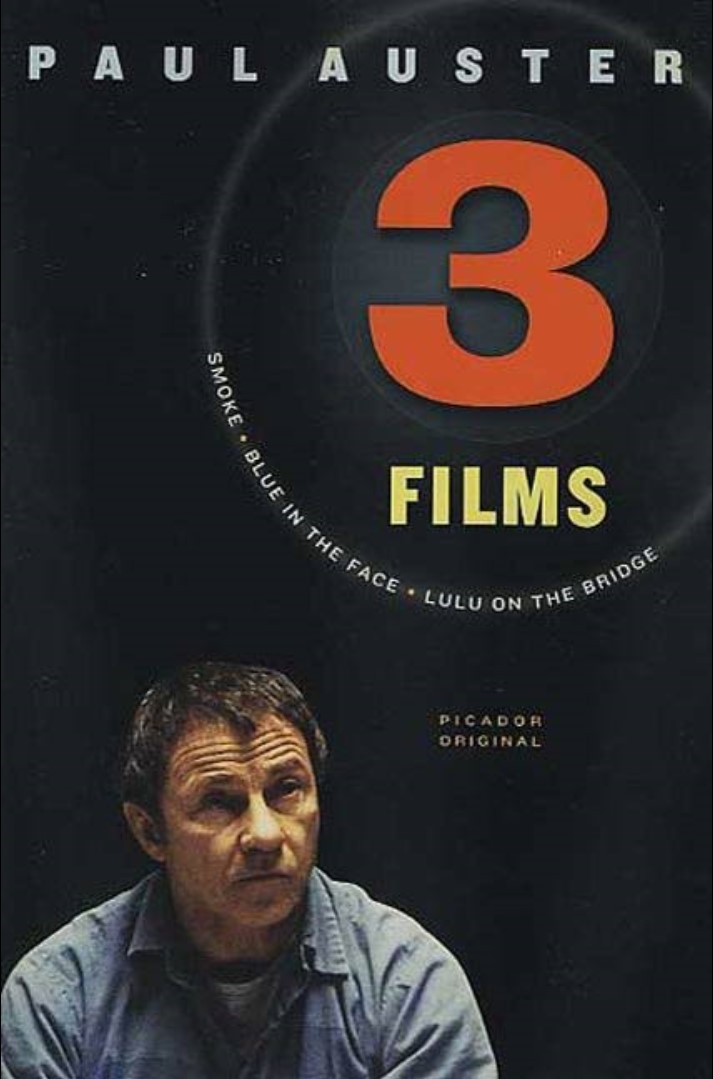
Three Films: Smoke, Blue in the Face, and Lulu on the Bridge
Macmillan · 2003 · English · EPUB
From The New York Trilogy to The Book of Illusions, Paul Auster's novels have earned him a reputation as "one of American's most spectacularly inventive writers." Here, published together for the first time, are the screenplays of the three films he made in the 1990s.Smoke (starring Harvey Keitel, William Hurt, Forest Whitaker, and Stockard Channing) tells the story of a novelist, a cigar store manager, and a black teenager who unexpectedly cross paths and end up changing each other's lives in indelible ways.Set in contemporary Brooklyn, Smoke directly inspired Blue in the Face, a largely improvised comedy shot in a total of six days. A film unlike any other it stars Harvey Keitel, with featured performances by Roseanne, Lily Tomlin, Lou Reed, and Michael J. Fox.Lulu on the Bridge (Auster's solo directorial debut, again starring Harvey Keitel, with Mira Sorvino, Willem Dafoe, and Vanessa Redgrave) opens with the accidental shooting of jazz musician Izzy Maurer during a performance in a New York club. Izzy is then led on a journey into the strange and sometimes frightening labyrinth of his soul. Both thriller and fairy tale, Lulu on the Bridge is above all a story about the redemptive powers of love.
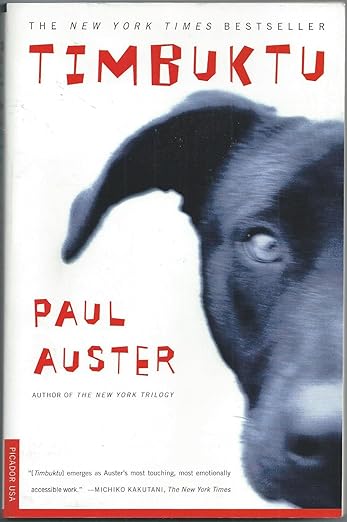
Timbuktu: A Novel
Picador · 1999 · English · EPUB
Mr. Bones, the canine hero of Paul Auster's astonishing new book, is the sidekick and confidant of Willy G. Christmas, a brilliant and troubled homeless man from Brooklyn. As Willy's body slowly expires, he sets off with Mr. Bones for Baltimore in search of his high school English teacher and a new home for his companion. Mr. Bones is our witness during their journey, and out of his thoughts, Paul Auster has spun one of the richest, most compelling tales in American fiction.
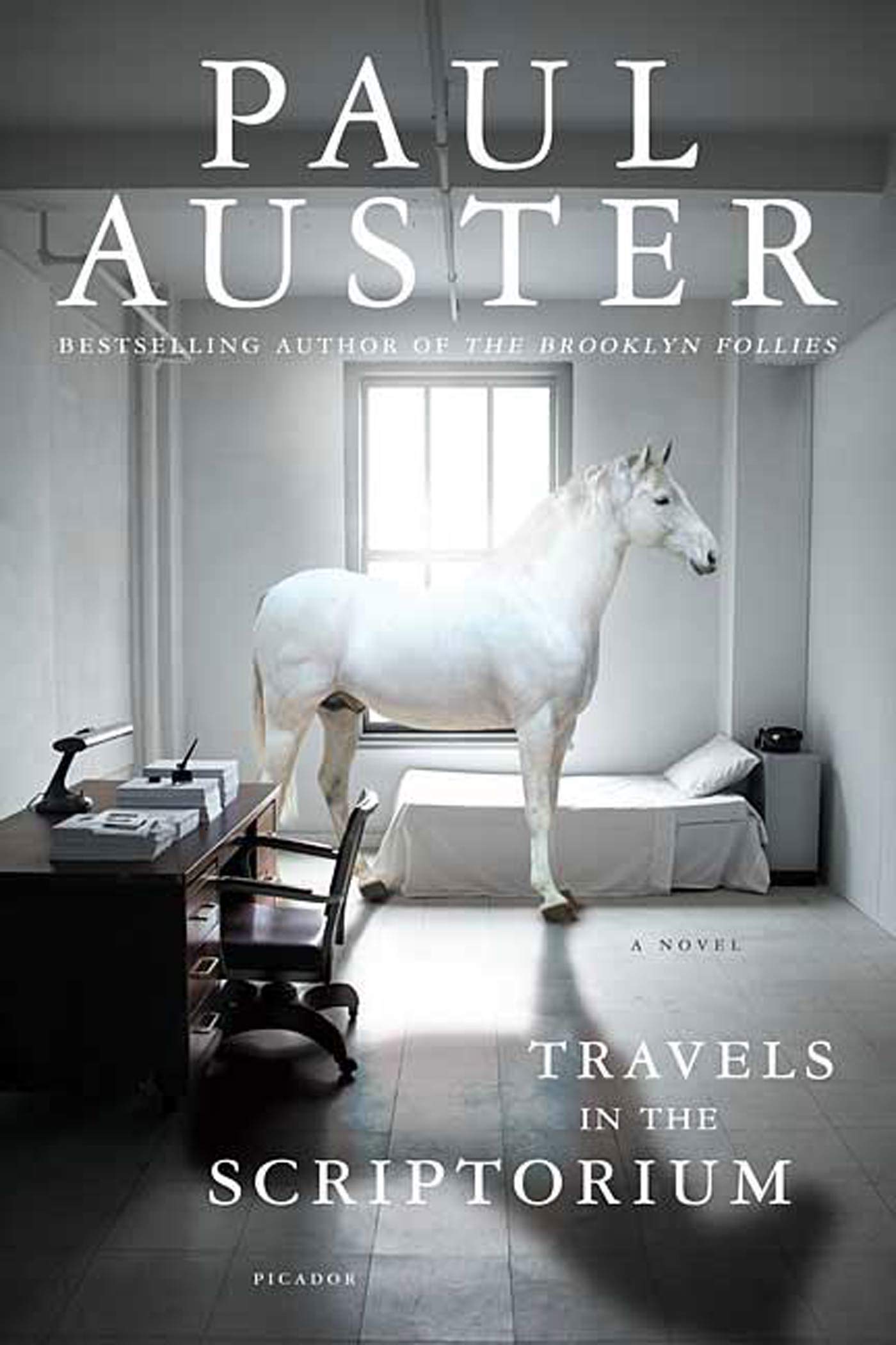
Travels in the Scriptorium
Faber & Faber · 2010 · English · EPUB
An old man sits in a room, with a single door and window, a bed, a desk and a chair. Each day he awakes with no memory, unsure of whether or not he is locked into the room. Attached to the few objects around him are one-word, hand-written, labels and on the desk is a series of vaguely familiar black-and-white photgraphs and four piles of paper. Then a middle-aged woman called Anna enters and talks of pills and treatment, but also of love and promises. Who is this Mr Blank, and what is his fate? What does Anna represent from his past - and will he have enough time to ever make sense of the clues that arise? After the huge success of The Brooklyn Follies, Travels in the Scriptorium sees Auster return to more metaphysical territory. A dark puzzle, and a game that implicates both reader and writer alike, it is an ingenious exploration of language, responsibility and the passage of time.
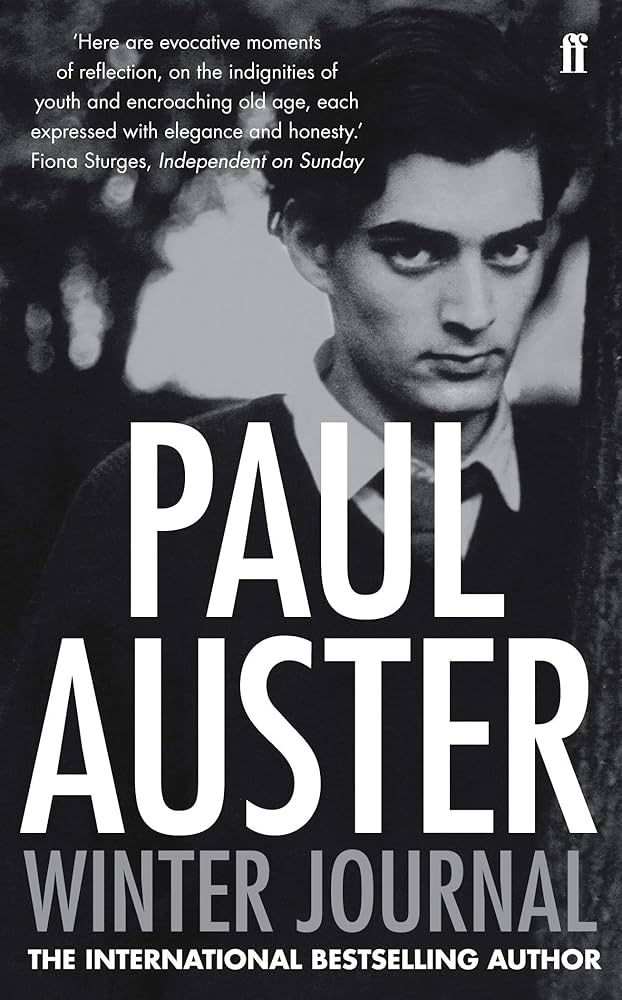
Winter Journal
McClelland & Stewart · 2012 · English · EPUB
Facing his sixty-forth winter, internationally acclaimed novelist Paul Auster decides to write a journal as he sees himself aging in ways he never imagined. Compellingly written, and with dreamlike logic and urgency, the autobiographical fragments and meditations produce an extraordinary mosaic of a life. Weaving together vividly detailed stories, Auster illuminates how each small incident comes to signify a whole. Also, there are two recurring moments: one of bodily terror -- his panic attack following his mother's death in 2002; the other of joy -- his experience watching a dance piece in 1978 which releases him from writer's block just prior to his father's death. It was his father's death that began his first equally unconventional and internationally celebrated memoir, The Invention of Solitude, published thirty years ago. Now, Auster has included an unforgettable portrait of his mother. Winter Journal is a surprising and moving meditation on time, the body, the weight of memory, a long and fulfilling marriage (with author Siri Hustvedt), and language itself by one of the most interesting and elegant writers writing today, and one with a devoted following.
+3