← Back to Authors


Featured Author
Stephen E. Ambrose
American • Historian • Author
17 books in Langa
Domains
HistoryLiterature
Books in Langa Library
17 books available from this author.
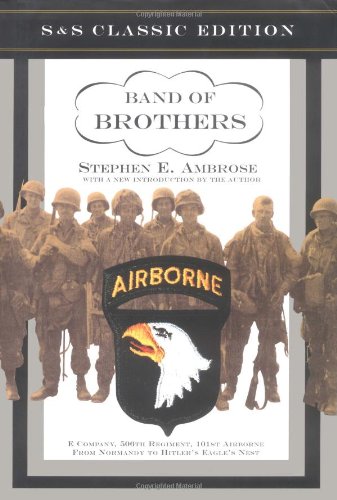
Band of Brothers
Simon and Schuster · 2001 · English · EPUB
### Amazon.com Review
The men of E Company, 506th Regiment, 101st Airborne, volunteered for this elite fighting force because they wanted to be the best in the army--and avoid fighting alongside unmotivated, out-of-shape draftees. The price they paid for that desire was long, arduous, and sometimes sadistic training, followed by some of the most horrific battles of World War II. Actor Cotter Smith--a veteran of numerous TV movies and Broadway plays--spins Stephen Ambrose's tale with almost laconic ease. Anecdote by anecdote, he lets the power of the story build. By the time the company has gotten through D-day and seized Hitler's Eagle's Nest in Bavaria, we feel we know as much about the men and their missions as we do about our own brothers. (Running time: 5 hours, 4 cassettes) *\--Lou Schuler*
### From Publishers Weekly
Ambrose ( Pegasus Bridge ) narrates in vivid detail the adventures, misadventures, triumphs and tragedies of a single U.S. Army infantry company over its span of organizational life. Formed in July 1944 and deactivated in November 1945, E Company was one of the most successful light infantry units in the European theater. Its troops saw their first action on D-Day behind the Normandy beachhead, took part in Operation Market Garden in Holland, held the perimeter around Bastogne during the Battle of the Bulge, and were the first to reach Hitler's Bavarian outpost at Berchtesgaden. The book is enlivened with pertinent comments by veterans of "Easy Company," who recall not only the combat action but their relations with their officers (one company commander was a petty tyrant of the worst type, but his oppressive ways had much to do with the unit's impressive esprit de corps ) and their impressions of the countries through which they campaigned (hated the French, loved the Germans). This is a terrific read for WW II actions buffs. Photos. Military Book Club main selection; Literary Guild alternate.
Copyright 1992 Reed Business Information, Inc.
+6
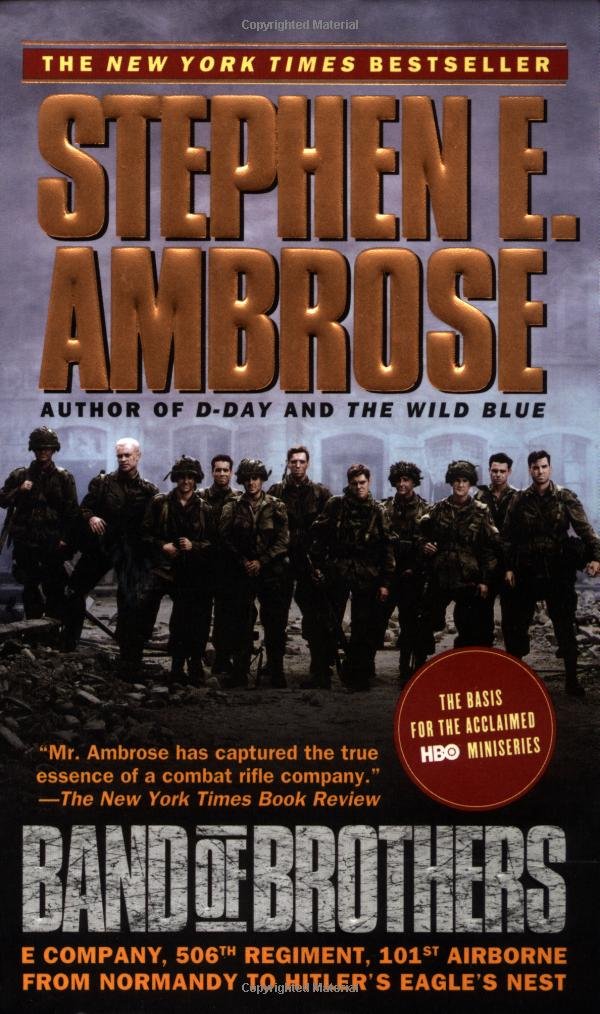
Band of Brothers: E Company, 506th Regiment, 101st Airborne From Normandy to Hitler's Eagle's Nest
Pocket · 2002 · English · EPUB
On the bloody battlefields of World War II Europe, Easy Company, 506th Airborne Division, U.S. Army, got the toughest missions. As good a rifle company as any in the world, Easy was always in the thick of the fight -- from parachuting into France under a hellish crossfire early D-Day morning, to the final capture of Hitler's supposedly impregnable Eagle's Nest at Berchtesgaden. *New York Times* bestselling author Stephen E. Ambrose tells of the men in this brave unit who fought, went hungry, froze, and died for their country, and for one another -- taking 150 percent casualties and earning Purple Hearts as combat pay. Drawing on interviews with survivors as well as the soldiers' journals and letters, Ambrose chronicles the gripping true stories of these American heroes.
### Review
*Publishers Weekly* This is a terrific read for WW II action buffs. -- *Review*
+3
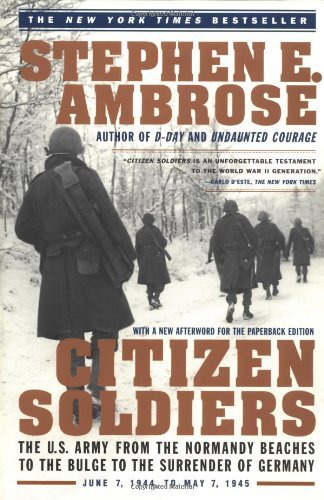
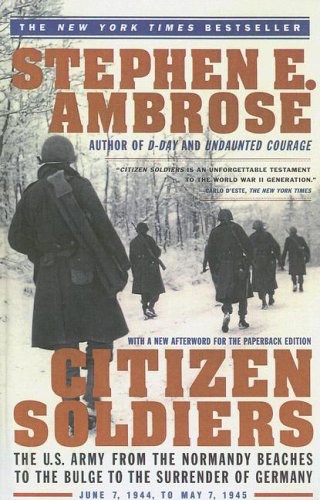
Citizen Soldiers: The U.S. Army From the Normandy Beaches to the Buldge to the Surrender of Germany Jun 7, 1994-May 7, 1945
Demco Media · 1998 · English · EPUB
<p class="description">In this riveting account, historian Stephen Ambrose continues where he left off in his #1 bestseller "D-Day". Ambrose again follows the individual characters of this noble, brutal, and tragic war, from the high command down to the ordinary soldier, drawing on hundreds of interviews to re-create the war experience with startling clarity and immediacy. From the hedgerows of Normandy to the overrunning of Germany, Ambrose tells the real story of World War II from the perspective of the men and women who fought it.</p> <p>Drawing on hundreds of interviews and oral histories, Ambrose recreates life on the front lines during one of the bloodiest periods of World War II: from D-Day to the surrender of Germany. The most gripping account of the second World War that I have ever read.--Joseph Heller. of photos. Maps.</p> SUMMARY: In this riveting account, historian Stephen Ambrose continues where he left off in his #1 bestseller "D-Day". Ambrose again follows the individual characters of this noble, brutal, and tragic war, from the high command down to the ordinary soldier, drawing on hundreds of interviews to re-create the war experience with startling clarity and immediacy. From the hedgerows of Normandy to the overrunning of Germany, Ambrose tells the real story of World War II from the perspective of the men and women who fought it. EDITORIAL REVIEW: From the author of "D-Day" and "Band of Brothers" comes the story of the ordinary soldiers in Northwest Europe from the day after D-Day until the end of the bittersweet days of the war. It opens at 00:01 hours, June 7, 1944 on the Normandy Beaches and ends at 02:45 hours, May 7, 1945. In between comes the battles in the hedgerows of Normandy; the breakout of Saint-Lo, the Falaise gap; Patton tearing through France; the liberation of Paris; the attempt to leap the Rhine in operation Market-Garden; the near-miraculous German recovery; the battles around Metz and in the Huertgen Forest; the Battle of the Bulge; the capture of the bridge at Remagen; and ends with the overunning of Germany. From the enlisted men and junior officers, Ambrose draws on hundreds of interviews and oral histories from those on both sides of the war. The experience of these citizen soldiers reveals the ordinary sufferings and hardships of war. They overcame their fear and inexperience, the mistakes of their high command and their enemy, to win the war. SUMMARY: In this riveting account, historian Stephen Ambrose continues where he left off in his #1 bestseller "D-Day". Ambrose again follows the individual characters of this noble, brutal, and tragic war, from the high command down to the ordinary soldier, drawing on hundreds of interviews to re-create the war experience with startling clarity and immediacy. From the hedgerows of Normandy to the overrunning of Germany, Ambrose tells the real story of World War II from the perspective of the men and women who fought it. SUMMARY: In this riveting account, historian Stephen Ambrose continues where he left off in his #1 bestseller "D-Day". Ambrose again follows the individual characters of this noble, brutal, and tragic war, from the high command down to the ordinary soldier, drawing on hundreds of interviews to re-create the war experience with startling clarity and immediacy. From the hedgerows of Normandy to the overrunning of Germany, Ambrose tells the real story of World War II from the perspective of the men and women who fought it. SUMMARY: In this riveting account, historian Stephen Ambrose continues where he left off in his #1 bestseller "D-Day". Ambrose again follows the individual characters of this noble, brutal, and tragic war, from the high command down to the ordinary soldier, drawing on hundreds of interviews to re-create the war experience with startling clarity and immediacy. From the hedgerows of Normandy to the overrunning of Germany, Ambrose tells the real story of World War II from the perspective of the men and women who fought it. SUMMARY: In this riveting account, historian Stephen Ambrose continues where he left off in his #1 bestseller "D-Day". Ambrose again follows the individual characters of this noble, brutal, and tragic war, from the high command down to the ordinary soldier, drawing on hundreds of interviews to re-create the war experience with startling clarity and immediacy. From the hedgerows of Normandy to the overrunning of Germany, Ambrose tells the real story of World War II from the perspective of the men and women who fought it.
+20
Citizen Soldiers: The U.S. Army From the Normandy Beaches to the Bulge to the Surrender of Germany June 7, 1944-May 7, 1945
Demco Media · 1997 · English · EPUB
In this riveting account, historian Stephen Ambrose continues where he left off in his #1 bestseller "D-Day". Ambrose again follows the individual characters of this noble, brutal, and tragic war, from the high command down to the ordinary soldier, drawing on hundreds of interviews to re-create the war experience with startling clarity and immediacy. From the hedgerows of Normandy to the overrunning of Germany, Ambrose tells the real story of World War II from the perspective of the men and women who fought it.
+7
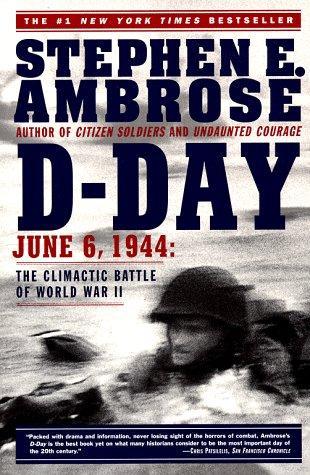
D-Day, June 6, 1944: The Climactic Battle of World War II
Simon & Schuster · 1994 · English · EPUB
SUMMARY: Stephen E. Ambrose draws from more than 1,400 interviews with American, British, Canadian, French, and German veterans to create the preeminent chronicle of the most important day in the twentieth century. Ambrose reveals how the original plans for the invasion were abandoned, and how ordinary soldiers and officers acted on their own initiative.D-Day is above all the epic story of men at the most demanding moment of their existence, when the horrors, complexities, and triumphs of life are laid bare. Ambrose portrays the faces of courage and heroism, fear and determination -- what Eisenhower called "the fury of an aroused democracy" -- that shaped the victory of the citizen soldiers whom Hitler had disparaged.
+15
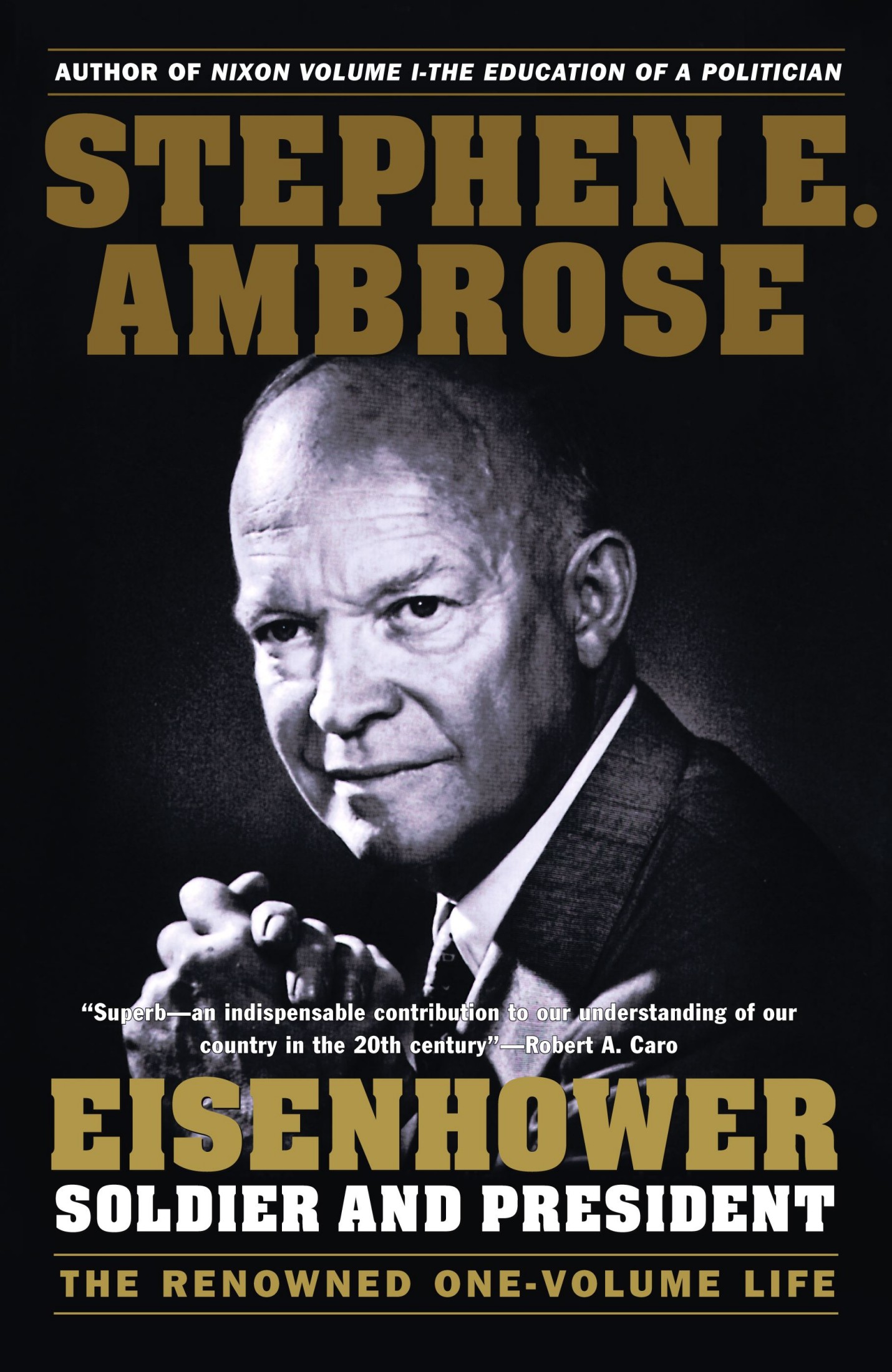
Eisenhower: Soldier and President
Simon and Schuster · 2014 · English · EPUB
Stephen E. Ambrose draws upon extensive sources, an unprecedented degree of scholarship, and numerous interviews with Eisenhower himself to offer the fullest, richest, most objective rendering yet of the soldier who became president.
He gives us a masterly account of the European war theater and Eisenhower's magnificent leadership as Allied Supreme Commander. Ambrose's recounting of Eisenhower's presidency, the first of the Cold War, brings to life a man and a country struggling with issues as diverse as civil rights, atomic weapons, communism, and a new global role. Along the way, Ambrose follows the 34th President's relations with the people closest to him, most of all Mamie, his son John, and Kay Summersby, as well as Franklin D. Roosevelt, Winston Churchill, Charles de Gaulle, Harry Truman, Nixon, Dulles, Khrushchev, Joe McCarthy, and indeed, all the American and world leaders of his time. This superb interpretation of Eisenhower's life confirms Stephen Ambrose's position as one of our finest historians.
+4
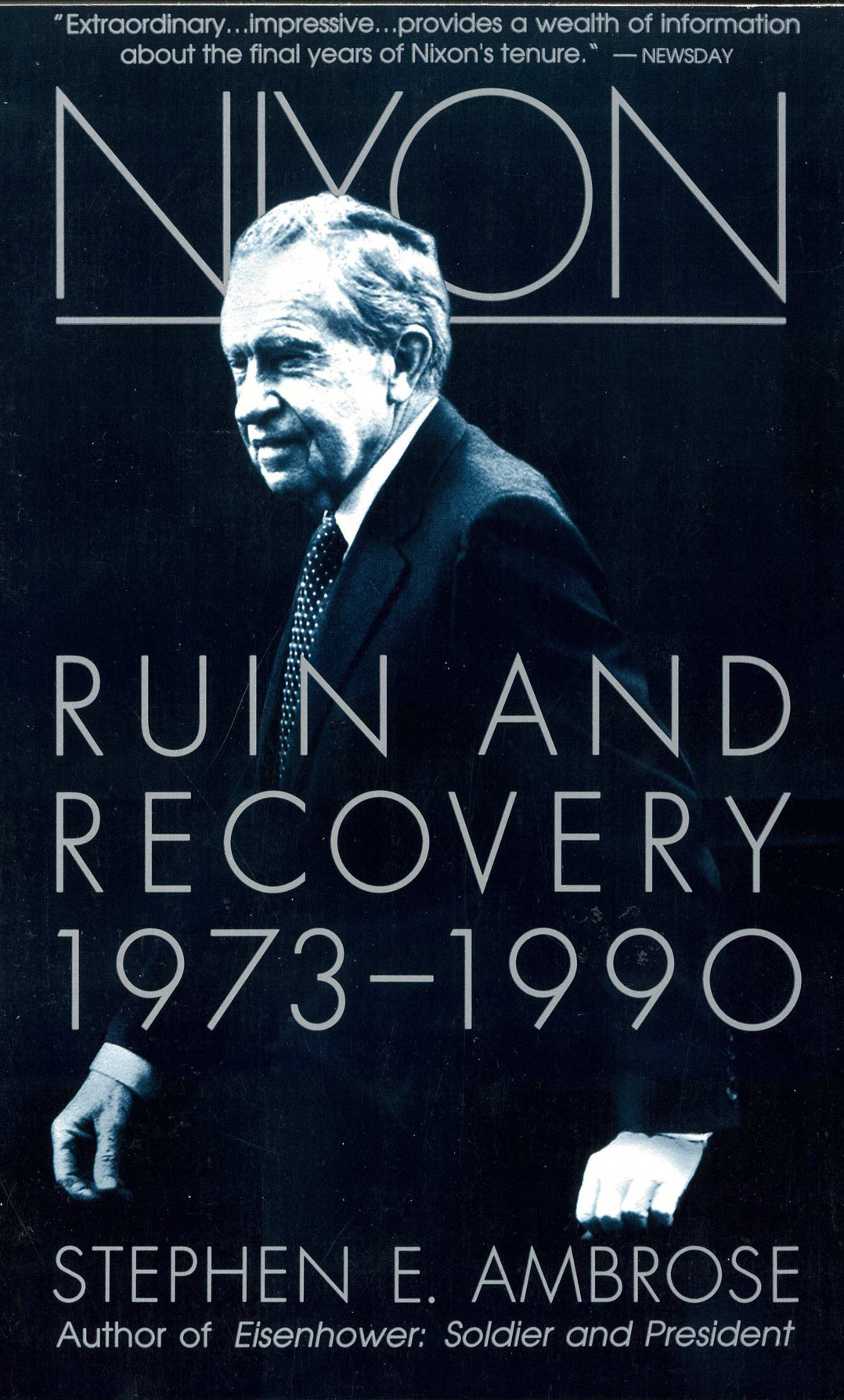
Nixon Volume III: Ruin and Recovery 1973-1990
Simon and Schuster · 2014 · English · EPUB
In Nixon: Ruin and Recovery, 1973-1990, Stephen E. Ambrose completes his acclaimed biography of the man many historians call the most fascinating politician in American history: Richard Milhous Nixon.
Rarely before on the stage of global politics has one man, respected and reviled, blessed and cursed, held us in such rapt attention. Using Nixon’s own words, private writings, and tape-recorded conversations, Ambrose captures the man and all his contradictions as he faces the ordeal of Watergate and its aftermath, the long road back to public life.
Watergate is a drama with high stakes and low skullduggery, of lies and bribes, of greed and lust for power. At its center is the obsession of the country and much of the world with President Richard Nixon himself. It is a remarkable play of foolhardy heroism as Nixon risked everything trying to maintain dignity and his job, when he alone had the power to determine the outcome of the scandal, whether by resigning, confessing, destroying evidence or defying the courts and Congress.
Ambrose explains how Nixon destroyed himself through a combination of arrogance and indecision, allowing a "third-rate burglary" to escalate into a scandal that overwhelmed his presidency.
Yet even after his self-exile from Washington and the Republican Party, even after the national outcry that sealed his shame, Nixon would not go gentle into oblivion. Ambrose provides an unforgettable portrait of the older Nixon in San Clemente, drawing on his seemingly endless reserves of determination, laying the groundwork for yet another comeback, a return to the arena that would defy all odds. Ambrose illuminates all the hidden years, and we see Nixon’s gradual transformation from pariah to valued elder statesmen, respected internationally and at home even by those who had earlier clamored loudest for his head. This is the story of Nixon's final fall from grace and astonishing recovery.
+3
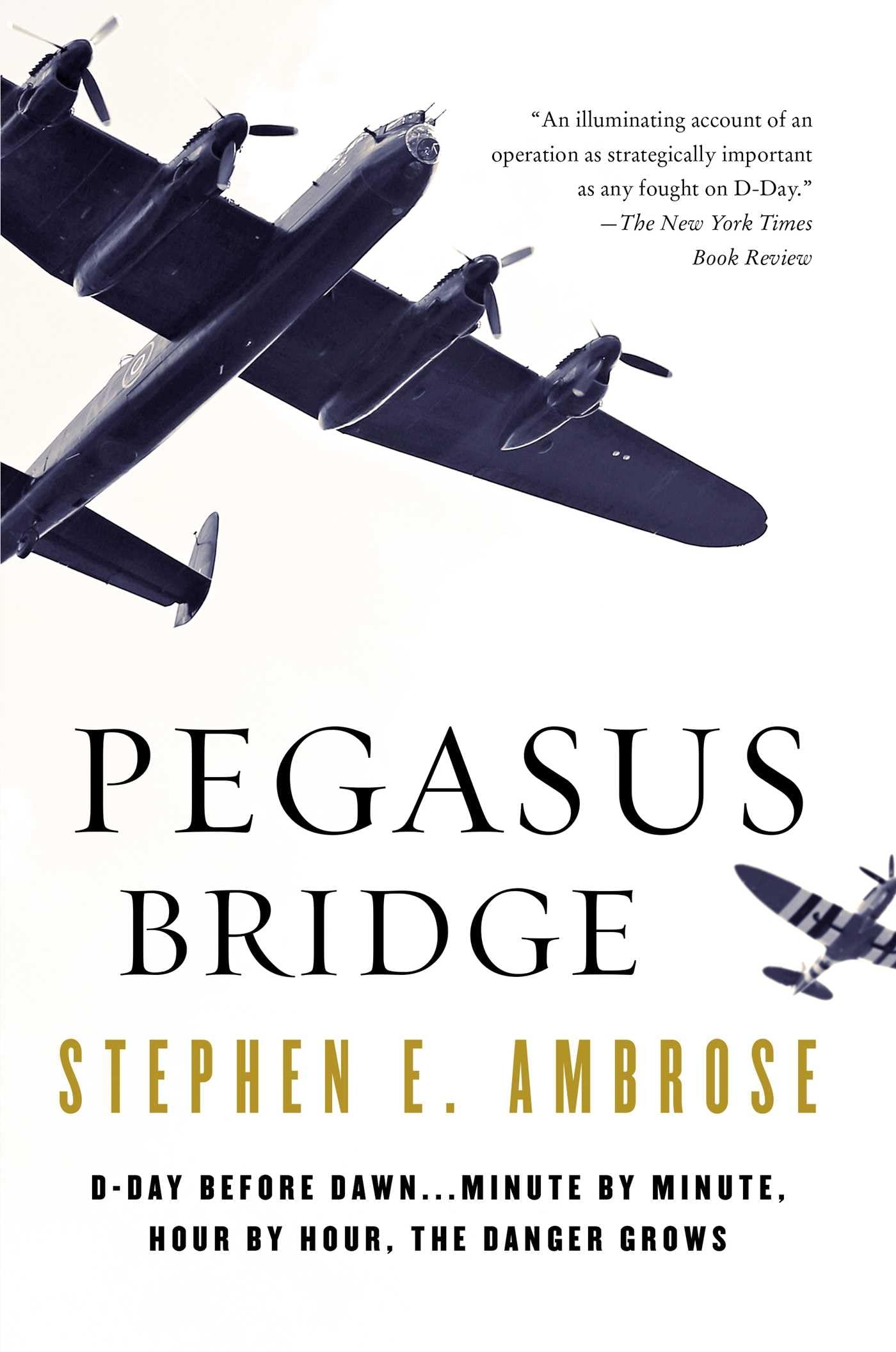
Pegasus Bridge
Simon & Schuster · 1988 · English · EPUB
<p><strong>In the early morning hours of June 6, 1944, a small detachment of British airborne troops stormed the German defense forces and paved the way for the Allied invasion of Europe. Pegasus Bridge was the first engagement of D-Day, the turning point of World War II.</strong> </p> <p>This gripping account of it by acclaimed author Stephen Ambrose brings to life a daring mission so crucial that, had it been unsuccessful, the entire Normandy invasion might have failed. Ambrose traces each step of the preparations over many months to the minute-by-minute excitement of the hand-to-hand confrontations on the bridge. This is a story of heroism and cowardice, kindness and brutality—the stuff of all great adventures.</p><h3>Review</h3> <p><em>Los Angeles Herald Examiner</em> All the vividness of a movie, and all the intelligence -- in every sense -- of fine military history. </p> <p>Drew Middleton The New York Times Book Review An illuminating account of an operation as strategically important as any fought on D-Day. </p> <p>James Pitts New Orleans Times A little gem. One that will be drawn from by historians of the future. </p> <p>Noland Norgaard The Denver Post The best war story this reviewer has ever read.</p> <h3>From the Back Cover</h3> <p>In the early morning hours of June 6, 1944, a small detachment of British airborne troops stormed the German defense forces and paved the way for the Allied invasion of Europe. Pegasus Bridge was the first engagement of D-Day, the turning point of World War II. This gripping account of it by acclaimed author Stephen Ambrose brings to life a daring mission so crucial that, had it been unsuccessful, the entire Normandy invasion might have failed.</p> <h3>About the Author</h3> <p>Stephen E. Ambrose was a renowned historian and acclaimed author of more than thirty books. Among his <em>New York Times</em> bestsellers are <em>Nothing Like It in the World, Citizen Soldiers, Band of Brothers, D-Day - June 6, 1944,</em> and <em>Undaunted Courage</em>. Dr. Ambrose was a retired Boyd Professor of History at the University of New Orleans and a contributing editor for the <em>Quarterly Journal of Military History</em>.</p> <h3>Excerpt. © Reprinted by permission. All rights reserved.</h3> <p><strong>D-Day: 0000 to 0015 Hours</strong> </p> <p>It was a steel-girder bridge, painted gray, with a large water tower and superstructure. At 0000 hours, June 5/6, 1944, the scudding clouds parted sufficiently to allow the nearly full moon to shine and reveal the bridge, standing starkly visible above the shimmering water of the Caen Canal. </p> <p>On the bridge, Private Vern Bonck, a twenty-two-year-old Pole conscripted into the German Army, clicked his heels sharply as he saluted Private Helmut Romer, an eighteen-year-old Berliner. Romer had reported to relieve Bonck. As Bonck went off duty, he met with his fellow sentry, another Pole. They decided they were not sleepy and agreed to go to the local brothel, in the village of Benouville, for a bit of fun. They strolled west along the bridge road, then turned south (left) at the T-junction, and were on the road into Benouville. By 0005 they were at the brothel. Regular customers, within two minutes they were<br /> knocking back cheap red wine with two French whores. </p> <p>Beside the bridge, on the west bank, south of the road, Georges and Theresa Gondree and their two daughters slept in their small cafe. They were in separate rooms, not by choice but as a way to use every room and thus to keep the Germans from billeting soldiers with them. It was the 1,450th night of the German occupation of Benouville. </p> <p>So far as the Germans knew, the Gondrees were simple Norman peasants, people of no consequence who gave them no trouble. Indeed, Georges sold beer, coffee, food, and a concoction made by Madame of rotting melons and half-fermented sugar to the grateful German troops stationed at the bridge. There were about fifty of them, the NCOs and officers all German, the enlisted men mostly conscripts from Eastern Europe. </p> <p>But the Gondrees were not as simple as they pretended to be. Madame came from Alsace and spoke German, a fact she successfully hid from the garrison. Georges, before acquiring the cafe, had been for twelve years a clerk in Lloyd's Bank in Paris and understood English. The Gondrees hated the Germans for what they had done to France, hated the life they led under the occupation, feared for the future of their daughters, and were consequently active in trying to bring German rule to an end. In their case, the most valuable thing they could do for the Allies was to provide information on conditions at the bridge. Theresa got information by listening to the chitter-chatter of the NCOs in the cafe; she passed along to Georges, who passed it to Mme. Vion, director of the maternity hospital, who passed it along to the Resistance in Caen on her trips to the city for medical supplies. From Caen, it was passed on to England via Lysander airplanes, small craft that could land in fields and get out in a hurry. </p> <p>Only a few days ago, on June 2, Georges had sent through this process a tidbit Theresa had overheard -- that the button that would set off the explosives to blow the bridge was located in the machine-gun pillbox across the road from the antitank gun. He hoped that information had got through, if only because he would hate to see his bridge destroyed. </p> <p>The man who would give that order, the commander of the garrison at the bridge, was Major Hans Schmidt. Schmidt had an understrength company of the 736th Grenadier Regiment of the 716th Infantry Division. At 0000 hours, June 5/6, he was in Ranville, a village two kilometers east of the Orne River. The river ran parallel to the canal, about four hundred meters to the east, and was also crossed by a bridge (fixed, and guarded by sentries but without emplacements or a garrison). Although the Germans expected the long-anticipated invasion at any time, and although Schmidt had been told that the two bridges were the most critical points in Normandy, because they provided the only crossings of the Orne waterways along the Norman coast road, Schmidt did not have his garrison at full alert, nor was he in Ranville on business. Except for the two sentries on each bridge, his troops were either sleeping in their bunkers, or dozing in their slit trenches or in the machine-gun pillbox, or off whoring in Benouville. </p> <p>Schmidt himself was with his girl friend in Ranville, enjoying the magnificent food and drink of Normandy. He thought of himself as a fanatic Nazi, this Schmidt, who was determined to do his duty for his Fuhrer. But he seldom let duty interfere with pleasure, and he had no worries that evening. His routine concern was the possibility of French partisans blowing his bridges, but that hardly seemed likely except in conjunction with an airborne operation, and the high winds and stormy weather of the past two days precluded a parachute drop. He had orders to blow the bridges himself if capture seemed imminent. He had prepared the bridges for demolition, but had not put the explosives into their chambers, for fear of accident or the partisans. Since his bridges were almost five miles inland, he figured he would have plenty of warning before any Allied units reached him, even paratroopers, because the paras were notorious for taking a long time to form up and get organized after their drops scattered them all over the DZ. Schmidt treated himself to some more wine, and another pinch. </p> <p>At Vimont, east of Caen, Colonel Hans A. von Luck, commanding the 125th Panzer Grenadier Regiment of the 21st Panzer Division, was working on personnel reports at his headquarters. The contrast between Schmidt and von Luck extended far beyond their activities at midnight. Schmidt was an officer gone soft from years of cushy occupation duty; von Luck was an officer hardened by combat. Von Luck had been in Poland in 1939, had commanded the leading reconnaissance battalion for Rommel at Dunkirk in 1940, had been in the van at Moscow in 1941 (in December, he actually led his battalion into the outskirts of Moscow, the deepest penetration of the campaign) and with Rommel throughout the North African campaign of 1942-43. </p> <p>There was an equally sharp contrast between the units von Luck and Schmidt commanded. The 716th Infantry was a second-rate, poorly equipped, immobile division made up of a hodgepodge of Polish, Russian, French, and other conscripted troops, while the 21st Panzer was Rommel's favorite division. Von Luck's regiment, the 125th, was one of the best equipped in the German Army. The 21st Panzer Division had been destroyed in Tunisia in April and May 1943, but Rommel had got most of the officer corps out of the trap, and around that nucleus rebuilt the division. It had all-new equipment, including Tiger tanks, self-propelled vehicles (SPVs) of all types, and an outstanding wireless communications network. The men were volunteers, young Germans deliberately raised by the Nazis for the challenge they were about to face, tough, well trained, eager to come to grips with the enemy. </p> <p>There was a tremendous amount of air activity that night, with British and American bombers crossing the Channel to bomb Caen. As usual, Schmidt paid no attention to it. Neither did von Luck, consciously, but he was so accustomed to the sights and sounds of combat that at about 0010 hours he noticed something none of his clerks did. There were a half-dozen or so planes flying unusually low, at five hundred feet or less. That could only mean they were dropping something by parachute. Probably supplies for the Resistance, von Luck thought, and he ordered a search of the area, hoping to capture some local resisters while they were gathering in the supplies. </p> <p>Heinrich (now Henry) Heinz Hickman, a sergeant in the German 6th (Independent) Parachute Regiment, was at that moment riding in an open staff car, coming from Ouistreham, on the coast, toward Benouville. Hickman, twenty-four years old, was a combat veteran of Sicily and Italy. His regiment had come to Normandy a fortnight ago; at 2300 hours on June 5 his company commander had ordered Hickman to pick up four young privates at observation posts outside Ouistreham and bring them back to headquarters, near Breville, on the east side of the river. </p> <p>Hickman, himself a paratrooper, also heard low-flying planes. He came to the same conclusion as von Luck, that they were dropping supplies to the Resistance, and for the same reason -- he could not imagine that the Allies would make a paratrooper drop with only a half-dozen airplanes involved. He drove on toward the bridge over the Caen Canal. </p> <p>Over the Channel, at 0000 hours, two groups of three Halifax bombers flew at seven thousand feet toward Caen. With all the other air activity going on, neither German searchlights nor AA gunners noticed that each Halifax was tugging a Horsa glider. </p> <p>Inside the lead glider, Private Wally Parr of D Company, the 2d Oxfordshire and Buckinghamshire Light Infantry (Ox and Bucks), a part of the Air Landing Brigade of the 6th Airborne Division of the British Army, was leading the twenty-eight men in singing. With his powerful voice and strong Cockney accent,<br /> Parr was booming out "Abby, Abby, My Boy." Corporal Billy Gray, sitting down the row from Parr, was barely singing, because all that he could think about was the pee he had to take. At the back end of the glider, Corporal Jack Bailey sang, but he also worried about the parachute he was responsible for securing. </p> <p>The pilot, twenty-four-year-old Staff Sergeant Jim Wallwork, of the Glider Pilot Regiment, anticipated casting off any second now, because he could see the surf breaking over the Norman coast. Beside him his copilot, Staff Sergeant John Ainsworth, was concentrating intensely on his stopwatch. Sitting behind Ainsworth, the commander of D Company, Major John Howard, a thirty-one-year-old former regimental sergeant major and an ex-cop, laughed with everyone else when the song ended and Parr called out, "Has the major laid his kitt yet?" Howard suffered from airsickness and had vomited on every training flight. On this flight, however, he had not been sick. Like his men, he had not been in combat before, but the prospect seemed to calm him more than it shook him. </p> <p>As Parr started up "It's a Long, Long Way to Tipperary," Howard touched the tiny red shoe in his battle-jacket pocket, one of his two-year-old son Terry's infant shoes that he had brought along for good luck. He thought of Joy, his wife, and Terry and their baby daughter, Penny. They were back in Oxford, living near a factory, and he hoped there were no bombing raids that night. Beside Howard sat Lieutenant Den Brotheridge, whose wife was pregnant and due to deliver any day (five other men in the company had pregnant wives back in England). Howard had talked Brotheridge into joining the Ox and Bucks, and had selected his platoon for the #1 glider because he thought Brotheridge and his platoon the best in his company. </p> <p>One minute behind Wallwork's glider was #2, carrying Lieutenant David Wood's platoon. Another minute behind that Horsa was #3 glider, with Lieutenant R.<br /> "Sandy" Smith's platoon. The three gliders in this group were going to cross the coast near Cabourg, well east of the mouth of the Orne River. </p> <p>Parallel to that group, to the west and a few minutes behind, Captain Brian Priday sat with Lieutenant Tony Hooper's platoon, followed by the gliders carrying the platoons of Lieutenants H. J. "Tod" Sweeney and Dennis Fox. This second group was headed toward the mouth of the Orne River. In Fox's platoon, Sergeant M. C. "Wagger" Thornton was singing "Cow Cow Boogie" and -- like almost everyone else on all the gliders -- chain-smoking Players cigarettes. </p> <p>In #2 glider, with the first group, the pilot, Staff Sergeant Oliver Boland, who had just turned twenty-three years old a fortnight past, found crossing the Channel an "enormously emotional" experience, setting off as he was "as the spearhead of the most colossal army ever assembled. I found it difficult to believe because I felt so insignificant." </p> <p>At 0007, Wallwork cast off his lead glider as he crossed the coast. At that instant, the invasion had begun. </p> <p>There were 156,000 men prepared to go into France that day, by air and by sea, British, Canadian, and American, organized into some twelve thousand companies. D Company led the way. It was not only the spearhead of the mighty host, it was also the only company attacking as a completely independent unit. Howard would have no one to report to, or take orders from, until he had completed his principal task. When Wallwork cast off, D Company was on its own. </p> <p>With cast-off, there was a sudden jerk, then dead silence. Parr and his singers shut up, the engine noise of the bomber faded away, and there was a silence broken only by the swoosh of air over the Horsa's wings. Clouds covered the moon; Ainsworth had to use a flashlight to see his stopwatch, which he had started instantaneously with cast-off. </p> <p>After casting off, the Halifax bombers continued on toward Caen, where they were to drop their small bomb load on the cement factory, more as a diversion than a serious attack. During the course of the campaign, Caen was almost completely obliterated, with hardly a brick left mortared to a brick. The only untouched building in the whole city was the cement factory. "They were great tug pilots," says Wallwork, "but terrible bombers." </p> <p>Howard's thoughts shifted from Joy, Penny, and Terry to his other "family," D Company. He thought of how deeply involved he was with his platoon commanders, his sergeants and corporals, and many of his privates. They had been preparing, together, for more than two years for this moment. The officers and men had done all that he asked of them, and more. By God, they were the best damn company in the whole British Army! They had earned this extraordinary role; they deserved it. John was proud of every one of them, and of himself, and he felt a wave of comradeship come over him, and he loved them all. </p> <p>Then his mind flashed through the dangers ahead. The antigilder poles, first of all -- air-reconnaissance photographs taken in the past few days revealed that the Germans were digging holes for the poles (called "Rommel's asparagus" by the Allies). Were the poles in place or not? Everything depended on the pilots until the instant the gliders had landed, and until that instant Howard was but a passenger. If the pilots could bring D Company down safely, within four hundred meters of the objective, he was confident he could carry out his first task successfully. But if the pilots were even one kilometer off course, he doubted that he could do his job. Any farther than a kilometer and there was no chance. If the Germans somehow spotted the gliders coming in, and got a machine gun on them, the men would never touch the soil of France alive. If the pilots crashed, into a tree, an embankment, or one of Rommel's asparagus, they might all well die even as their feet touched French soil. </p> <p>Howard was always a bad passenger; he was the type who wanted to drive himself. On this occasion, as he willed Wallwork onto the target, he at least had something physical to do for diversion. Held by a couple of men, Lieutenant Brotheridge began to open the side door. It stuck, and Howard had to help him. Looking down, once the door was open, they could see nothing but cloud. Still, they grinned at each other before slumping back into their seats, recalling the fifty-franc bet they had made as to who would be the first out of the glider. </p> <p>As he took his seat again, Howard's orders flashed through his mind. Dated May 2, they had been unchanged since. Signed by Brigadier Nigel Poett, and classified "Bigot" (a superclassification, above "Top Secret"; the few who did have clearance for "Bigot" material were said to be "bigoted"), Howard's orders read: "Your task is to seize <em>intact</em> the bridges over the River Orne and canal at Benouville and Ranville, and to hold them until relief....The capture of the bridges will be a coup de main operation depending largely on surprise, speed and dash for success. Provided the bulk of your force lands safely, you should have little difficulty in overcoming the known opposition on the bridges. Your difficulties will arise in holding off an enemy counterattack on the bridges, until you are relieved." </p> <p>The relief would come from the men of the 6th Airborne Division, specifically from the 5th Para Brigade and especially its 7th Battalion. They would land in DZs between the Orne River and the River Dives at 0050 hours. Brigadier Poett, commanding 5th Para Brigade, told Howard that he could expect organized reinforcements within two hours of touchdown. The paras would come through Ranville, where Poett intended to set up his headquarters for the defense of the bridges. </p> <p>Poett himself was only two or three minutes behind Howard, flying with the pathfinders who would mark the DZ for the main body of the 5th Para Brigade.<br /> There were six planes in Poett's group -- these were the low-flying planes von Luck and Hickman had heard. Poett wanted to be the first to jump, but at 0008 hours he was struggling desperately to get the floor hatch open. He and his ten men were jammed into an old Albemarle bomber, which none of them had ever seen before. They were carrying so much equipment that they had to "push and push and push to get in." They had then had a terrible time squeezing together sufficiently to close the hatch door. Now, over the Channel with the coast coming up, they could not get the damn thing open. Poett began to fear he would never get out at all, that he would end up landing ignominiously back in England. </p> <p>In #3 glider, Lieutenant Sandy Smith felt his stomach clinch as it did before a big sports event. He was only twenty-two years old, and he rather liked the feeling of tension, because he was full of the confidence he used to feel before a match when he was a Cambridge rugby star. "We were eager," he remembers, "we were fit. And we were totally innocent. I mean my idea was that everyone was going to be incredibly brave with drums beating and bands playing and I was going to be the bravest among the brave. There was absolutely no doubt at all in my mind that that was going to be the case." </p> <p>Across the aisle from Smith, Dr. John Vaughan sat fidgeting. He was distinctly unhappy when Smith opened the door. Vaughan was a doctor with the paratroopers, had many jumps behind him, had confidence in a parachute. But he had volunteered for this special mission, not knowing what it was, and ended up in a plywood glider, an open door in front of him, and no parachute. He kept thinking, "My God, why haven't I got a parachute?"<br /> rd </p> <p>Back in Oxford, Joy Howard slept. She had had a routine day, taking care of Terry and Penny, doing her housework, getting the children into bed at 7 P.M., then spending a couple of hours by the radio, smocking Penny's little dresses. </p> <p>On his last furlough, John had hidden his dress uniform in a spare-room closet. He had then taken Terry's red baby shoe, kissed the children, started to leave, and returned to kiss them once more. As he left, he told Joy that when she heard that the invasion had started, she could stop worrying, because his job would be finished. Joy had discovered the missing shoe and found the uniform. She knew that the invasion must be imminent, because leaving the uniform behind meant that John did not expect to be dining in the officers' mess for the foreseeable future. </p> <p>But that had been weeks ago, and nothing had happened since. For two years there had been talk of an invasion, but nothing happened. On June 5, 1944, Joy had no special feelings -- she just went to bed. She did hear air traffic, but because most of the bombers based in the Midlands were headed south, rather than east, she was on the fringes of the great air armada and paid little attention to the accustomed noise. She slept. </p> <p>Down in the southeastern end of London, almost in Kent, Irene Parr did hear and see the huge air fleet headed toward Normandy, and she immediately surmised that the invasion had begun, partly because of the numbers, partly because Wally -- in a gross breach of security -- had told her that D Company was going to lead the way and he guessed it would be in the first week of June, when the moon was right. She did not know, of course, exactly where he was, but she was sure he was in great danger, and she prayed for him. She would have been pleased, had she known, that Wally's last thoughts, before leaving England, were of her. Just before boarding Wallwork's Horsa, Wally had taken a piece of chalk and christened the glider the "Lady Irene." </p> <p>Wallwork had crossed the coast well to the east of the mouth of the Orne River. Although he was the pilot of the #1 glider, and #2 and #3 were directly behind him, he was not leading the group to the LZ. Rather, each pilot was on his own, as the pilots could not see the other gliders in any case. Boland remembers the feeling "of being on your own up there, dead quiet, floating over the coast of France, and knowing that there's no turning back." </p> <p>Wallwork could not see the bridges, not even the river and canal. He was flying by Ainsworth's stopwatch, watching his compass, his airspeed indicator, his altimeter. Three minutes and forty-two seconds into the run, Ainsworth said, "Now!" and Wallwork threw the descending glider into a full right turn. </p> <p>He looked out the window for a landmark. He could see nothing. "I can't see the Bois de Bavent," he whispered to Ainsworth, not wanting to upset his passengers. Ainsworth snapped back, "For God's sake, Jim, it is the biggest place in Normandy. Pay attention." </p> <p>"It's not there," Jim whispered fiercely. </p> <p>"Well, we are on course anyway," Ainsworth replied. Then he started counting: "Five, four, three, two, one, bingo. Right one turn to starboard onto course." Wallwork heaved over the wooden steering wheel and executed another turn. He was now headed north, along the east bank of the canal, descending rapidly. Using the extra-large "barn door" wing flaps, he had brought the glider from seven thousand to about five hundred feet and reduced its airspeed from 160 mph to about 110 mph. </p> <p>Below and behind him, Caen was ablaze, from tracers shot at bombers and from searchlights and from fires started by the bombers. Ahead of him, he could see nothing. He hoped Ainsworth was right and they were on target. </p> <p>That target was a small, triangular-shaped field, about five hundred meters long, with the base on the south, the tip near the southeast end of the canal bridge. Wallwork could not see it, but he had studied photographs and a detailed model of the area so long and so hard that he had a vivid mental picture of what he was headed toward. </p> <p>There was the bridge itself, with its superstructure and water tower at the east end the dominant features of the flat landscape. There was a machine-gun pillbox just north of the bridge, on the east side, and an antitank gun emplacement across the road from it. These fortifications were surrounded by barbed wire. At Wallwork's last conference with Howard, Howard had told him that he wanted the nose of the Horsa to break through the barbed wire. Wallwork thought to himself that there was not a chance in hell that he could land that big, heavy, cumbersome, badly overloaded, powerless Horsa with such precision, at midnight, over a bumpy and untested landing strip he could barely see. But ut loud he assured Howard he would do his best. What he and Ainsworth thought, however, was that such a sudden stop would result in "a broken leg or so, maybe two each." And they agreed among themselves that if they got out of this caper with only broken legs, they would be lucky. </p> <p>Along with the constant concern about his location, and with the intense effort to penetrate the darkness and clouds, Wallwork had other worries. He would be doing between 90 and 100 mph when he hit the ground. If he ran into a tree or an antiglider pole, he would be dead. his passengers too injured or stunned to carry out their task. And the parachute worried him too. It was in the back of the glider, held in place by Corporal Bailey. Wallwork had agreed to add the parachute at the last minute, because his Horsa was so overloaded and Howard refused to remove one more round of ammunition. The idea was that the arrester parachute would provide a safer, quicker stop. What Wallwork feared that it would do was throw him into a nose dive. </p> <p>The control mechanism for the chute was over Ainsworth's head. At the proper moment, he would press an electric switch and the trapdoor would fall open, the chute billow out. When Ainsworth pressed another switch, the chute would fall away from the glider. Wallwork understood the theory; he just hoped he would not have to use the chute in fact. </p> <p>At 0014 Wallwork called over his shoulder to Howard to get ready. Howard and the men linked arms and brought their knees up. Most everyone thought the obvious thoughts -- "No turning back now," or "Here we go," or "This is it." Howard recalled, "I could see ole Jim holding that bloody great machine and driving it in at the last minute, the look on his face was one that one could never forget. I could see those damn great footballs of sweat across his forehead and all over his face." </p> <p>Gliders #2 and #3 were directly behind Wallwork, at their one-minute intervals. The other group of Horsas was, however, now split up. Priday's #4 glider had gone up the River Dives rather than the Orne River. Seeing a bridge over the Dives at about the right distance inland, the pilot of #4 glider was preparing to land. The other two Horsas, on the correct course, headed up the Orne River. They had a straight-in run. They would "prang," a gliderman's term for touchdown, pointed south, along the west bank of the river, in a rectangular field nearly one thousand meters long. </p> <p>Brigadier Poett finally got his hatch open (in another of those Albemarles one of Poett's officers fell out while opening his hatch and was lost in the Channel). Standing over the hole in the floor of the bomber, a foot on each side, Poett could not see anything. He flew right over the Merville Battery, another critical target for the paras that night. Another minute and it was 0016 hours. The pilot flipped on the green light, and Poett brought his feet together and fell through the hatch into the night. </p> <p>On the canal bridge, Private Romer and the other sentry were putting in another night of routine pacing back and forth across the bridge. The bombing activity at Caen was old stuff to them, not their responsibility and not worth a glance. The men in the machine-gun pillbox dozed, as usual, as did the troops standing to in the slit trenches. The antitank gun was unmanned. </p> <p>In Ranville, Major Schmidt opened another bottle of wine. In Benouville, Private Bonck had finished his wine and had gone into the bedroom with his little French whore. He unbuckled his belt and began to unbutton his trousers as the whore slipped out of her dress. On the road from Ouistreham, Sergeant Hickman and his group in the staff car sped south, toward Benouville and the bridge. At the cafe, the Gondrees slept. </p> <p>Wallwork was down to two hundred feet, his airspeed slightly below 100 mph. At 0015 he was halfway down the final run. About two kilometers from his target, the clouds cleared the moon. Wallwork could see the river and the canal -- they looked like strips of silver to him. Then the bridge loomed before him, exactly where he expected it. "Well," he thought to himself, "I gotcha now." </p> <p>Copyright © 1985 by Stephen E. Ambrose</p> SUMMARY: In the early morning hours of June 6, 1944, a small detachment of British airborne troops stormed the German defense forces and paved the way for the Allied invasion of Europe. Pegasus Bridge was the first engagement of D-Day, the turning point of World War II. This gripping account of it by acclaimed author Stephen Ambrose brings to life a daring mission so crucial that, had it been unsuccessful, the entire Normandy invasion might have failed. Ambrose traces each step of the preparations over many months to the minute-by-minute excitement of the hand-to-hand confrontations on the bridge. This is a story of heroism and cowardice, kindness and brutality -- the stuff of all great adventures.
+26
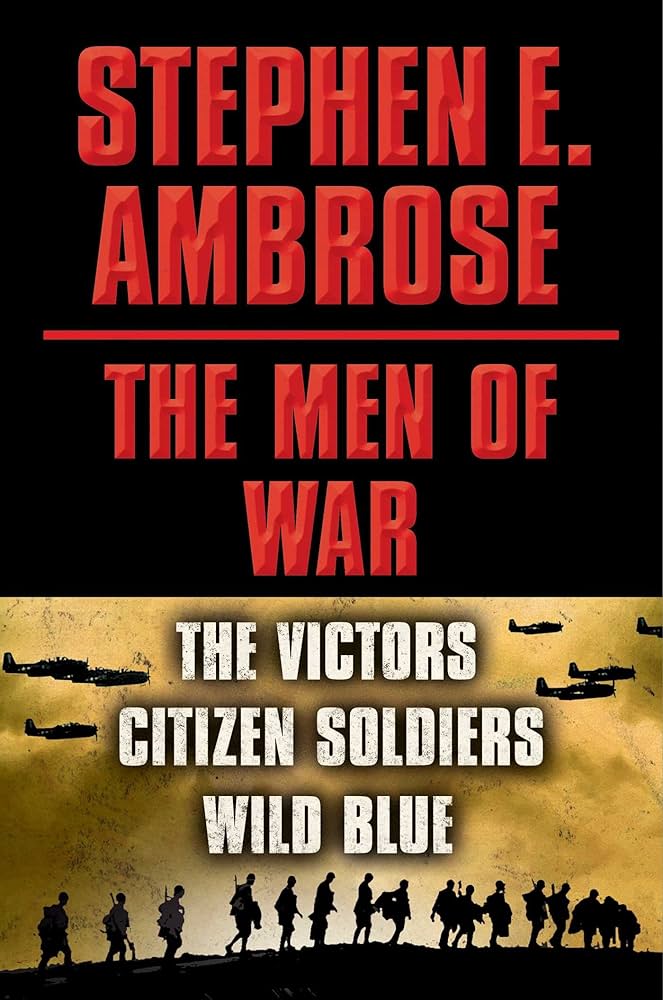
Stephen E. Ambrose the Men of War E-Book Box Set: Victors, Citizen Soldiers, Wild Blue
Simon and Schuster · 2013 · English · EPUB
This ebook box set includes books by Stephen E. Ambrose that bring into focus the men and women who fought in World War II.The Victors: A breathtaking work that follows the momentous events of the war from D-Day through to the final days, centering this epic drama on the citizen soldiers, the boys who became men as they fought, proving eventually unbeatable. A compelling celebration of military genius and heroism, and of camaraderie and courage. Citizen Soldiers: A riveting account that follows the individual characters of World War II, from the high command down to the ordinary soldier, drawing on hundreds of interviews to re-create the war experience with startling clarity and immediacy. From the hedgerows of Normandy to the overrunning of Germany, this is the real story of World War II from the perspective of the men and women who fought it. Wild Blue: Following this exceptional band of brothers, the young men who flew the B-24s over Germany in World War II against terrible odds, Ambrose recounts their extraordinary brand of heroism, skill, daring, and comradeship with the vivid detail and affection.
+3
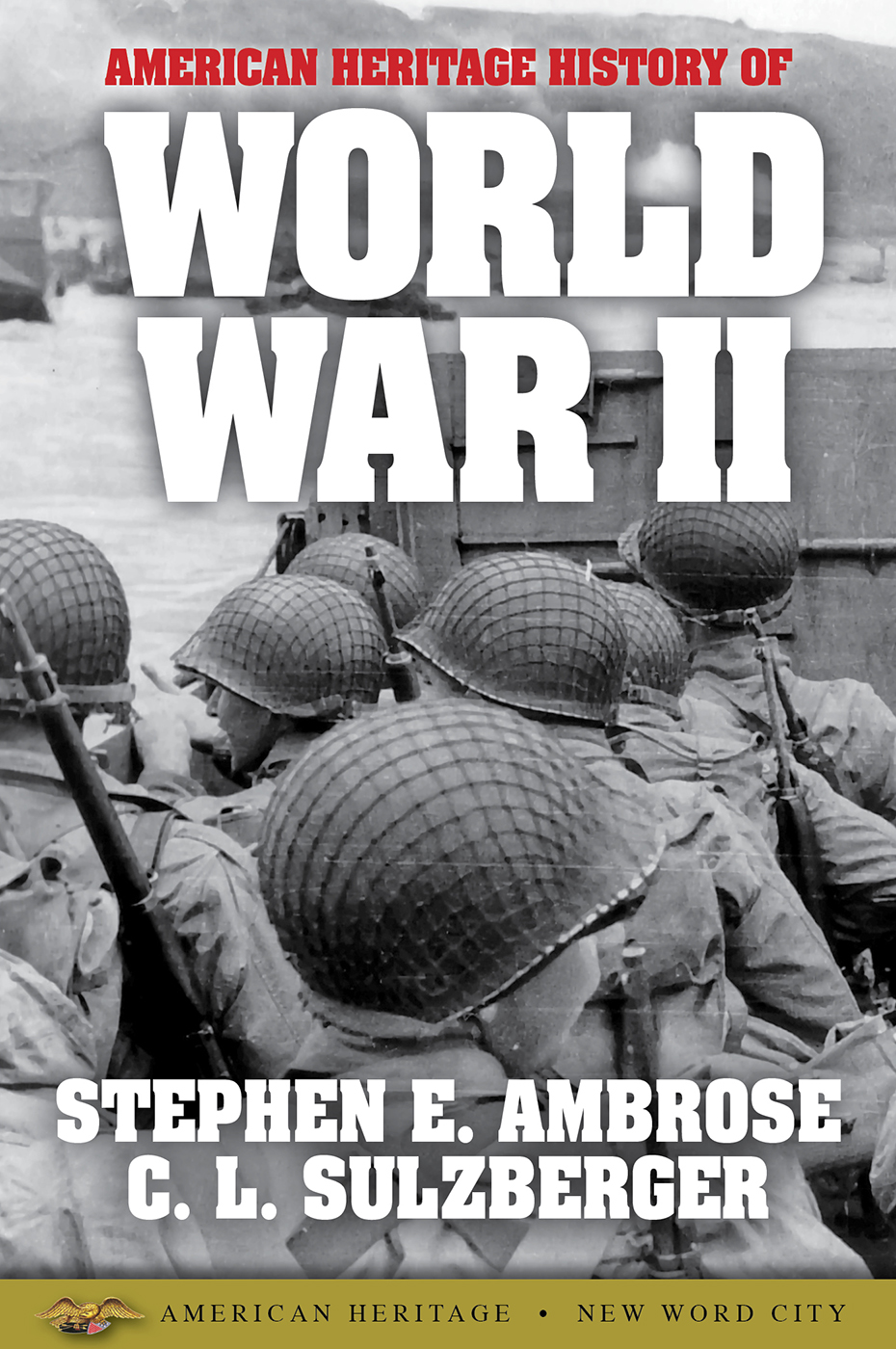
The American Heritage History of World War II
New Word City, Inc. · 2015 · English · EPUB
<p><i>The American Heritage History of World War II</i> was first published in 1966. At the time, author and Pulitzer Prize-winning journalist C.L. Sulzberger received widespread praise for his authoritative account of the six-year war that involved more than fifty-six nations, resulted in the death of some 22 million people, and shaped the course of history. His work became a standard reference on the war.<p>Stephen E. Ambrose, one of the most highly regarded historians of our time, oversaw a major revision of this classic work. Seamlessly incorporating new material and insights, Ambrose produced a comprehensive and riveting account of the war's key characters and events.<p>In planes and foxholes, in deserts and jungles, on ships and beaches, Ambrose shines a light on the people involved—the leaders, the fighters, the victims. He also added new chapters on the atrocities of the Holocaust and revelations about the secret war of espionage.
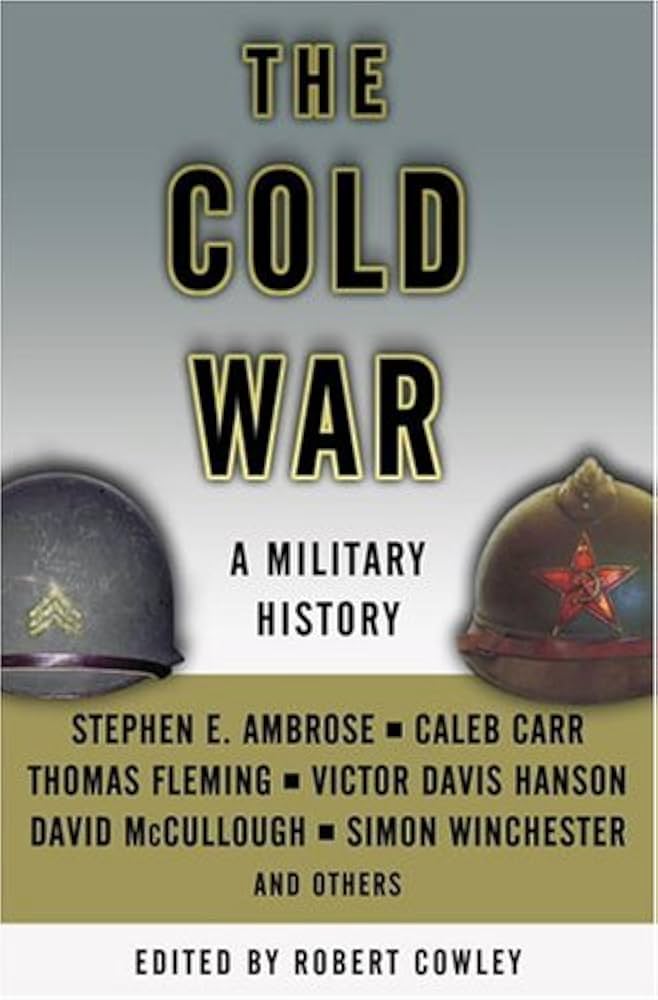
The Cold War: A Military History
Random House Publishing Group · 2009 · English · EPUB
Even fifteen years after the end of the Cold War, it is still hard to grasp that we no longer live under its immense specter. For nearly half a century, from the end of World War II to the early 1990s, all world events hung in the balance of a simmering dispute between two of the greatest military powers in history. Hundreds of millions of people held their collective breath as the United States and the Soviet Union, two national ideological entities, waged proxy wars to determine spheres of influence–and millions of others perished in places like Korea, Vietnam, and Angola, where this cold war flared hot.
Such a consideration of the Cold War–as a military event with sociopolitical and economic overtones–is the crux of this stellar collection of twenty-six essays compiled and edited by Robert Cowley, the longtime editor of MHQ: The Quarterly Journal of Military History. Befitting such a complex and far-ranging period, the volume’s contributing writers cover myriad angles. John Prados, in “The War Scare of 1983,” shows just how close we were to escalating a war of words into a nuclear holocaust. Victor Davis Hanson offers “The Right Man,” his pungent reassessment of the bellicose air-power zealot Curtis LeMay as a man whose words were judged more critically than his actions.
The secret war also gets its due in George Feiffer’s “The Berlin Tunnel,” which details the charismatic C.I.A. operative “Big Bill” Harvey’s effort to tunnel under East Berlin and tap Soviet phone lines–and the Soviets’ equally audacious reaction to the plan; while “The Truth About Overflights,” by R. Cargill Hall, sheds light on some of the Cold War’s best-kept secrets.
The often overlooked human cost of fighting the Cold War finds a clear voice in “MIA” by Marilyn Elkins, the widow of a Navy airman, who details the struggle to learn the truth about her husband, Lt. Frank C. Elkins, whose A-4 Skyhawk disappeared over Vietnam in 1966. In addition there are profiles of the war’s “front lines”–Dien Bien Phu, the Cuban Missile Crisis, the Bay of Pigs–as well as of prominent military and civil leaders from both sides, including Harry S. Truman, Nikita Khrushchev, Dean Acheson, Gen. Douglas MacArthur, Richard M. Nixon, Gen. Vo Nguyen Giap, and others.
Encompassing so many perspectives and events, The Cold War succeeds at an impossible task: illuminating and explaining the history of an undeclared shadow war that threatened the very existence of humankind.
+3
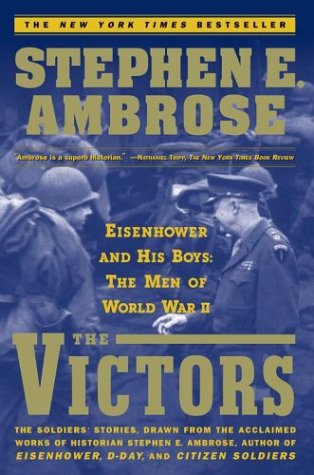
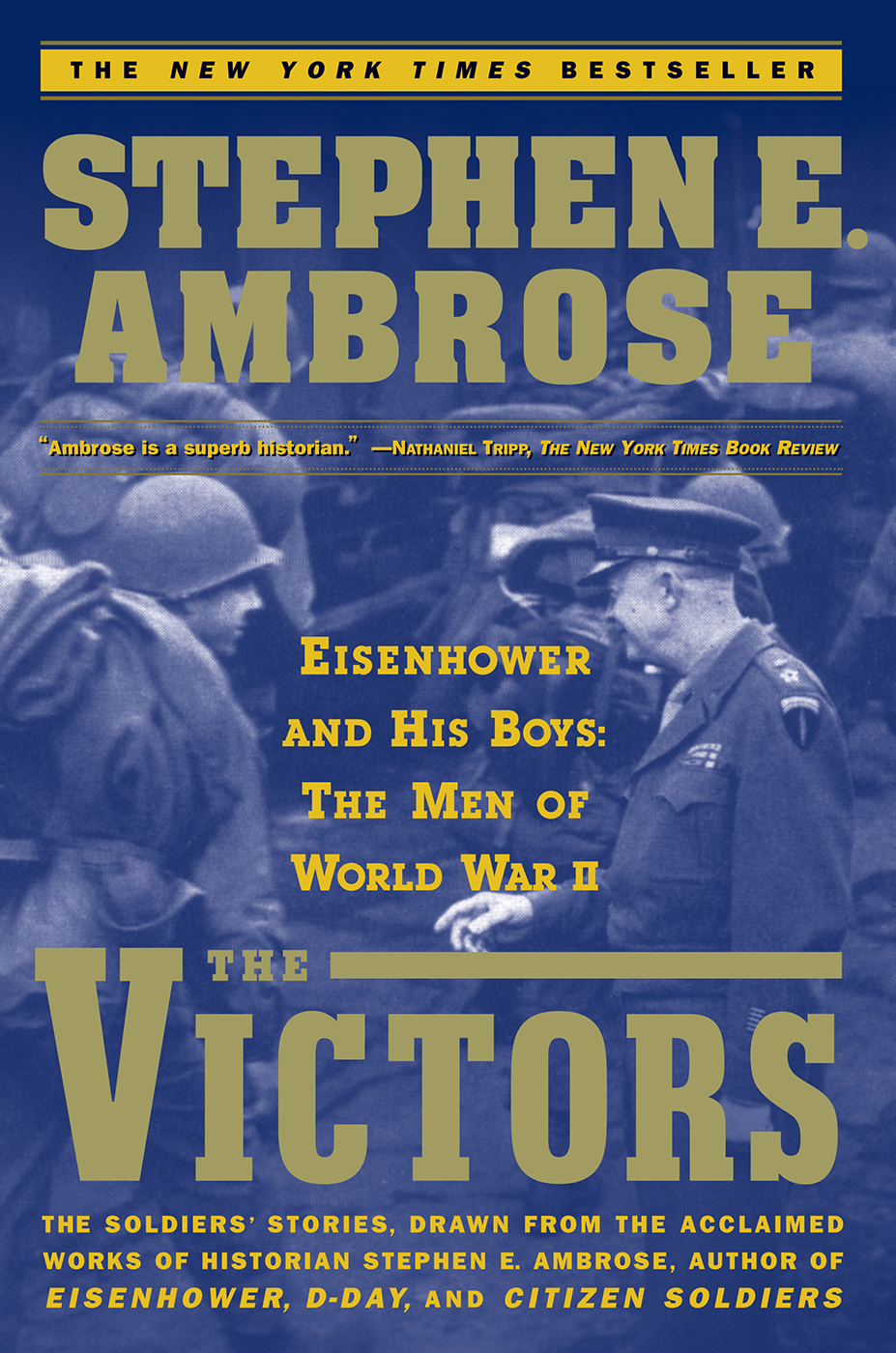
The Victors - Eisenhower and His Boys The Men of World War II
Paw Prints · 2008 · English · EPUB
EDITORIAL REVIEW: From America's preeminent military historian, Stephen E. Ambrose, comes a brilliant telling of the war in Europe, from D-Day, June 6, 1944, to the end, eleven months later, on May 7, 1945. This authoritative narrative account is drawn by the author himself from his five acclaimed works about that conflict, most particularly from the definitive and comprehensive *D-Day* and *Citizen Soldiers.* But it is, as always with Stephen Ambrose, the ranks, the ordinary boys and men, who command his attention and his awe. *The Victors* tells their stories, how citizens became soldiers in the best army in the world. Ambrose draws on thousands of interviews and oral histories from government and private archives, from the high command -- Eisenhower, Bradley, Patton -- on down through officers and enlisted men, to re-create the last year of the Second World War when the Allied soldiers pushed the Germans out of France, chased them across Germany, and destroyed the Nazi regime.
+3
The Victors: Eisenhower and His Boys the Men of World War Ii
Simon and Schuster · 1999 · English · EPUB
From America’s preeminent military historian, Stephen E. Ambrose, comes the definitive telling of the war in Europe, from D-Day, June 6, 1944, to the end, eleven months later, on May 7, 1945.This authoritative narrative account is drawn by the author himself from his five acclaimed books about that conflict, most particularly from the definitive and comprehensive D-Day and Citizen Soldiers, about which the great Civil War historian James McPherson wrote, “If there is a better book about the experience of GIs who fought in Europe during World War II, I have not read it. Citizen Soldiers captures the fear and exhilaration of combat, the hunger and cold and filth of the foxholes, the small intense world of the individual rifleman as well as the big picture of the European theater in a manner that grips the reader and will not let him go. No one who has not been there can understand what combat is like but Stephen Ambrose brings us closer to an understanding than any other historian has done.” The Victors also includes stories of individual battles, raids, acts of courage and suffering from Pegasus Bridge, an account of the first engagement of D-Day, when a detachment of British airborne troops stormed the German defense forces and paved the way for the Allied invasion; and from Band of Brothers, an account of an American rifle company from the 506th Parachute Infantry Regiment who fought, died, and conquered, from Utah Beach through the Bulge and on to Hitter's Eagle’s Nest in Germany. Stephen Ambrose is also the author of Eisenhower, the greatest work on Dwight Eisenhower, and one of the editors of the Supreme Allied Commander's papers. He describes the momentous decisions about how and where the war was fought, and about the strategies and conduct of the generals and officers who led the invasion and the bloody drive across Europe to Berlin. But, as always with Stephen E. Ambrose, it is the ranks, the ordinary boys and men, who command his attention and his awe. The Victors tells their stories, how citizens became soldiers in the best army in the world. Ambrose draws on thousands of interviews and oral histories from government and private archives, from the high command—Eisenhower, Bradley, Patton—on down through officers and enlisted men, to re-create the last year of the Second World War when the Allied soldiers pushed the Germans out of France, chased them across Germany, and destroyed the Nazi regime.
+3
To America: Personal Reflections of an Historian
Simon and Schuster · 2002 · English · EPUB
Completed shortly before Ambrose's untimely death, To America is a very personal look at our nation's history through the eyes of one of the twentieth century's most influential historians.
Ambrose roams the country's history, praising the men and women who made it exceptional. He considers Jefferson and Washington, who were progressive thinkers (while living a contradiction as slaveholders), and celebrates Lincoln and Roosevelt. He recounts Andrew Jackson's stunning defeat of a superior British force in the battle of New Orleans with a ragtag army in the War of 1812. He brings to life Lewis and Clark's grueling journey across the wilderness and the building of the railroad that joined the nation coast to coast. Taking swings at political correctness, as well as his own early biases, Ambrose grapples with the country's historic sins of racism; its ill treatment of Native Americans; and its tragic errors such as the war in Vietnam, which he ardently opposed. He contrasts the modern presidencies of Eisenhower, Kennedy, Nixon, and Johnson. He considers women's and civil rights, immigration, philanthropy, and nation building. Most powerfully, in this final volume, Ambrose offers an accolade to the historian's mighty calling.
+4
Undaunted Courage: Meriwether Lewis Thomas Jefferson and the Opening
Simon and Schuster · 2013 · English · EPUB
From the New York Times bestselling author of Band of Brothers and D-Day, the definitive book on Lewis and Clark’s exploration of the Louisiana Purchase, the most momentous expedition in American history and one of the great adventure stories of all time.
In 1803 President Thomas Jefferson selected his personal secretary, Captain Meriwether Lewis, to lead a voyage up the Missouri River to the Rockies, over the mountains, down the Columbia River to the Pacific Ocean, and back. Lewis and his partner, Captain William Clark, made the first map of the trans-Mississippi West, provided invaluable scientific data on the flora and fauna of the Louisiana Purchase territory, and established the American claim to Oregon, Washington, and Idaho. Ambrose has pieced together previously unknown information about weather, terrain, and medical knowledge at the time to provide a vivid backdrop for the expedition. Lewis is supported by a rich variety of colorful characters, first of all Jefferson himself, whose interest in exploring and acquiring the American West went back thirty years. Next comes Clark, a rugged frontiersman whose love for Lewis matched Jefferson’s. There are numerous Indian chiefs, and Sacagawea, the Indian girl who accompanied the expedition, along with the French-Indian hunter Drouillard, the great naturalists of Philadelphia, the French and Spanish fur traders of St. Louis, John Quincy Adams, and many more leading political, scientific, and military figures of the turn of the century. High adventure, high politics, suspense, drama, and diplomacy combine with high romance and personal tragedy to make this outstanding work of scholarship as readable as a novel.
+2
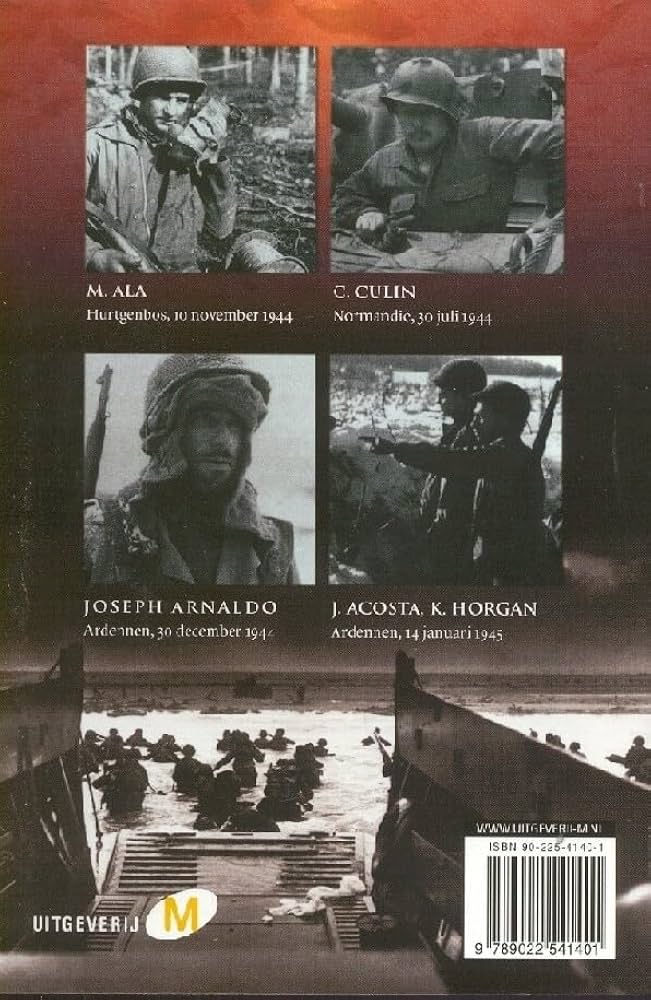
Van D-Day tot Berlijn: het amerikaanse leger vanaf de stranden van Normandie via de Ardennen naar de Duitse capitulatie 7 juni 1944 tot 7 mei 1945
Meulenhoff Boekerij B.V. · 2011 · nld · EPUB
Van D-Day tot Berlijn begint op 7 juni 1944 op de stranden van Normandië en eindigt op 7 mei 1945, de dag dat Duitsland capituleert en er een einde komt aan de Tweede Wereldoorlog. Stephen E. Ambrose vertelt de geschiedenis van de geallieerde legers tijdens hun moeizame tocht van de Normandische stranden naar Duitsland en maakt daarbij gebruik van honderden interviews en nagelaten verhalen, van de generale staf (Eisenhower, Bradley en Patton) tot de gewone soldaten en de Duitsers die tegen hen vochten. Ambrose brengt hun ervaringen op unieke wijze weer tot leven.
+2