← Back to Authors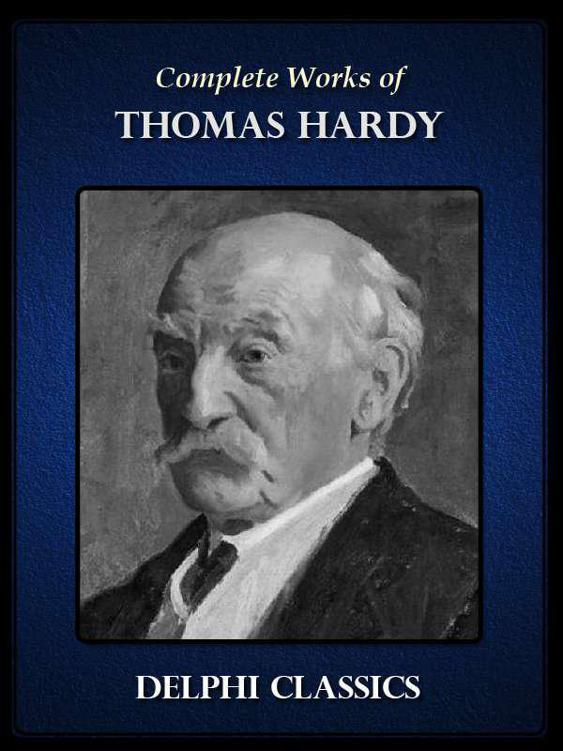



Featured Author
Thomas Hardy
English • Novelist • Poet • Author
11 books in Langa
Domains
Literature
Books in Langa Library
11 books available from this author.
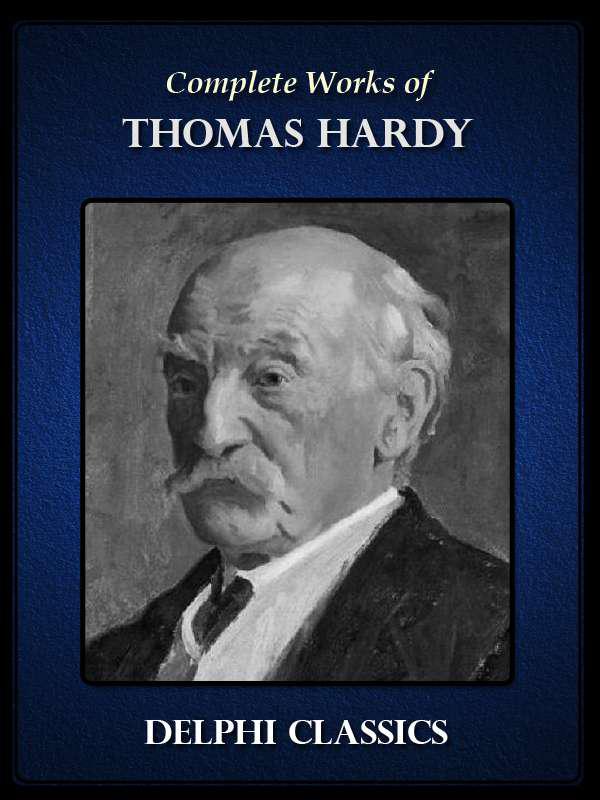
Delphi Complete Works of Thomas Hardy (Illustrated)
Delphi Classics · 2013 · English · EPUB
One of the few authors to distinguish himself with equal merit in poetry and novel writing, Thomas Hardy remains one of English literature’s leading figures. For the first time in publishing history, this comprehensive eBook presents Hardy’s complete works, with scarce texts, numerous illustrations, informative introductions and the usual Delphi bonus material. (Version 8)Features:* illustrated with countless images relating to Hardy and his works* annotated with concise introductions to the novels and other texts * each novel has its own contents table - easily navigate between chapters!* information on the lost first novel ‘THE POOR MAN AND THE LADY', with a rare novella and poem tracing its content* ALL of the short stories with BOTH chronological and alphabetical contents tables* the compete plays – even including the rare “Tragedy of the Queen of Cornwall” available nowhere else as a digital book* ALL of the poems with their own separate chronological and alphabetical contents tables – find that special poem easily and quickly!* the poems are ALSO presented in their original collections, each with its own table* scholarly ordering of texts into chronological order and literary genres* special Hardy’s Wessex Map to accompany your reading of the novels* includes a special criticism section, with 6 different texts from other authors and critics, examining Hardy's literary work in detail* D. H. Lawrence's lengthy critical book A STUDY OF THOMAS HARDY* Hardy's wife's TWO biographies - explore the great writer's life in detail - available nowhere else* UPDATED with newly formatted texts, introductions, corrections and many more imagesPlease visit www.delphiclassics.com to browse our range of exciting Complete Works titlesThe NovelsTHE POOR MAN AND THE LADYAN INDISCRETION IN THE LIFE OF AN HEIRESSDESPERATE REMEDIESUNDER THE GREENWOOD TREEA PAIR OF BLUE EYESFAR FROM THE MADDING CROWDTHE HAND OF ETHELBERTATHE RETURN OF THE NATIVETHE TRUMPET-MAJORA LAODICEANTWO ON A TOWERTHE MAYOR OF CASTERBRIDGETHE WOODLANDERSTESS OF THE D’URBERVILLESTHE WELL-BELOVEDJUDE THE OBSCUREThe Short Story CollectionsWESSEX TALESLIFE’S LITTLE IRONIESA GROUP OF NOBLE DAMESThe Short StoriesCHRONOLOGICAL LIST OF HARDY’S SHORT STORIESALPHABETICAL LIST OF HARDY’S SHORT STORIESThe Verse DramasTHE DYNASTSTRAGEDY OF THE QUEEN OF CORNWALLThe Poetry CollectionsWESSEX POEMS AND OTHER VERSESPOEMS OF THE PAST AND THE PRESENTTIME’S LAUGHINGSTOCKS AND OTHER VERSESSATIRES OF CIRCUMSTANCEMOMENTS OF VISION AND MISCELLANEOUS VERSESLATE LYRICS AND EARLIER WITH MANY OTHER VERSESHUMAN SHOWS FAR PHANTASIES SONGS, AND TRIFLESWINTER WORDS IN VARIOUS MOODS AND METRESThe PoemsLIST OF POEMS IN CHRONOLOGICAL ORDERLIST OF POEMS IN ALPHABETICAL ORDERThe CriticismA STUDY OF THOMAS HARDY by D.H. LawrenceTHOMAS HARDY by Leon H. VincentTHE LYRICAL POETRY OF THOMAS HARDY by Edmund GosseUNDER FRENCH ENCOURAGEMENT by David Christie MurrayTHOMAS HARDY by John Cowper PowysA NOTE ON THE GENIUS OF THOMAS HARDY by Arthur SymonsThe BiographiesTHE EARLY LIFE OF THOMAS HARDY, 1841–1891 by Florence HardyTHE LATER YEARS OF THOMAS HARDY, 1892–1928 by Florence HardyHardy’s Wessex MapPlease visit www.delphiclassics.com to browse our range of exciting titles
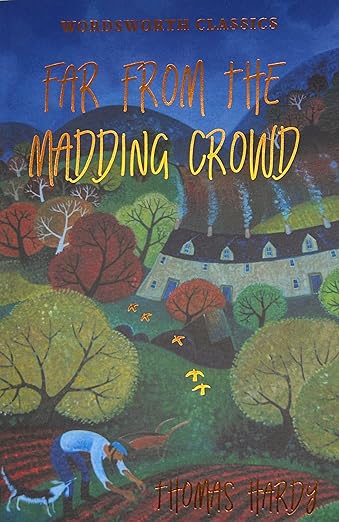
Far From the Madding Crowd
Wordsworth Editions Ltd · 1997 · English · EPUB
Far from the Madding Crowd (1874) is Thomas Hardy's fourth novel and his first major literary success. It originally appeared anonymously as a monthly serial in Cornhill Magazine, where it gained a wide readership. The novel is the first to be set in Hardy's fictional county of Wessex in rural south west England. It deals in themes of love, honour and betrayal, against a backdrop of the seemingly idyllic, but often harsh, realities of a farming community in Victorian England. It describes the farmer Bathsheba Everdene, her life and relationships - especially with her lonely neighbour William Boldwood, the faithful shepherd Gabriel Oak, and the thriftless soldier Sergeant Troy.
On publication, critical notices were plentiful and mostly positive. Hardy revised the text extensively for the 1895 edition and made further changes for the 1901 edition. Plot: Gabriel Oak is a young shepherd. With the savings of a frugal life, and a loan, he has leased and stocked a sheep farm. He falls in love with a newcomer six years his junior, Bathsheba Everdene, a proud beauty who arrives to live with her aunt, Mrs. Hurst. Over time, Bathsheba and Gabriel grow to like each other well enough, and Bathsheba even saves his life once. However, when he makes her an unadorned offer of marriage, she refuses; she values her independence too much, and him too little. Feeling betrayed and embarrassed, Gabriel offers blunt protestations that only foster her haughtiness. After a few days, she moves to Weatherbury, a village some miles off. When next they meet, their circumstances have changed drastically. An inexperienced new sheepdog drives Gabriel's flock over a cliff, ruining him. After selling off everything of value, he manages to settle all his debts but emerges penniless. He seeks employment at a hiring fair in the town of Casterbridge. When he finds none, he heads to another such fair in Shottsford, a town about ten miles from Weatherbury. On the way, he happens upon a dangerous fire on a farm and leads the bystanders in putting it out. When the veiled owner comes to thank him, he asks if she needs a shepherd. She uncovers her face and reveals herself to be none other than Bathsheba. She has recently inherited her uncle's estate and is now wealthy. Though somewhat uncomfortable, she employs him.... Thomas Hardy, OM (2 June 1840 - 11 January 1928) was an English novelist and poet. A Victorian realist in the tradition of George Eliot, he was influenced both in his novels and in his poetry by Romanticism, especially William Wordsworth. He was highly critical of much in Victorian society, though Hardy focused more on a declining rural society.
While Hardy wrote poetry throughout his life and regarded himself primarily as a poet, his first collection was not published until 1898. Initially, therefore, he gained fame as the author of such novels as Far from the Madding Crowd (1874), The Mayor of Casterbridge (1886), Tess of the d'Urbervilles (1891), and Jude the Obscure (1895). During his lifetime, Hardy's poetry was acclaimed by younger poets (particularly the Georgians) who viewed him as a mentor. After his death his poems were lauded by Ezra Pound, W. H. Auden and Philip Larkin.
Many of his novels concern tragic characters struggling against their passions and social circumstances, and they are often set in the semi-fictional region of Wessex; initially based on the medieval Anglo-Saxon kingdom, Hardy's Wessex eventually came to include the counties of Dorset, Wiltshire, Somerset, Devon, Hampshire and much of Berkshire, in southwest and south central England. Two of his novels, Tess of the d'Urbervilles and Far from the Madding Crowd, were listed in the top 50 on the BBC's survey The Big Read.
Far From the Madding Crowd
Wordsworth Editions Ltd · 1997 · English · PDF
Far from the Madding Crowd (1874) is Thomas Hardy's fourth novel and his first major literary success. It originally appeared anonymously as a monthly serial in Cornhill Magazine, where it gained a wide readership. The novel is the first to be set in Hardy's fictional county of Wessex in rural south west England. It deals in themes of love, honour and betrayal, against a backdrop of the seemingly idyllic, but often harsh, realities of a farming community in Victorian England. It describes the farmer Bathsheba Everdene, her life and relationships - especially with her lonely neighbour William Boldwood, the faithful shepherd Gabriel Oak, and the thriftless soldier Sergeant Troy.
On publication, critical notices were plentiful and mostly positive. Hardy revised the text extensively for the 1895 edition and made further changes for the 1901 edition. Plot: Gabriel Oak is a young shepherd. With the savings of a frugal life, and a loan, he has leased and stocked a sheep farm. He falls in love with a newcomer six years his junior, Bathsheba Everdene, a proud beauty who arrives to live with her aunt, Mrs. Hurst. Over time, Bathsheba and Gabriel grow to like each other well enough, and Bathsheba even saves his life once. However, when he makes her an unadorned offer of marriage, she refuses; she values her independence too much, and him too little. Feeling betrayed and embarrassed, Gabriel offers blunt protestations that only foster her haughtiness. After a few days, she moves to Weatherbury, a village some miles off. When next they meet, their circumstances have changed drastically. An inexperienced new sheepdog drives Gabriel's flock over a cliff, ruining him. After selling off everything of value, he manages to settle all his debts but emerges penniless. He seeks employment at a hiring fair in the town of Casterbridge. When he finds none, he heads to another such fair in Shottsford, a town about ten miles from Weatherbury. On the way, he happens upon a dangerous fire on a farm and leads the bystanders in putting it out. When the veiled owner comes to thank him, he asks if she needs a shepherd. She uncovers her face and reveals herself to be none other than Bathsheba. She has recently inherited her uncle's estate and is now wealthy. Though somewhat uncomfortable, she employs him.... Thomas Hardy, OM (2 June 1840 - 11 January 1928) was an English novelist and poet. A Victorian realist in the tradition of George Eliot, he was influenced both in his novels and in his poetry by Romanticism, especially William Wordsworth. He was highly critical of much in Victorian society, though Hardy focused more on a declining rural society.
While Hardy wrote poetry throughout his life and regarded himself primarily as a poet, his first collection was not published until 1898. Initially, therefore, he gained fame as the author of such novels as Far from the Madding Crowd (1874), The Mayor of Casterbridge (1886), Tess of the d'Urbervilles (1891), and Jude the Obscure (1895). During his lifetime, Hardy's poetry was acclaimed by younger poets (particularly the Georgians) who viewed him as a mentor. After his death his poems were lauded by Ezra Pound, W. H. Auden and Philip Larkin.
Many of his novels concern tragic characters struggling against their passions and social circumstances, and they are often set in the semi-fictional region of Wessex; initially based on the medieval Anglo-Saxon kingdom, Hardy's Wessex eventually came to include the counties of Dorset, Wiltshire, Somerset, Devon, Hampshire and much of Berkshire, in southwest and south central England. Two of his novels, Tess of the d'Urbervilles and Far from the Madding Crowd, were listed in the top 50 on the BBC's survey The Big Read.
Jude the Obscure
Oxford University Press · 1985 · English · EPUB
Jude the Obscure, the last completed novel by Thomas Hardy, began as a magazine serial in December 1894 and was first published in book form in 1895. Its protagonist, Jude Fawley, is a working-class young man, a stonemason, who dreams of becoming a scholar. The other main character is his cousin, Sue Bridehead, who is also his central love interest. The novel is concerned in particular with issues of class, education, religion and marriage. Plot: The novel tells the story of Jude Fawley, who lives in a village in southern England (part of Hardy's fictional county of Wessex), who yearns to be a scholar at "Christminster", a city modelled on Oxford. As a youth, Jude teaches himself Classical Greek and Latin in his spare time, while working first in his great-aunt's bakery, with the hope of entering university. But before he can try to do this the naïve Jude is seduced by Arabella Donn, a rather coarse and superficial local girl who traps him into marriage by pretending to be pregnant. The marriage is a failure, and they separate by mutual agreement, and Arabella later emigrates to Australia, where she enters into a bigamous marriage. By this time, Jude has abandoned his classical studies. After Arabella leaves him, Jude moves to Christminster and supports himself as a mason while studying alone, hoping to be able to enter the university later. There, he meets and falls in love with his free-spirited cousin, Sue Bridehead. But, shortly after this, Jude introduces Sue to his former schoolteacher, Mr. Phillotson, whom she eventually marries. However, she soon regrets this, because in addition to being in love with Jude, she is physically disgusted by her husband, and, apparently, by sex in general. Sue soon leaves Phillotson for Jude. Because of the scandal, Phillotson has to give up his career as a schoolmaster. Sue and Jude spend some time living together without any sexual relationship. This is because of Sue's dislike both of sex and the institution of marriage. Soon after, Arabella reappears and this complicates matters. But Arabella and Jude divorce and she legally marries her bigamous husband, and Sue also is divorced. However, following this, Arabella reveals that she had a child of Jude's, eight months after they separated, and subsequently sends this child to his father. He is named Jude and nicknamed "Little Father Time" because of his intense seriousness and moroseness.......... Thomas Hardy, OM (2 June 1840 - 11 January 1928) was an English novelist and poet. A Victorian realist in the tradition of George Eliot, he was influenced both in his novels and in his poetry by Romanticism, especially William Wordsworth. He was highly critical of much in Victorian society, though Hardy focused more on a declining rural society.
While Hardy wrote poetry throughout his life and regarded himself primarily as a poet, his first collection was not published until 1898. Initially, therefore, he gained fame as the author of such novels as Far from the Madding Crowd (1874), The Mayor of Casterbridge (1886), Tess of the d'Urbervilles (1891), and Jude the Obscure (1895). During his lifetime, Hardy's poetry was acclaimed by younger poets (particularly the Georgians) who viewed him as a mentor. After his death his poems were lauded by Ezra Pound, W. H. Auden and Philip Larkin.
Many of his novels concern tragic characters struggling against their passions and social circumstances, and they are often set in the semi-fictional region of Wessex; initially based on the medieval Anglo-Saxon kingdom, Hardy's Wessex eventually came to include the counties of Dorset, Wiltshire, Somerset, Devon, Hampshire and much of Berkshire, in southwest and south central England. Two of his novels, Tess of the d'Urbervilles and Far from the Madding Crowd, were listed in the top 50 on the BBC's survey The Big Read.......
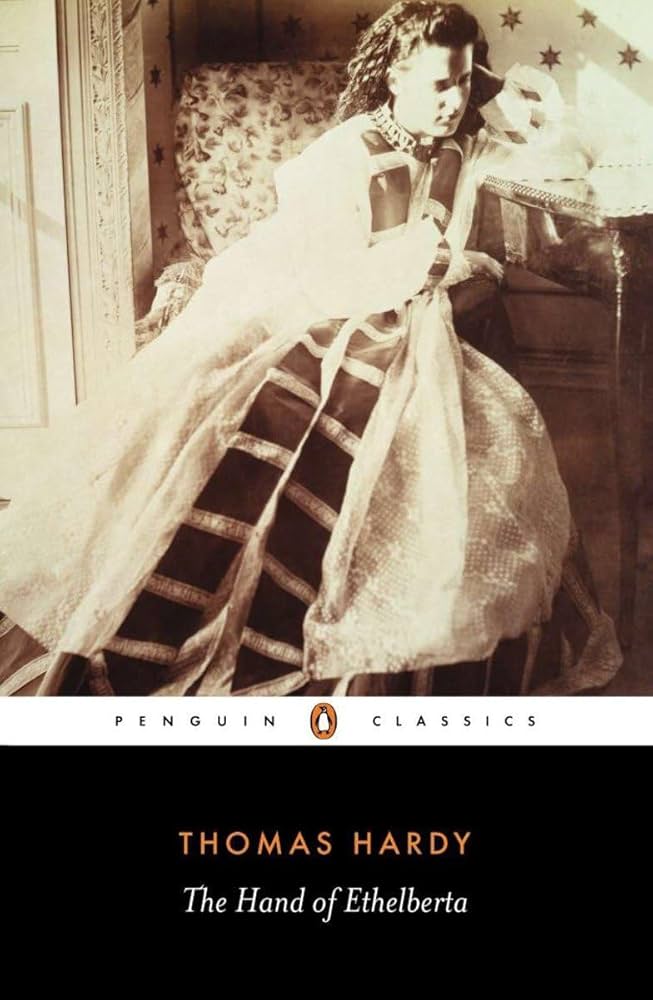
The Hand of Ethelberta (Illustrated Edition)
Independently Published · 2021 · English · EPUB
The Hand of Ethelberta: A Comedy in Chapters is a novel by Thomas Hardy, published in 1876. It was written, in serial form, for the Cornhill Magazine, which was edited by Leslie Stephen, a friend and mentor of Hardy's. Unlike the majority of Hardy's fiction, the novel is a comedy, with both humour and a happy ending for the major characters and no suicides or tragic deaths. The late nineteenth century novelist George Gissing, who knew Hardy, considered it 'surely old Hardy's poorest book'
The Return of the Native (Oxford World’s Classics)
Oxford University Press · 2005 · English · EPUB
THE RETURN OF THE NATIVE was written towards the beginning of Hardy's career as a novelist and can be considered one of his most representative works. In this novel, Hardy's tragic vision is powerfully and narrowly focussed on Egdon Heath and the men and women who live on it. Set against the backdrop of the Heath and the impersonal and eternal forces it represents, the fates of Eustacia Vye, Diggory Venn, Clym Yeobright - the returning 'native' - and others are inexorably played out.
**'To be loved to madness - such was her great desire'**
Eustacia Vye criss-crosses the wild Egdon Heath, eager to experience life to the full in her quest for 'music, poetry, passion, war'. She marries Clym Yeobright, native of the heath, but his idealism frustrates her romantic ambitions and her discontent draws others into a tangled web of deceit and unhappiness.
Early readers responded to Hardy's 'insatiably observant' descriptions of the heath, a setting that for D. H. Lawrence provided the 'real stuff of tragedy'. For modern readers, the tension between the mythic setting of the heath and the modernity of the characters challenges our freedom to shape the world as we wish; like Eustacia, we may not always be able to live our dreams.
This edition has a critically established text based on the manuscript and first edition, and without the later changes that substantially altered Hardy's original intentions.
**About the Series:** For over 100 years **Oxford World's Classics** has made available the broadest spectrum of literature from around the globe. Each affordable volume reflects Oxford's commitment to scholarship, providing the most accurate text plus a wealth of other valuable features, including expert introductions by leading authorities, voluminous notes to clarify the text, up-to-date bibliographies for further study, and much more.
### About the Author
Thomas Hardy (1840-1928) is one of England's greatest novelists. Most of his work is set in his native Dorset, on the south coast of England.
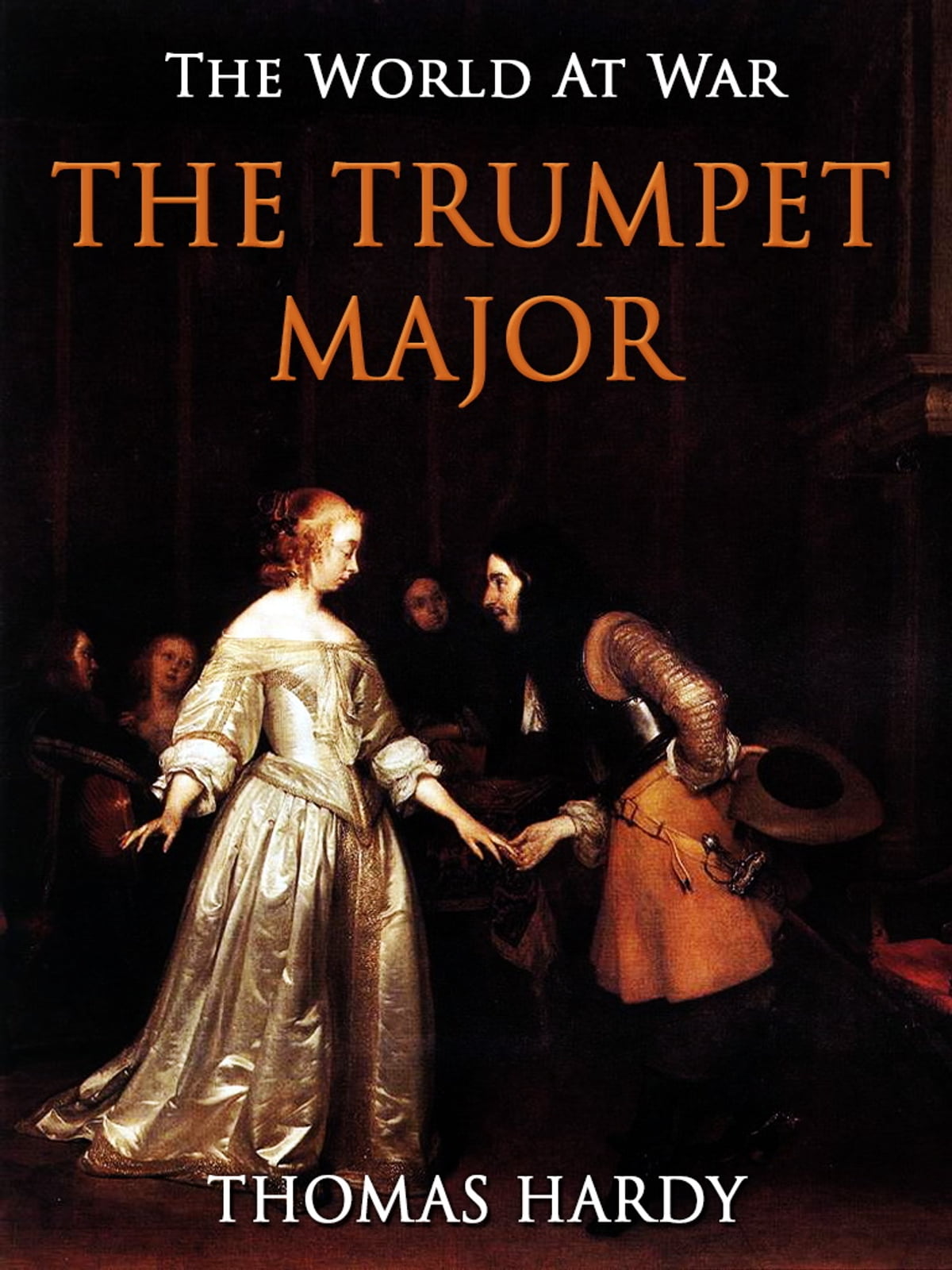
The Trumpet-Major
Macmillan · 2003 · English · EPUB
This historic book may have numerous typos and missing text. Purchasers can download a free scanned copy of the original book (without typos) from the publisher. Not indexed. Not illustrated. 1880 edition. Excerpt: ...these unfortunate days. He might have gone to Weymouth every afternoon, stood before Gloucester Lodge till the King and Queen came out, held his hat in his hand, and enjoyed their Majesties' smiles at his homage all for nothing--watched the picketmounting, heard the different bands strike up, observed the staff; and, above all, have seen the pretty Weymouth girls go trip-trip-trip along the Esplanade, deliberately fixing their innocent eyes on the distant sea, the gray cliffs, and the sky, and accidentally on the soldiers and himself. "I'll raze out her image," he said. "She shall make a fool of me no more.
" And his resolve resulted in conduct which had elements of real greatness. He went back to his father, whom he found in the mill-loft. "Tis true, father, what you say," he observed; "my brains will turn to bilge-water if I think of her much longer. By the oath of a--navigator, I wish I could sigh less and laugh more. Gad, she's gone. Why can't I let her go, and be happy? But how begin?" "Take it careless, my son," said the miller, "and lay yourself out to enjoy snacks and cordials.
" "Ah--that's a thought " said Bob. "Baccy is good for't. So is sperrits. Though I don't advise thee to drink neat.
" "Baccy--I'd almost forgot it " said Captain Loveday. He went to his room, hastily untied the package of tobacco that he had brought home, and began to make use of it in his own way, calling to David for a bottle of the old household mead that had lain in the cellar these eleven years. He was discovered by his father threequarters of an hour later as a half-invisible object behind a cloud of smoke. The miller drew a breath of relief. "Why, Bob," he said, "I thought the house was a-fire " "I'm smoking rather fast to drown my reflections, father. Tis no...
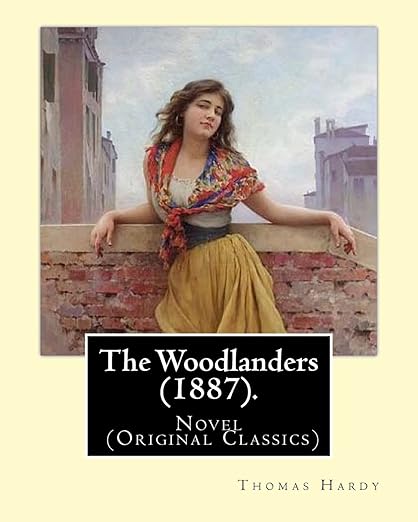
The Woodlanders (1887). By: Thomas Hardy: Novel (Original Classics)
CreateSpace Independent Publishing Platform · 2017 · English · EPUB
The Woodlanders is a novel by Thomas Hardy. It was serialised from May 1886 to April 1887 in Macmillan's Magazine and published in three volumes in 1887. It is one of his series of Wessex novels. PLOT: The story takes place in a small woodland village called Little Hintock, and concerns the efforts of an honest woodsman, Giles Winterborne, to marry his childhood sweetheart, Grace Melbury. Although they have been informally betrothed for some time, her father has made financial sacrifices to give his adored only child a superior education and no longer considers Giles good enough for her. When the new doctor - a well-born and handsome young man named Edred Fitzpiers - takes an interest in Grace, her father does all he can to make Grace forget Giles, and to encourage what he sees as a brilliant match. Grace has misgivings prior to the marriage as she sees a village woman (Suke Damson) coming out of his cottage very early in the morning and suspects he has been sleeping with her. She tells her father that she does not want to go on with the marriage and he becomes very angry. Later Fitzpiers tells her Suke has been to visit him because she was in agony from toothache and he extracted a molar. Grace clutches at this explanation - in fact Fitzpiers has started an affair with Suke some weeks previously. After the honeymoon, the couple take up residence in an unused wing of Melbury's house. Soon, however, Fitzpiers begins an affair with a rich widow named Mrs. Charmond, which Grace and her father discover. Grace finds out by chance that Suke Damson has a full set of teeth and realises that Fitzpiers lied to her. The couple become progressively more estranged and Fitzpiers is assaulted by his father-in-law after he accidentally reveals his true character to him. Both Suke Damson and Mrs Charmond turn up at Grace's house demanding to know whether Fitzpiers is all right - Grace addresses them both sarcastically as "Wives -all". Fitzpiers later deserts Grace and goes to the Continent with Mrs Charmond. Grace realises that she has only ever really loved Giles but as there is no possibity of divorce feels that her love seems hopeless.
Melbury is told by a former legal clerk down on his luck that the law was changed in the previous year (making the setting of the action 1858) and divorce is now possible. He encourages Giles to resume his courtship of Grace. It later becomes apparent, however, that Fitzpiers' adultery is not sufficient for Grace to be entitled to a divorce. When Fitzpiers quarrels with Mrs. Charmond and returns to Little Hintock to try to reconcile with his wife, she flees the house and turns to Giles for help. He is still convalescing from a dangerous illness, but nobly allows her to sleep in his hut during stormy weather, whilst he insists on sleeping outside. As a result, he dies. Grace later allows herself to be won back to the (at least temporarily) repentant Fitzpiers, thus sealing her fate as the wife of an unworthy man. This is after Suke's husband Timothy Tangs has set a man trap to try to crush Fitzpiers' leg but it only tears Grace's skirt. No one is left to mourn Giles except a courageous peasant girl named Marty South, who has always loved him. Marty is a plain girl whose only attribute is her beautiful hair. She is persuaded to sell this at the start of the story to a barber who is procuring it for Mrs Charmond, after Marty realises that Giles loves Grace and not her. She precipitates the final quarrel between Fitzpiers and Mrs Charmond by writing to Fitzpiers and telling him of the origin of most of Mrs Charmond's hair.... Thomas Hardy, OM (2 June 1840 - 11 January 1928) was an English novelist and poet. A Victorian realist in the tradition of George Eliot, he was influenced both in his novels and in his poetry by Romanticism, especially William Wordsworth.
He was highly critical of much in Victorian society, though Hardy focused more on a declining rural society.
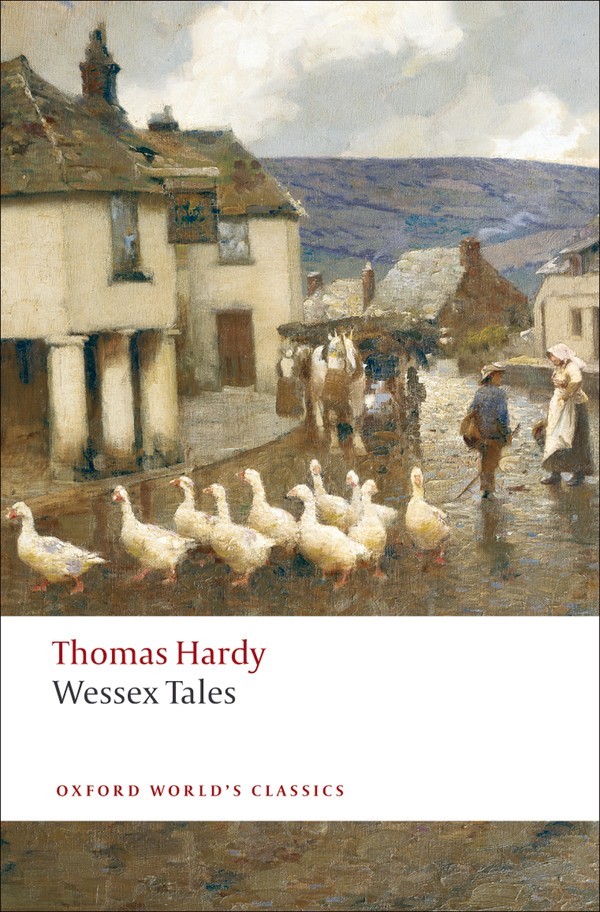
Wessex Tales (Annotated Edition)
CreateSpace Independent Publishing Platform · 2017 · English · EPUB
Wessex Tales is an 1888 collection of tales written by English novelist and poet Thomas Hardy, many of which are set before Hardy's birth in 1840.In the various short stories, Hardy writes of the true nature of nineteenth-century marriage and its inherent restrictions, the use of grammar as a diluted form of thought, the disparities created by the role of class status in determining societal rank, the stance of women in society and the severity of even minor diseases causing the rapid onset of fatal symptoms prior to the introduction of sufficient medicinal practices. A focal point of all the short stories is that of social constraints acting to diminish one's contentment in life, necessitating unwanted marriages, repression of true emotion and succumbing to melancholia due to constriction within the confines of 19th-century perceived normalcy.
Great Value: This product contains both the original text AND a 30 page collection of annotations, information, and resources!Whether you are reading for fun or seeking a new level of understanding, you will benefit immensely from this Special Annotated Student and Teacher Edition!Added to this special edition of a classic book is a special section which contains activities for understanding, as well as guided questions for major aspects of the book. This resource is ideal for a quick read to prepare you for an exam or finish a homework assignment. This resource contains information specifically aimed at assisting readers in understanding the classic text, preparing students for examinations, or providing lesson plans for teachers. This book is ideal for readers in high school, college, or those individuals who are seeking an easier understanding of a classic text.